Personal injury, and nothing else
Shalhoub Law Injury & Accident takes injury cases only. What follows is the whole practice, not a department inside a larger firm — and the Florida Bar’s own record for Bar #88300 lists the firm size as one, which is the verifiable version of “Paul handles it himself”.
Sixteen kinds of case are listed here and they share more than they differ. Every one of them has to prove the same four things, and the thing that decides what any of them is worth is almost never the label on the claim. So before the lists: the machinery that runs underneath all of them.
What every Florida injury claim has to prove
Four elements, and then a fifth question that decides whether any of it matters.
Duty. Someone owed you a standard of care. A driver owes it to everyone on the road. A store owes it to the people it invites in. A nursing home owes it by statute, in terms Florida wrote down. The question is rarely contested in a crash and is frequently the whole case on a property claim.
Breach. They fell short of it. This is where evidence lives: the vehicle data, the inspection log, the camera that was pointed at the entrance, the staffing records, the maintenance history.
Causation. That failure is what caused your injury — not something else, and not a condition you already had. Expect this to be the fight if you have any medical history at all, and know that section 627.737(2) anticipates the argument: it reaches an injury that consists “in whole or in part” of a qualifying permanent injury. Your claim is the change, not the baseline.
Damages. What it cost you and what it took from you — treatment, the treatment still to come, wages, earning capacity, and the part that is not on any invoice.
And then: is there anything to pay with? This is the question nobody asks until late and it determines the outcome more often than fault does. Florida requires only $10,000 of property damage liability security under section 324.022(1), and nothing at all in bodily injury liability for an ordinary private passenger car. A clear-liability crash against a driver with no BI coverage, no UM on your own policy and no assets is a claim with nowhere to go. Which is why one of the first steps on any crash file is a written demand under section 627.4137(1), which obliges a liability insurer to state the limits under oath within 30 days and hand over the policy, “including excess or umbrella insurance”.
The two numbers that govern every case on this page
Two years. Section 95.11(5)(a) gives two years for an action founded on negligence, for incidents on or after 24 March 2023. Wrongful death is two years from the date of death under (5)(e). Medical malpractice has its own scheme under (5)(c): two years from the incident or from discovery, and in no event later than four from the incident, with an exception for a claim brought for a child on or before the eighth birthday. A claim against a city, county or the state is governed first by section 768.28 — written notice, then a six-month wait — and missing that notice ends the claim regardless of the two years.
Fifty-one percent. Under section 768.81(3)(a), a claimant found more than 50 percent at fault recovers nothing; at or below that the award is reduced by the percentage. This is why an insurer's early theory about what you did matters so much, and why section 316.066(4) is worth knowing: the crash report and the statements of the person who made it “may not be used as evidence in any trial, civil or criminal”. An officer’s box checked at the scene is not the verdict.
Crashes
Seven kinds of collision, and they do not run on the same rules.
 Car accidents
 Truck accidents
 Motorcycle accidents
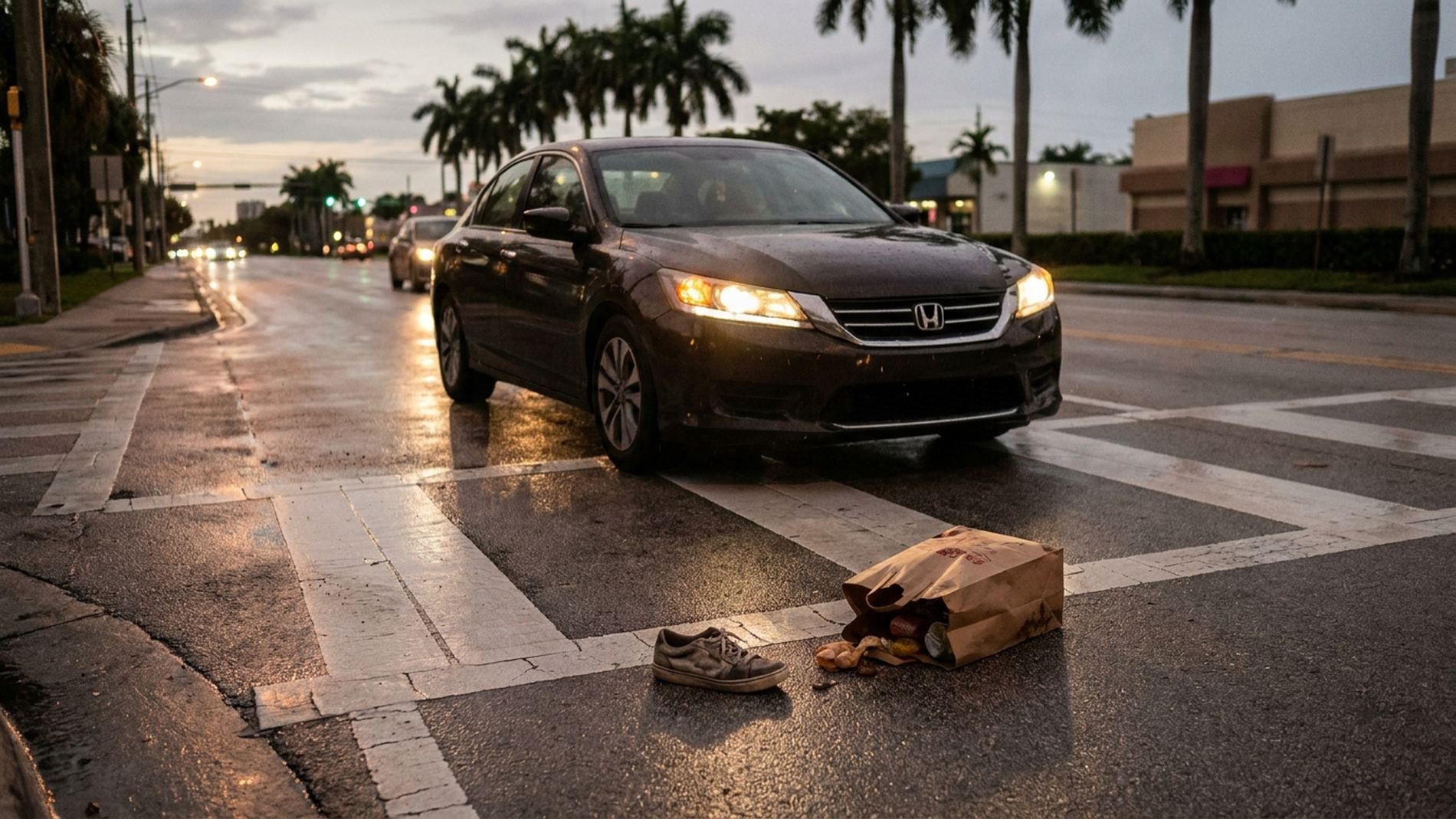 Pedestrian accidents
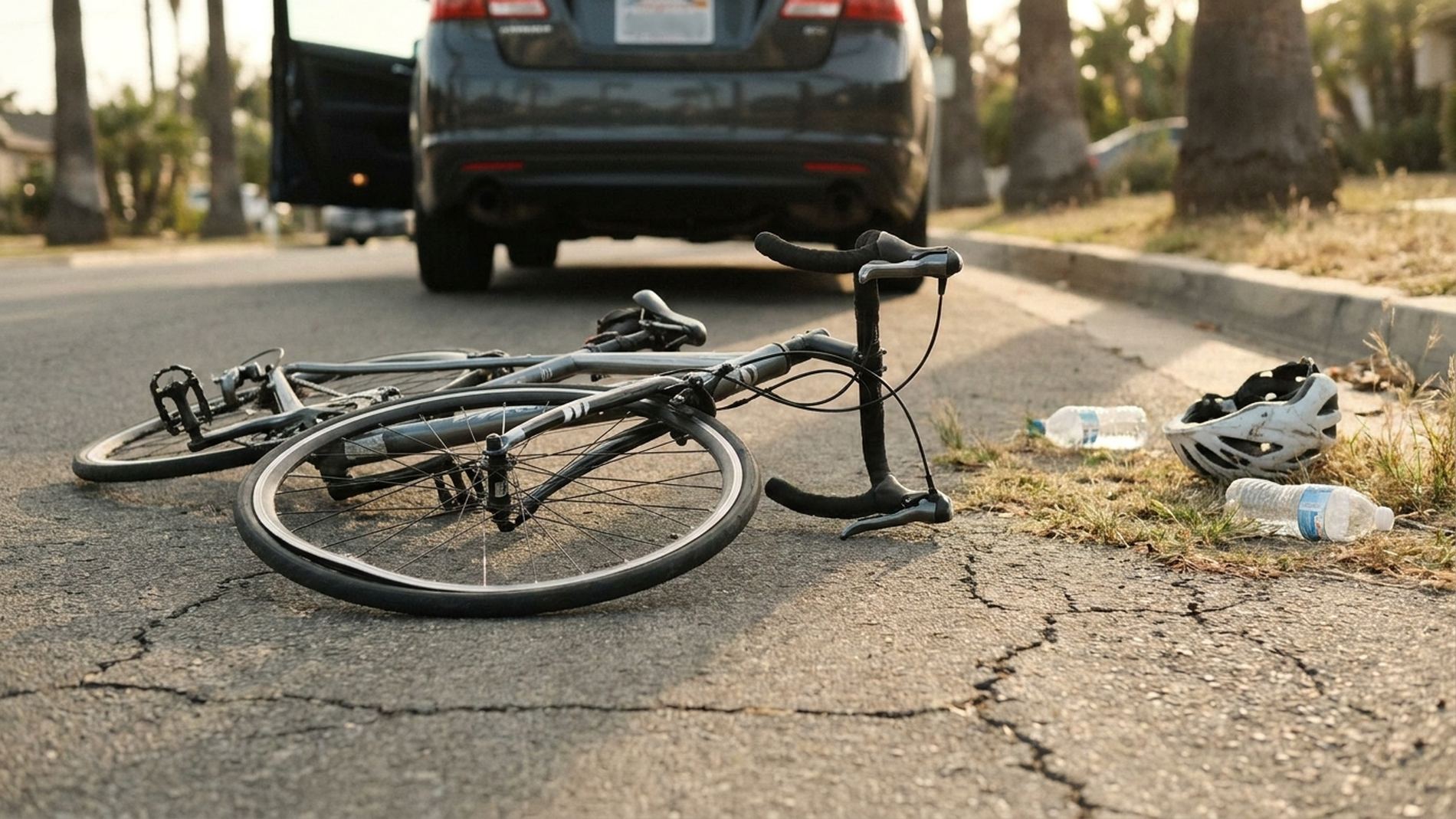 Bicycle accidents
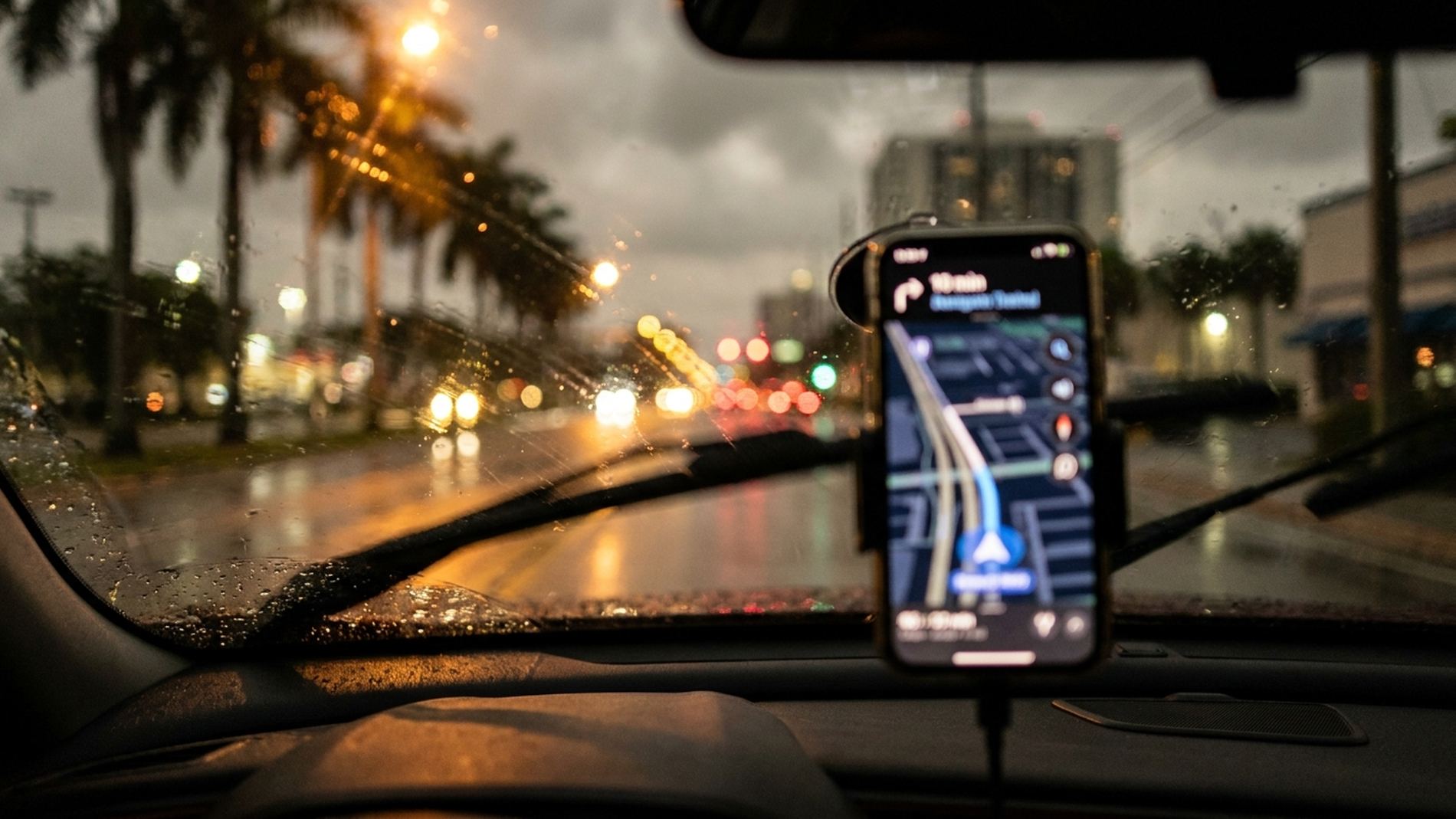 Rideshare accidents
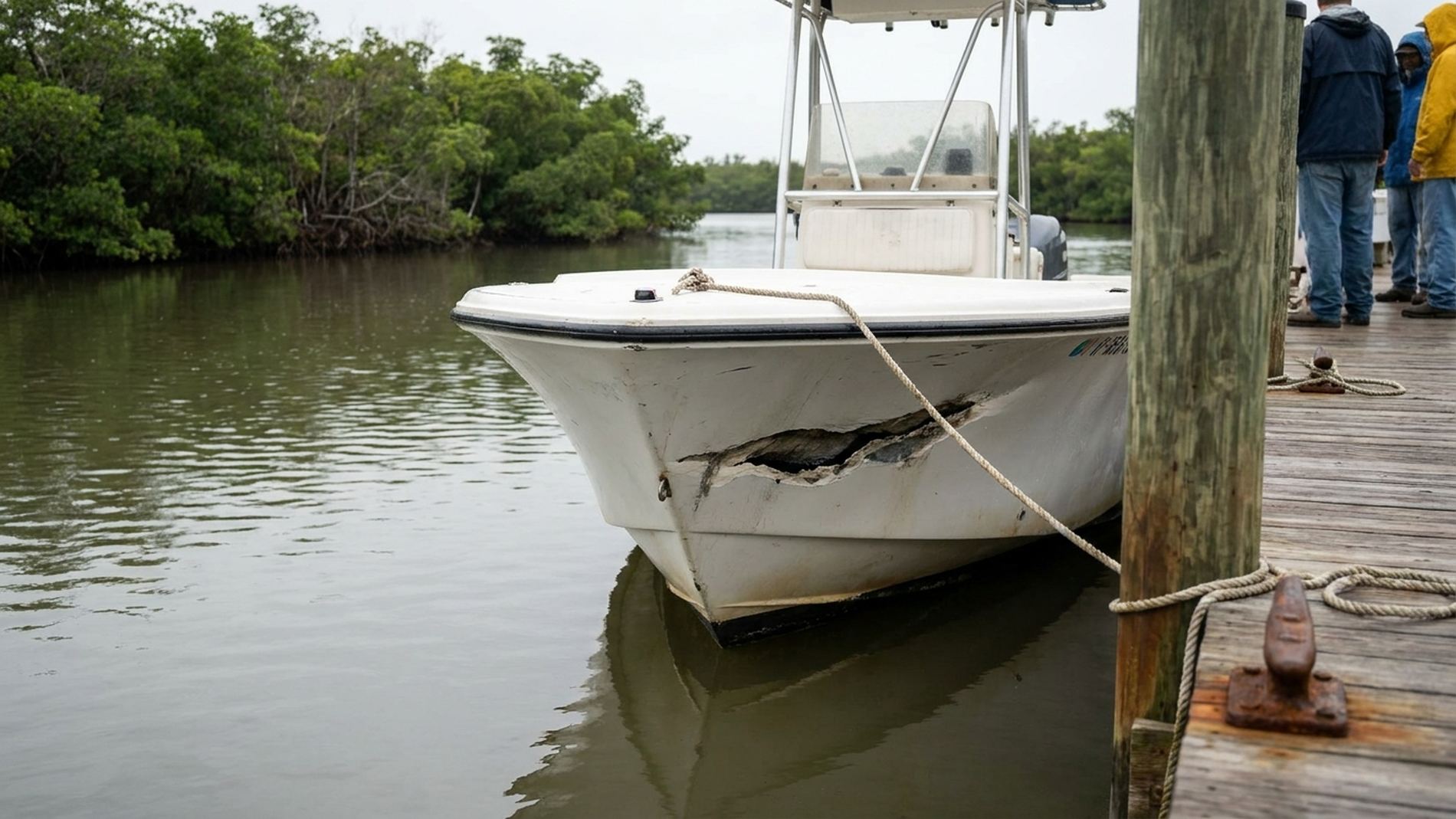 Boat accidents
The dividing line is Florida’s no-fault scheme. In a car, truck or rideshare crash your own PIP pays first regardless of fault, and section 627.736(1)(a) conditions it on initial care within 14 days of the crash — a window that closes whether or not you knew about it. The same $10,000 is a shared medical-and-disability limit under subsection (1), so a serious injury consumes the medical side and the wage benefit is gone before it is paid. Then section 627.737(2) stands between a car-crash claimant and damages for pain and suffering unless the permanent injury threshold is met.
A motorcycle sits outside all of that, because of a definition: section 627.732(3) defines a “motor vehicle” as a self-propelled vehicle “with four or more wheels”. No PIP cushion, and no threshold to clear either. A pedestrian or a cyclist struck by a car is in a third position again, with their own PIP reaching them as a person rather than as a driver.
And where the at-fault driver has no coverage or not enough, the claim moves onto your own uninsured motorist coverage, which carries two traps written into section 627.727: certified-mail notice to the UM carrier before you settle with the liability carrier under (6)(a), and a credit set at the liability policy’s limits even if you settled for less, under (6)(c).
| Inside this group | What the fight is usually about |
|---|---|
| Car accidents | The threshold and the injury, far more often than who ran the light |
| Rear-end collisions | Almost never fault. The carrier’s position is that a low-speed impact cannot have done this |
| Hit and run | Finding coverage when there is no at-fault driver to sue |
| Uninsured motorist | Your own insurer, now adverse to you, and the notice and credit rules in s. 627.727 |
| Truck accidents | Preservation. Electronic data, logs and maintenance records that are routinely gone within weeks |
| Motorcycle accidents | Rider blame as a defense theme, with no PIP cushion underneath the medical bills |
| Pedestrian and bicycle | Whether you were where you were allowed to be, and which policy reaches a person on foot |
| Rideshare accidents | Which layer of coverage was switched on at that moment of that trip |
| Boat accidents | No scene, no report in the usual sense, and witnesses who left on other vessels |
Property and premises
Here the duty question is live, and Florida has written down what the owner has to have done.
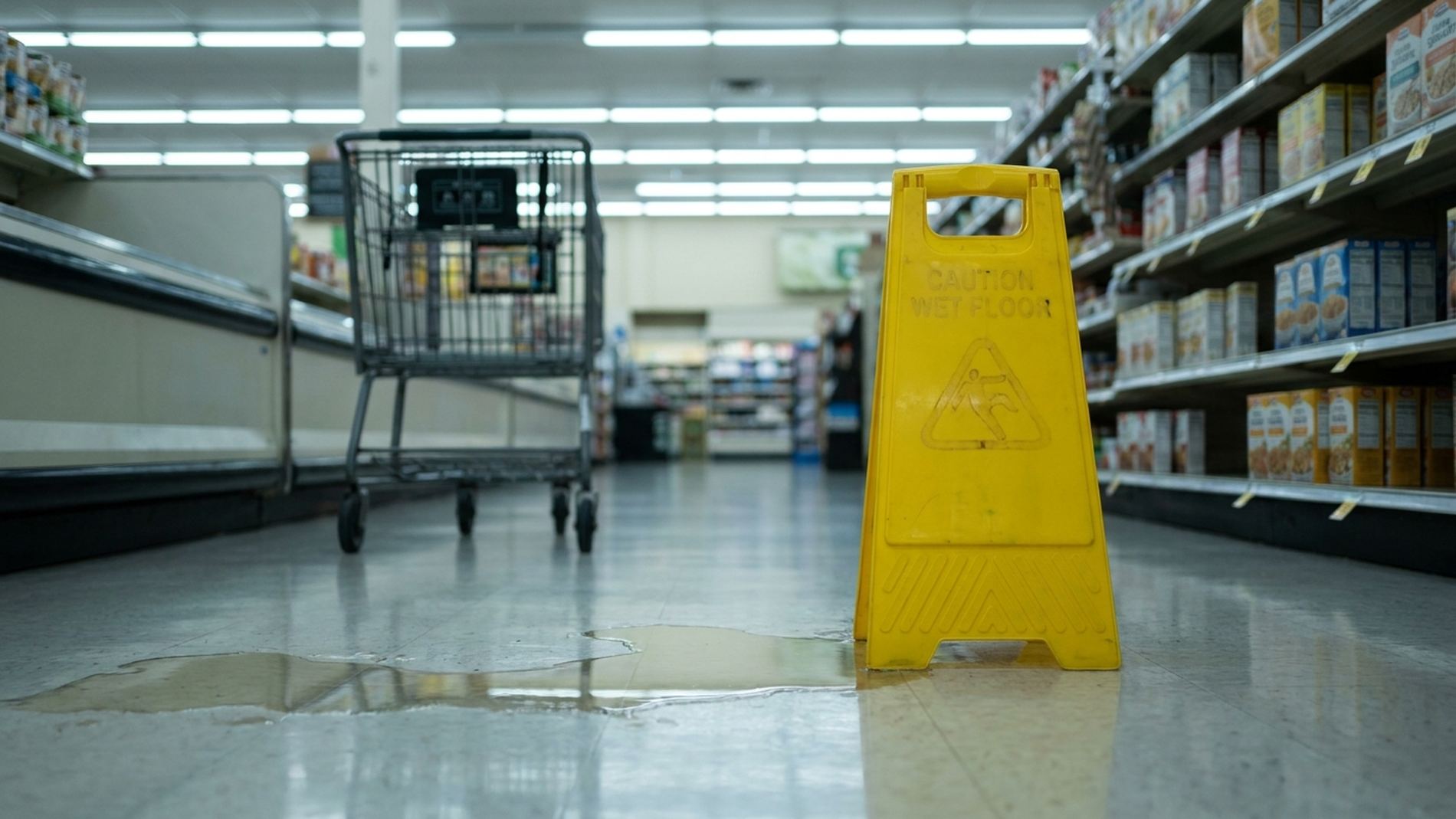

A fall in a store runs on section 768.0755, which requires a person who slipped on a transitory foreign substance in a business establishment to prove the business had actual or constructive knowledge of it. Constructive knowledge is proved circumstantially — that the condition existed long enough that it should have been discovered in the exercise of ordinary care, or that it occurred with regularity and was therefore foreseeable. Which turns the case into a documents case: sweep logs, inspection sheets, the state of the substance when you went down, and the footage that is overwritten on a two-week cycle unless someone demands it.
An assault at an apartment complex runs on something newer. Section 768.0706 gives a multifamily residential owner a presumption against liability for a third party’s criminal act where it has substantially implemented a specific list: lighting of at least 1.8 foot-candles at 18 inches above each parking-lot surface, security cameras at each entry and exit retaining footage for at least 30 days, a one-inch deadbolt on each dwelling door, a locked gate on a pool fence, lighted walkways and parking lots, a peephole, window and sliding-door locks, a crime prevention through environmental design assessment, and proof of training for employees. Under subsection (3) the burden of establishing all of it is the owner’s. Subsection (5) creates no private cause of action for failing to comply — the list is a defense, and read the other way, a checklist.
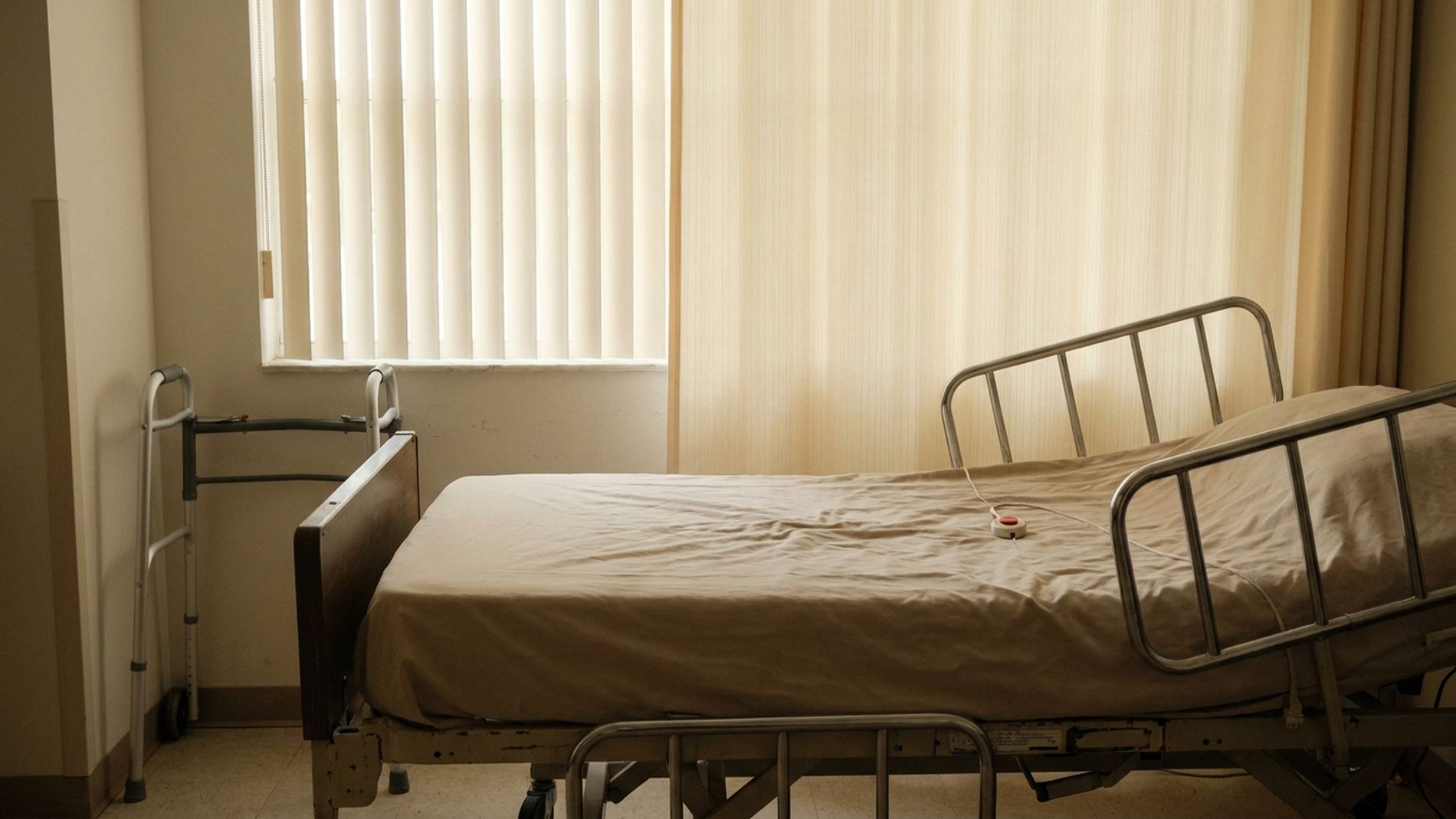
And a nursing home claim is a statutory claim before it is a negligence claim. Section 400.023(1) gives the resident the right of action for a violation of the rights in section 400.022, and section 400.0233(2) requires a 75-day presuit notice period before a negligence action can be filed at all.
| Inside this group | What has to be established |
|---|---|
| Slip and fall | Notice under s. 768.0755, almost always circumstantially |
| Premises liability | What the owner knew about a condition that was not a spill — stairs, railings, lighting, a pool |
| Negligent security | Foreseeability, and for a residential property, the s. 768.0706 list |
| Apartment complex assault | Each of the nine requirements, one at a time, with the burden on the owner |
| Nursing home neglect | Which resident right in s. 400.022 was violated, and the 75-day presuit clock |
| Bed sores | Whether the ulcer was avoidable — the federal rule puts that burden on the facility |
Serious injury and loss
Five claim types where the procedure in front of the case is sometimes harder than the case.
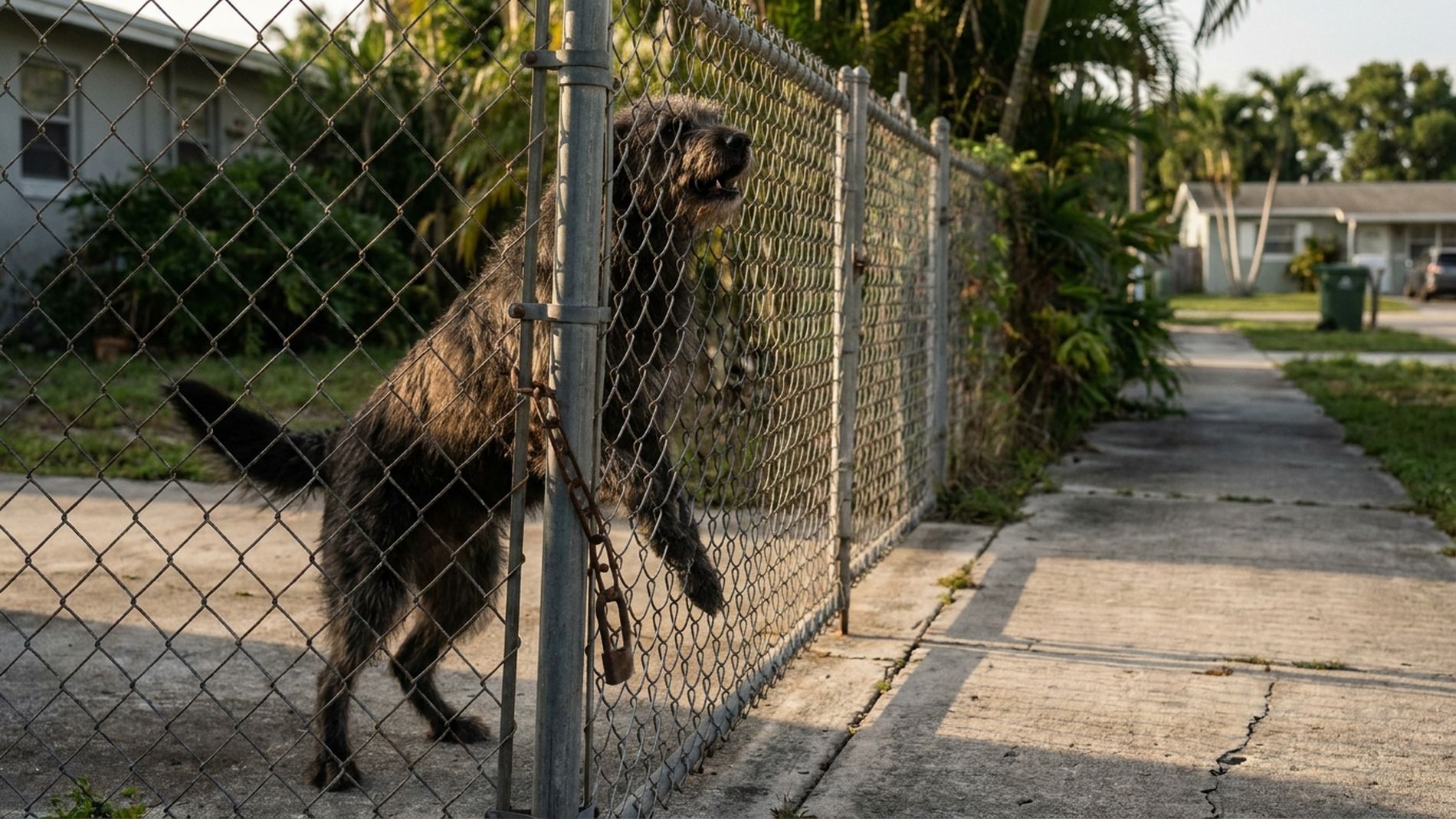

Dog bites are strict liability in Florida, and that surprises people on both sides. Section 767.04 makes an owner liable for a bite in a public place, or where the bitten person was lawfully on private property including the owner’s own, “regardless of the former viciousness of the dog or the owners’ knowledge of such viciousness”. The same section cuts the other way twice: the bitten person’s own negligence reduces liability by their percentage, and an owner who displayed a prominent, easily readable sign including the words “Bad Dog” is relieved — except as to a person under the age of six, or where the injury was proximately caused by the owner’s own negligent act or omission.
Medical malpractice is gated before it begins. Section 766.203(2) requires the claimant to investigate and to corroborate reasonable grounds with “a verified written medical expert opinion from a medical expert”, submitted at the time the notice of intent is mailed. Then section 766.106(3)(a): “A suit may not be filed for a period of 90 days after notice is delivered to any prospective defendant.” All of that has to fit inside the limitations period in section 95.11(5)(c), which is why a malpractice case that feels early is often already late.
Wrongful death is not the deceased person’s claim. Under section 768.20 the action is brought by the personal representative of the estate, for the benefit of the survivors and the estate, and section 768.21 sets out who those survivors are and what each may recover — which is not the same for a spouse, a minor child, an adult child and a parent. Families frequently discover this at the worst possible moment, which is one reason the first conversation is worth having before an estate is opened.
| Inside this group | What stands in front of the case |
|---|---|
| Dog bites | Strict liability under s. 767.04, then the sign defense and the claimant’s own share |
| Medical malpractice | A verified expert opinion and 90 days, before a complaint can be filed |
| Traumatic brain injury | Proving an injury that a scan may not show, against a carrier arguing there was no loss of consciousness |
| Wrongful death | A personal representative, and the s. 768.21 schedule of who recovers what |
| Product liability | Keeping the product, and the repose period in s. 95.031(2) |
What this firm does not handle
Worth stating plainly, because sending someone to the wrong lawyer wastes a month they may not have.
No workers’ compensation. No criminal defense. No family law. No dental malpractice. No property-damage-only claims — if your car is wrecked and nobody was hurt, that is a claim you can make yourself and you should not pay a percentage of it to anyone.
One point of confusion worth clearing up: a family law firm carrying the Shalhoub name shares the same building. That is the Law Offices of Robert M.W. Shalhoub, P.A. — Paul’s father’s practice, a different firm and a different kind of law. If you need that, or any of the others above, call anyway and Paul will tell you where to go. He does the same with injury claims that belong somewhere else.
There is no minimum case size, and no case is too small to get a straight answer about. Some of those answers are that a claim is not worth bringing, which is still the answer you called for.
Common questions
Does Paul Shalhoub handle anything other than injury cases?
No. Personal injury only, which is why the case list is short and the attention is not. A firm with four practice groups is a firm where your injury claim competes for attention with a divorce and a lease dispute.
What if my claim is not on the list?
Call anyway. The list covers what comes through the door most often, not the boundaries of Florida negligence law. If it is an injury claim Paul will tell you whether it belongs here, and if it does not, where it does.
Is there a minimum case size?
No. Paul takes the call and gives a straight answer either way, including when the answer is that the claim is not worth what pursuing it would cost you.
Who handles my case day to day?
Paul. He deals with the adjuster, takes the depositions and tries the case if it needs trying. The Florida Bar record for Bar #88300 lists the firm size as one, which is the checkable version of that.
Which of these claims has the shortest real deadline?
A claim involving a government body, by a wide margin, because section 768.28 requires written notice and then a six-month wait before suit, and missing the notice ends the claim. Medical malpractice and nursing home claims are next, because the presuit machinery — a verified expert opinion plus 90 days under chapter 766, a 75-day period under section 400.0233(2) — has to happen inside the limitations period, not after it.
Does it matter which of these labels my case gets?
Less than people expect. The label decides which statute governs notice and proof; it does not decide what the claim is worth. Two cases with the same label and the same liability can be worth very different amounts because one claimant needed surgery and one did not, or because one policy had limits of $25,000 and one had $1 million.
Can a single crash be more than one of these claims?
Routinely. A rear-end crash by a commercial van is a car case, a truck case and a vicarious liability claim against the employer, and if the van driver had no coverage it becomes an uninsured motorist claim against your own carrier as well. Each of those runs on different evidence with different deadlines, which is the argument for one attorney seeing all of it at once.
What happens on the first call?
Paul asks what happened, what the injuries are, who has treated you, what insurance exists on both sides and what you have already signed or recorded. Then he tells you whether there is a claim, what the next step is, and what the obstacle is. It is free and confidential, and it does not create an attorney-client relationship on its own — that begins only when the firm agrees in writing to represent you.
How long has Paul Shalhoub been licensed in Florida?
Since 22 March 2011, in the Fifteenth Judicial Circuit, with no discipline in ten years. That is not a claim about him; it is the Florida Bar’s own published record at Bar #88300, which also lists his federal admission to the Southern District of Florida.
Talk to Paul, not a case manager
Describe what happened and you will get a straight read on it, including when the answer is that you do not need a lawyer. Consultations are free and confidential. We advance case costs, and you owe no attorney’s fees or reimbursement of those costs unless we recover compensation for you.
Call (561) 208-5058 Free case review
Shalhoub Law Injury & Accident, 1011 N Olive Ave, West Palm Beach, FL 33401. This describes Florida law as of 27 October 2026 and applies to claims in Florida. It is general information, not legal advice, and reading it does not create an attorney-client relationship. Past results do not guarantee or predict a similar outcome.