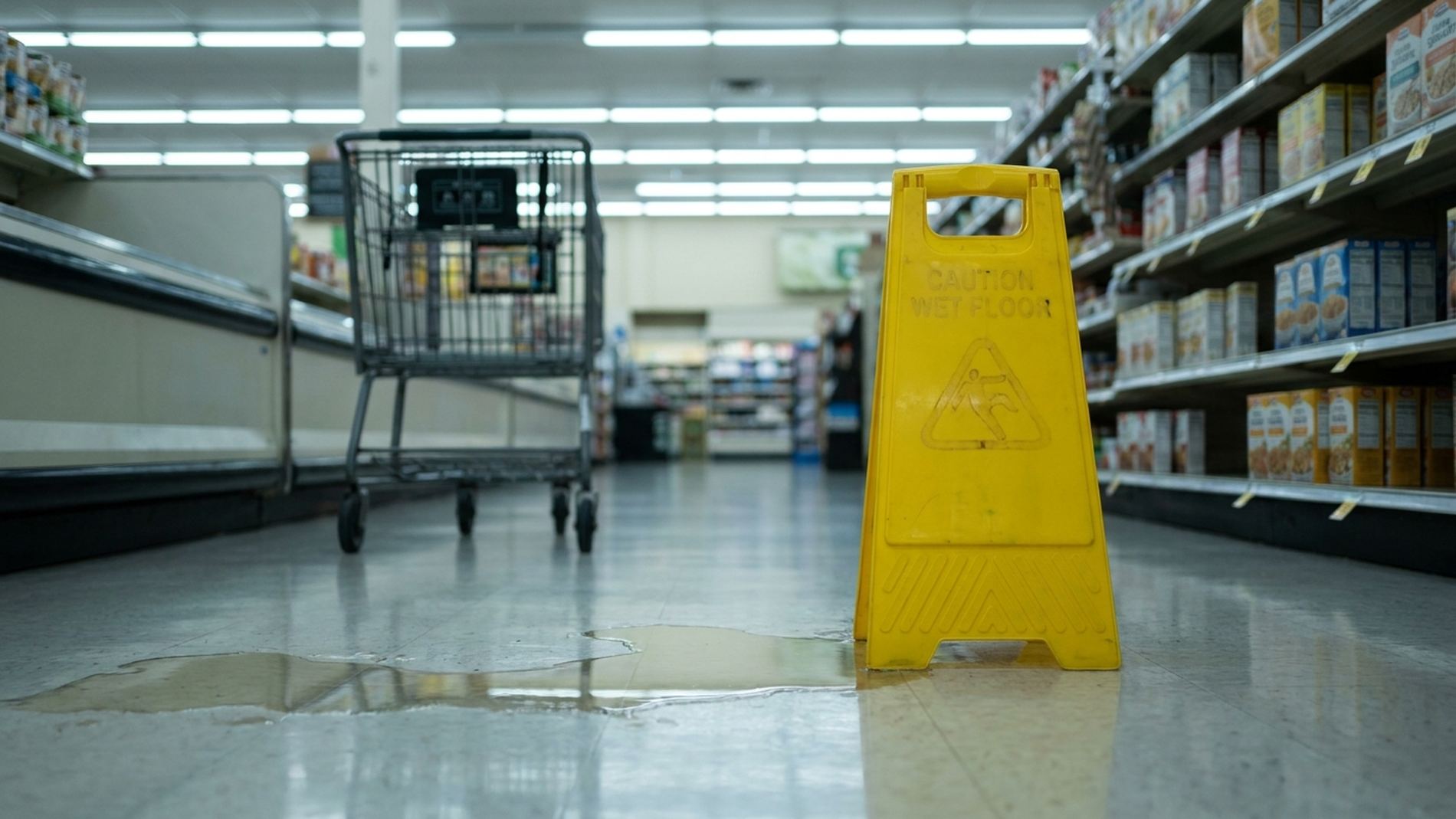
West Palm Beach slip and fall lawyer
Shalhoub Law Injury & Accident represents people injured in falls in stores and other businesses in West Palm Beach and throughout Palm Beach County. That includes proving the owner knew, or should have known, about the hazard under Florida’s slip and fall statute. Attorney Paul R. Shalhoub spent years defending insurance companies before he began representing injured people, and he handles every case himself, from the first call through trial.
Falling in a store is not the same as proving the store is responsible for it. One short Florida statute decides almost every one of these cases, and most of what you will read online about slip and fall claims does not mention it.
What separates a winning case from a losing one is almost always proof of how long the hazard had been on the floor. Two Florida appellate decisions turn on exactly that — in one the injured person lost, in the other she won — and the difference between them came down to evidence that existed for about ten minutes. Photographs of the floor, taken before anyone cleans it up, are the most valuable thing an injured person can produce.
Attorney Paul R. Shalhoub tried a slip and fall against Walmart to a jury verdict at six times the offer the company made shortly before trial. He also spent the early part of his career at an insurance-defense firm, which is where he learned how these claims get taken apart.
Your attorney, Paul R. Shalhoub
| Attorney | Paul R. Shalhoub — the sole attorney at the firm |
| License | The Florida Bar number 88300, admitted 22 March 2011. Verify on The Florida Bar |
| Relevant background | Began at a Florida insurance-defense firm. Tried a slip and fall against Walmart to verdict at six times the pre-trial offer, with fees and costs awarded |
| Who handles the case | Paul, start to finish. No other attorneys, no case managers |
| Who answers the phone | Korina Malone, lead trial paralegal, takes most first calls and puts you through. Clients also get Paul’s direct line |
| Office hours | Monday to Friday, 8:30 a.m. to 5:30 p.m. Calls and messages answered 24 hours |
| Consultation | Free and confidential, at the office, your home, hospital, phone or video. No need to wait for an incident report |
| Case costs | The firm advances them. You owe no fee and no reimbursement of costs unless it recovers compensation for you |
The statute that decides your case
Florida Statute 768.0755 governs every slip and fall on a spill, a liquid or a dropped object inside a business. It is two subsections long. Here it is, complete.
768.0755 Premises liability for transitory foreign substances in a business establishment.
(1) If a person slips and falls on a transitory foreign substance in a business establishment, the injured person must prove that the business establishment had actual or constructive knowledge of the dangerous condition and should have taken action to remedy it. Constructive knowledge may be proven by circumstantial evidence showing that:
(a) The dangerous condition existed for such a length of time that, in the exercise of ordinary care, the business establishment should have known of the condition; or
(b) The condition occurred with regularity and was therefore foreseeable.
(2) This section does not affect any common-law duty of care owed by a person or entity in possession or control of a business premises.
Read the statute on the Florida Legislature’s site
Read subsection (1) again slowly. The burden is on you. It is not enough that you fell, that you were hurt, or even that the floor was genuinely dangerous. You have to prove the business knew about the hazard, or should have known about it, and failed to deal with it.
That was not always the law. In 2001 the Florida Supreme Court held in Owens v. Publix Supermarkets, 802 So. 2d 315, that a foreign substance on the floor created a rebuttable presumption of negligence and shifted the burden to the store to show it had exercised reasonable care. The Legislature removed that burden shift, first in 2002 and decisively with this statute in 2010. Any page telling you the store has to prove it was careful is describing law that was repealed fifteen years ago.
The five things you have to prove
Laid out in order, because the second and third are where cases are won and lost:
- The defendant is a business establishment. The statute reaches businesses. A condominium common area, a private home or a public sidewalk is governed by different rules.
- A transitory foreign substance caused the fall. Something that does not belong there, as opposed to a permanent feature of the building.
- The business had actual or constructive knowledge of it. Someone knew, or should have known.
- It should have taken action to remedy it. A separate clause in the statute, not a restatement of the third.
- The ordinary negligence elements the statute leaves alone — duty, breach, causation and damages — plus control of the premises. Florida courts describe a premises claim as a negligence claim with the added elements of possession or control and notice of the dangerous condition.
What a “transitory foreign substance” actually means
The statute uses the phrase without defining it, so the definition still comes from Owens, which remains good law on this point. The Court described it as “any liquid or solid substance, item or object located where it does not belong.” A puddle of water, a grape, spilled detergent, a dropped hanger, tracked-in rain. All of it qualifies.
Subsection (2) matters more than people think
The second subsection preserves every common-law duty a property owner already had. Florida courts describe the effect precisely: proof of the breach element is “statutorily constrained” by this section. The duty to maintain the premises in a reasonably safe condition did not go anywhere. That distinction is what allows a case to proceed on a theory the statute does not cover, such as a floor that was dangerous by design rather than because something was spilled on it.
The two ways to prove the store should have known
Actual knowledge means someone at the business knew. That is rare and usually easy. Constructive knowledge is where nearly every case is fought, and the statute gives exactly two routes.
Route one: the hazard was there long enough
The question is whether the condition existed long enough that ordinary care would have caught it. There is no bright-line number. The Fourth District Court of Appeal, which governs appeals from Palm Beach County, applies a reasonableness standard rather than a clock.
What that district has decided is instructive, because the numbers are short:
| About 2 minutes | Not enough. A yogurt container fell from another customer’s cart and the injured person slipped roughly two minutes later. The Fourth District reversed a jury verdict for the plaintiff (Publix Super Markets v. Safonte, Fourth District, Nos. 4D2023-0216 and 4D2023-0815, 20 June 2024) |
| 111 seconds | Not enough. The puddle had been on the concrete for 111 seconds (Speedway, LLC v. Cevallos, 331 So. 3d 731, Fla. 4th DCA 2021) |
So if you fell on something that had just been dropped, this route is difficult, and an honest assessment says so early rather than after a year of litigation.
Route two: it happened regularly
This is the prong almost nobody explains, and it is often the stronger one. You are not proving how long this particular spill sat there. You are proving the condition recurs.
The Fourth District has said what it takes: evidence of recurring or ongoing problems that could have resulted from operational negligence or negligent maintenance. The dispositive question becomes whether the store’s method of operation was itself negligent. A drink station with no mat that produces a puddle every afternoon, an entrance that floods whenever it rains and has done for years, a produce misting system that drips — those are regularity cases, and they do not depend on timing at all.
Two real cases, and what separated them
The clearest way to understand this statute is to compare a case that was lost with one that was won, because the difference is almost entirely about evidence that existed in the first few minutes.
The case that was lost: a grape, and no footprints
In Oliver v. Winn-Dixie Stores (Fourth District, No. 4D19-291, 19 February 2020) a customer slipped on a squished grape in dirty liquid with a speck of color in it. The store produced an employee affidavit and four time-stamped surveillance stills showing he had walked that exact spot at 6:54, 7:01, 7:03 and 7:10 p.m. and each time the floor was clean and dry. She fell at 7:23.
What sank the claim was what the floor did not show. There were no cart tracks, no footprints, no track marks through the liquid — only her own slip mark. Summary judgment for the store was affirmed. The court noted the contrast with an earlier case where wheel tracks through a liquid did establish duration.
The case that was won: a big puddle with a source
In a July 2026 decision, the Fifth District reversed summary judgment for Publix where the customer slipped in what she described as a pile of water about four feet by four feet, her husband saw a leaking float device in the aisle, and a store employee was in the immediate vicinity (Christie v. Publix Super Markets, Fifth District, Case No. 5D2025-1184, 17 July 2026).
Three facts did the work: the size of the puddle, an identifiable source for it, and an employee nearby. Florida courts are more willing to find constructive knowledge when staff were in the area, because a jury can reasonably infer that someone should have seen a visible hazard.
What that means for the ten minutes after you fall
The difference between those two outcomes is evidence that only exists briefly. If you are physically able, or if someone with you is:
- Photograph the substance before anyone cleans it. Wide shot and close-up.
- Photograph the edges of it. Drying rings, dirt, melting, discoloration and footprints or cart tracks through it are how duration gets proven.
- Photograph the source if you can see one — a leaking cooler, a dripping ceiling tile, a case of product, a float or dispenser.
- Photograph who is nearby, including employees and where they were standing.
- Report it before you leave and ask for the incident report number. Do not give a recorded statement about how it happened.
- Keep the shoes you were wearing, unwashed. Footwear becomes a defense argument.
- Get the names of witnesses, including other customers, not just staff.
Surveillance video is usually the whole case, and most systems overwrite themselves within days. A written demand to preserve it, sent to the store and its corporate owner quickly, is the single most useful thing that can happen in week one.
When this statute does not apply at all
Section 768.0755 governs falls on a transitory substance in a business establishment. A great deal of what people call a slip and fall is not that, and the rules are different — often better for the injured person.
| A condominium or apartment common area | Owned by an association or a landlord rather than a business establishment. Common-law premises liability applies, without the statute’s knowledge requirement in the same form |
| A private home | Ordinary premises liability, usually against a homeowner’s insurance policy |
| A public sidewalk, park or government building | A claim against a city or county, with its own notice requirements and shorter deadlines |
| A fall caused by the building itself | A broken stair, a missing handrail, a raised slab, bad lighting. That is not a transitory substance at all, and subsection (2) expressly preserves the duty to maintain the premises |
| A fall caused by an employee | If a worker created the hazard, the knowledge question changes entirely |
Getting this classification right at the start changes what has to be proven, which is why the first conversation matters more than people expect.
If you fell on government property
Claims against a Florida city, county or agency run through section 768.28, which requires written notice to the agency before suit can be filed and sets its own time limits, shorter and stricter than an ordinary negligence claim. The requirements are specific enough that they should be handled by a lawyer rather than from a web page. If your fall happened on a public sidewalk, in a park, at a government office or on transit property, say so on the first call.
The defenses you will actually face
“It was open and obvious”
This is the most common response, and it is more limited than it sounds. Florida law treats it as two separate duties: a hazard being obvious can discharge a property owner’s duty to warn about it, but it does not by itself discharge the duty to maintain the premises in a reasonably safe condition. Those are different obligations, and a case can survive on the second even when the first is conceded.
“You were partly at fault”
Section 768.81(6) provides that a party found more than 50 percent at fault for their own harm recovers nothing. At or below that line, your recovery is reduced by your percentage rather than barred. Expect arguments about your footwear, your phone, whether you were looking where you were going, and whether you had any reason to be in that part of the store.
“Another customer caused it”
This one is underappreciated. A store can point at the customer who dropped the item and ask the jury to assign fault to that person, even though they are not a defendant. In Safonte the jury assigned 40 percent to Publix and 60 percent to the customer who dropped the yogurt. Combined with the 50 percent bar, apportionment is a real risk that has to be planned for from the beginning.
What the store has that you do not
Most of the evidence in a slip and fall case belongs to the defendant. Getting it is procedural work that starts the moment a case is filed.
| Surveillance video | Usually decisive, and usually overwritten within days unless someone demands it is kept |
| The incident report | Written by the manager on the day, often before anyone has decided to be careful about wording |
| Inspection and sweep logs | The records showing when the area was last checked. In Oliver these, plus video stills, ended the case |
| Prior incidents at that location | The heart of a regularity case under subsection (1)(b) |
| Work orders and maintenance records | How long a leak or a worn surface had been known |
| The insurance policy | Under Florida’s initial-disclosure rule, effective 1 January 2025, a defendant must produce its insurance agreements early in the case without being asked for them |
The store already holds the video, the incident report and the inspection log. You have two years and no way to compel any of it until someone files. That asymmetry is the reason to call early rather than late.
The deadline
A negligence claim that accrued after 24 March 2023 must be filed within two years under section 95.11(5)(a). Claims that accrued on or before that date remain governed by the previous four-year rule. Claims against a government body follow section 768.28 instead and are shorter still.
Four years is still printed on Florida law firm websites, including pages ranking for this search in West Palm Beach. Someone relying on that for a 2024 fall would be a year and a half late.
Where these falls happen in Palm Beach County
| Supermarkets and big-box stores | Produce departments, drink stations, freezer aisles and entrances in the rain. The classic § 768.0755 case |
| Restaurants and bars | Kitchen run-off, drink spills at closing time, and the salad-bar pattern Florida courts have treated as a regularity case |
| Hotels and resorts | Pool decks, lobbies during storms, bathroom floors |
| Condominium common areas | Not a business establishment, so the statute does not govern — a distinction worth getting right early |
| Parking lots and garages | Often a surface-condition case rather than a substance case, with lighting and maintenance in issue |
| Public sidewalks and parks | A government claim under section 768.28 |
If suit is filed, a Palm Beach County case is generally brought in the Fifteenth Judicial Circuit at the main courthouse, 205 N Dixie Highway in West Palm Beach, about a mile from this office.
The injuries, and why they decide the value
A fall onto a hard floor from standing height is not a minor mechanism of injury, particularly past about sixty.
| Hip and pelvis fractures | The injury that most often changes how someone lives. Surgery, then rehabilitation, and frequently a permanent loss of independence |
| Wrist, elbow and shoulder fractures | From the instinct to break the fall. Common, and often requiring hardware |
| Head injuries | Including concussion and bleeding on the brain, which can appear hours later. Anyone on a blood thinner who hits their head should be evaluated the same day |
| Spine injuries | Compression fractures, disc herniations, and aggravation of degeneration that was present but silent before the fall |
| Knee injuries | Meniscus and ligament damage from a twisting fall |
Paying for treatment before the case resolves
Unlike a car crash, there is no personal injury protection coverage in a slip and fall. That is one of the most practical differences between the two, and people are often caught out by it. Health insurance generally pays, subject to a lien that has to be dealt with out of any recovery. Where there is no health coverage, some providers will treat on a letter of protection, agreeing to wait for payment until the case ends. Those arrangements are now subject to specific Florida requirements about disclosure, and they should be discussed with a lawyer before they are signed rather than afterward.
Pre-existing conditions
Arthritis, an old back injury or prior surgery is not a defense to a claim, though it will be argued as one. Florida law allows recovery for the aggravation of a pre-existing condition. The way to protect that is to tell every doctor your complete history. Records that look like a concealed history do far more damage than the history itself.
Why Palm Beach County produces so many of these cases
This is an older county than Florida as a whole, and falls land hardest on older people.
26.1 percent of Palm Beach County residents are 65 or older, compared with 22.8 percent statewide (U.S. Census Bureau QuickFacts, Vintage 2025 estimates). That gap shows up in the injury data. In 2025 there were 7,903 hospitalizations from non-fatal unintentional falls in Palm Beach County, a rate of 507.9 per 100,000 against a Florida rate of 404.8 (Florida Department of Health, FLHealthCHARTS). The county rate is statistically significantly higher than the state’s.
Fall-related hip fracture hospitalizations among residents 65 and over came to 2,178 in 2025, a rate of 551.1 per 100,000 in that age group against 509.0 statewide. The health department asks that rates built on small numbers be read carefully, and that coding changes over time be kept in mind when comparing years.
None of that decides an individual case. It explains why a fall here is so often a serious injury rather than an embarrassment, and why defense lawyers work so hard on the argument that an older person simply lost their footing.
A rule change in 2025 that helps you
Florida changed its civil discovery rules effective 1 January 2025, and the change is genuinely useful to injured people. No competing page we reviewed mentions it.
Under Rule 1.280(a) of the Florida Rules of Civil Procedure, once a case is filed each side must make initial disclosures without waiting for anyone to ask. For a defendant store that includes the people likely to have information about the incident, the documents and electronically stored information it may rely on, and — the part that matters most — a copy of any insurance policy under which an insurer may be liable to satisfy a judgment.
The deadline is 60 days after service of the complaint, and the rule says plainly that a party is not excused from disclosing because it has not finished investigating. Knowing what coverage exists early changes how a case is valued and negotiated, instead of being something you learn a year in.
What happens if the store loses the video
An honest answer, because this is widely misrepresented online.
Florida does not allow a separate lawsuit against the store for destroying evidence. The Supreme Court of Florida settled that in Martino v. Wal-Mart Stores, 908 So. 2d 342 (Fla. 2005), a case about a shopping cart and a videotape, litigated by West Palm Beach lawyers. The Court chose sanctions and an evidentiary presumption over an independent cause of action.
What that leaves is still meaningful. If evidence is lost or destroyed, a court can impose discovery sanctions, and where the loss genuinely hinders your ability to make out your case, a rebuttable presumption of negligence can apply. Whether a store has a duty to preserve footage before a suit is filed, absent a statute, rule or court order, is contested in Florida — which is precisely why a written preservation demand goes out early. The demand is what creates the obligation to argue about later.
If you have already asked a store for its footage and been refused, say so on the first call. It changes what has to happen next, and how fast.
Falls on city or county property
A fall on a public sidewalk, in a park or inside a government building is a different kind of claim, and two things surprise people.
Florida law does not make the neighboring business fix the sidewalk
There is no Florida statute making an abutting private property owner responsible for maintaining a public sidewalk. Responsibility sits with the government entity that has operation and maintenance responsibility for that right of way, and section 337.29(3) ties tort liability to exactly that entity, to the extent sovereign immunity has been waived. Identifying the correct defendant — city, county or state — is the first piece of work. One real exception: where a county has abandoned subdivision roads, section 336.125 can place sidewalk maintenance on the homeowners’ association, which matters across this county’s gated communities.
Public records will get you a lot, but not the claims file
Florida’s public records law lets you obtain inspection records, work orders, maintenance logs, prior complaints about the same location and incident reports held outside a risk-management file. But section 768.28(16)(b) makes claims files maintained by a government risk-management program confidential and exempt until all litigation and settlement arising from the incident concludes. Expect to get the maintenance history and not the adjuster’s file.
One more thing a defense lawyer will raise: section 316.130(3) says that where sidewalks are provided, a pedestrian should not walk on the roadway. If you were in the street because the walk was blocked or unusable, that fact needs to be documented early.
What a slip and fall claim is worth
Nobody can tell you from a web page, and a firm that offers a number before seeing your medical records and the store’s evidence is guessing. What can be said honestly is what moves it: how badly you were hurt and whether the injury is permanent, whether you were treated promptly and consistently, how strong the constructive-knowledge evidence is, how much fault a jury would assign to you, and what insurance exists.
Prior results do not guarantee a similar outcome. Every case turns on its own facts, its venue and the coverage that actually exists.
Common questions
Can I sue a store just because I fell?
No, and this is the single most common misunderstanding. Under section 768.0755 you must prove the business knew about the hazard or should have known about it and failed to deal with it. Falling, by itself, proves none of that. What proves it is evidence about the condition — how long it was there, where it came from, and whether it happens regularly.
How long does a spill have to be on the floor?
There is no fixed number. The test is whether ordinary care would have caught it. The Fourth District has held that about two minutes was not enough, and that 111 seconds was not enough. Longer periods, or a hazard with dirt, tracks or drying edges, are a different case.
What if nobody knows who spilled it?
That usually does not matter. The question is what the business knew or should have known, not who caused it. The regularity route matters here too: if that kind of spill happens often at that spot, you may not need to prove anything about this particular one.
The store says the hazard was obvious. Is my case over?
No. Obviousness can discharge the duty to warn you about a hazard, but it does not automatically discharge the duty to keep the property reasonably safe. Those are two separate duties under Florida law, and a claim can proceed on the second.
Can the store blame the customer who dropped it?
Yes, and they do. A jury can assign fault to a non-party who created the hazard, which reduces what the store pays. In one Fourth District case the jury put 60 percent on the customer who dropped the item and 40 percent on the store.
I fell in a condo lobby, not a store. Is it the same law?
No. Section 768.0755 applies to business establishments. A condominium common area, an apartment building or a private home is governed by ordinary premises liability, which asks a somewhat different question. Say where you fell on the first call, because the classification changes what has to be proven.
I waited a few days to see a doctor. Does that ruin it?
It is a problem, not an ending. Gaps in treatment get read as evidence you were not badly hurt, whatever the real reason. The practical answer is to get evaluated now and be straightforward about the delay rather than explain it later under oath.
How long do I have to file?
Two years for a claim that accrued after 24 March 2023, under section 95.11(5)(a). Earlier claims follow the old four-year rule. A claim against a city, county or state agency runs under section 768.28, with its own written notice requirement and shorter limits.
What if I was partly at fault?
You can still recover if your share is 50 percent or less, reduced by your percentage. Above 50 percent, section 768.81(6) bars recovery entirely.
How much is a slip and fall case worth in Florida?
There is no formula, and anyone quoting one before seeing your records is selling something. The inputs are the severity and permanence of the injury, whether treatment was prompt and consistent, the strength of the evidence that the business should have known about the hazard, the share of fault a jury would assign to you, and the insurance available. A fractured hip with surgery and a clear constructive-knowledge case is a different claim from a bruise with no video.
The store’s insurance company called me. Should I give a statement?
Not before you have spoken to a lawyer. A recorded statement taken in the first days is taken while you are still medicated, before anyone knows the full extent of the injury, and the questions are built around your share of fault — what shoes you had on, whether you saw the sign, what you were looking at. You are not required to give one to the other side’s insurer.
The store had me fill out a form. Did I sign away my claim?
An incident report is normally just that, and filling one out is usually helpful because it fixes the date, the location and the fact that you reported it. What matters is whether you signed anything described as a release or a settlement. If you did, bring it in and have it looked at, because releases can close a claim permanently.
Do I need a lawyer for a slip and fall?
For a minor fall with no real injury, often not. The honest threshold is whether you were treated, whether the business is denying it knew about the hazard, and whether evidence exists that someone has to go and get. The pieces that decide these cases — surveillance video, inspection logs, prior incident history at that location — are all in the defendant’s hands and have to be demanded, usually in litigation.
What does it cost to hire a lawyer?
The consultation is free and confidential. The firm advances case costs, and you owe no attorney’s fee and no reimbursement of those costs unless it recovers compensation for you.
Related claims
Injuries on someone else’s property, handled by the same attorney in the same office. See every practice area



Talk to Paul about your fall
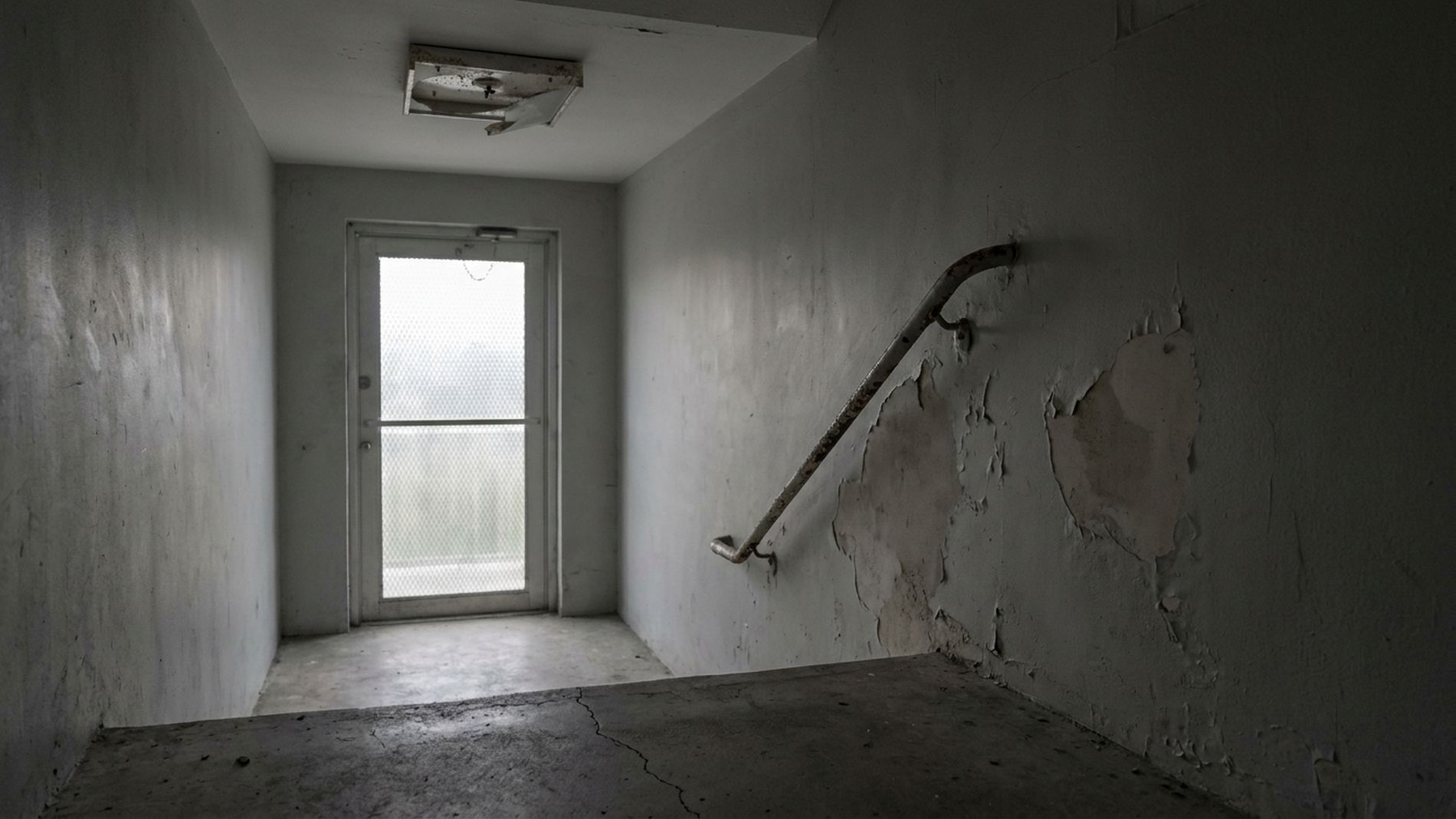
Free, confidential, and with the attorney who would handle the case. If it happened recently, the store’s video is already on a countdown.
Call (561) 208-5058 Free case review
This page describes Florida law as of 21 October 2026 and applies to claims in Florida. It is general information, not legal advice, and reading it does not create an attorney-client relationship.