West Palm Beach negligent security lawyer
Shalhoub Law Injury & Accident represents people attacked on property that did not keep them safe in West Palm Beach and throughout Palm Beach County. That includes claims against the owners and managers of apartment complexes and other properties, including how the 2023 change affects what a case is worth. Attorney Paul R. Shalhoub spent years defending insurance companies before he began representing injured people, and he handles every case himself, from the first call through trial.
Someone attacked you on property that belonged to somebody else. The question this page answers is the one nobody explains plainly: when is the owner of that property legally responsible, and what did Florida change in 2023 that makes these claims harder than they were.
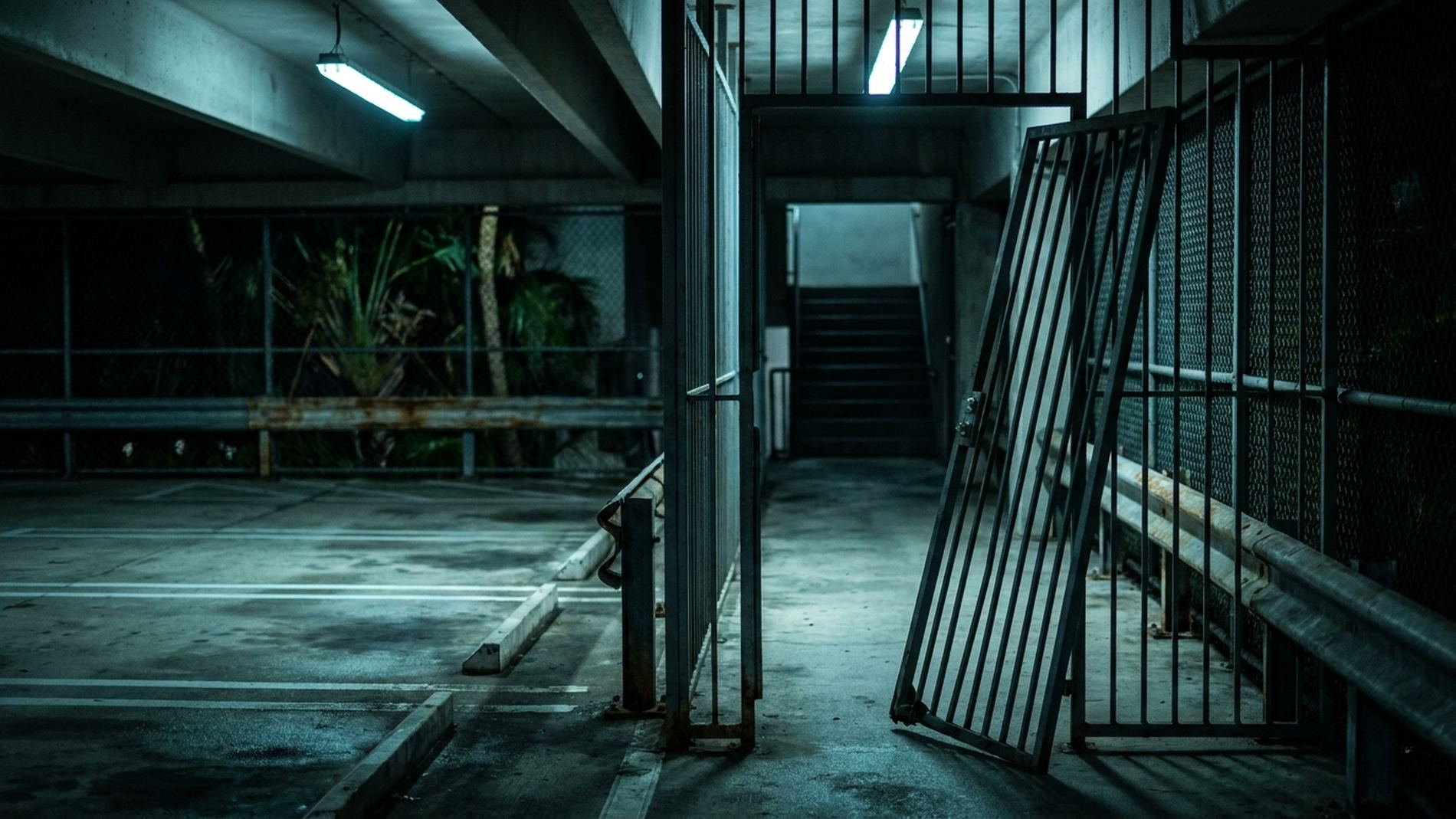
A negligent security claim is not a claim against the person who hurt you. It is a claim against the apartment complex, hotel, bar, store, garage or shopping center that knew its property drew violent crime and left the gate broken, the cameras dead, the lot dark or the door propped open anyway.
Florida courts analyze these cases as premises liability, not ordinary negligence, which means the duty you are owed depends on why you were on the property. The Fourth District Court of Appeal, which governs appeals from Palm Beach County, said so in Nicholson v. Stonybrook Apartments, LLC, 154 So. 3d 490, 493 (Fla. 4th DCA 2015), and the Sixth District described that as the settled approach across Florida districts as recently as April 2026.
Two statutes passed in March 2023 now decide most of what a case like this is worth. Neither one appears on a single competing West Palm Beach law firm page we reviewed. Both are explained below, in full, with the statutory language quoted and linked so you can read it yourself.
Your attorney, Paul R. Shalhoub
Everything a person reasonably wants to confirm before calling a law firm, in one place.
| Attorney | Paul R. Shalhoub — the sole attorney at the firm |
| License | The Florida Bar number 88300, admitted 22 March 2011. Verify on The Florida Bar |
| Relevant background | Began his career at a Florida insurance-defense firm before moving to plaintiff-side injury work. Premises cases are argued against carriers whose evaluation process he worked inside |
| Who handles the case | Paul, from the first conversation through resolution. No other attorneys, no case managers |
| Who answers the phone | Korina Malone, the firm’s lead trial paralegal, takes most first calls and puts you through. Clients also get Paul’s direct line, and when he cannot pick up, someone at the firm answers and he returns the call |
| Office hours | Monday to Friday, 8:30 a.m. to 5:30 p.m., at 1011 N Olive Ave. Calls and messages are answered 24 hours a day, including nights and weekends |
| Consultation | Free and confidential, with Paul directly — at the office, at your home, in the hospital, by phone or by video. No need to wait for a police report or medical records first |
| Attorney’s fee | Contingent — no attorney’s fee unless the firm recovers compensation for you |
| Case costs | The firm advances them. You owe no attorney’s fees and no reimbursement of those costs unless the firm recovers compensation for you |
| Premises results | A jury verdict against Walmart in a premises case at six times the offer made shortly before trial, with fees and costs awarded; a $100,000 settlement in a premises claim arising from a commercial fire. More on case results |
The 2023 change that decides what your case is worth
The single most important thing to understand about a Florida negligent security claim today is that the jury is now asked to put a percentage of fault on the criminal who attacked you.
Before March 2023 it could not. Florida’s comparative fault statute, section 768.81(4), says the statute “does not apply … to any action based upon an intentional tort.” An assault is an intentional tort, so the attacker’s share of the blame did not go on the verdict form.
Then the Legislature passed section 768.0701. The entire statute is one sentence:
“Notwithstanding s. 768.81(4), in an action for damages against the owner, lessor, operator, or manager of commercial or real property brought by a person lawfully on the property who was injured by the criminal act of a third party, the trier of fact must consider the fault of all persons who contributed to the injury.”
Read the first two words again. Notwithstanding means the intentional-tort exclusion no longer protects your claim. The jury now apportions fault among the property owner, you, and the person who committed the crime. And under section 768.81(3) judgment is entered against each defendant “on the basis of such party’s percentage of fault and not on the basis of the doctrine of joint and several liability.”
What that means in dollars
Take a verdict of $1,000,000. The jury decides the man who shot you bears 80 percent of the fault and the apartment complex that left the gate broken for two months bears 20 percent. The judgment against the complex is $200,000. The other $800,000 is assigned to a person who, in the ordinary case, has nothing and is in prison.
That is why the apportionment argument is the case. Not a side issue, not a detail for the end. A claim handled as though the 2023 law never passed is a claim being prepared for the wrong trial.
What the defense has to do to get there
The owner does not simply get to point at an empty chair. Section 768.81(3)(a) requires a defendant to “affirmatively plead the fault of a nonparty and, absent a showing of good cause, identify the nonparty, if known, or describe the nonparty as specifically as practicable.” And to get that person onto the verdict form, the defendant “must prove at trial, by a preponderance of the evidence, the fault of the nonparty in causing the plaintiff’s injuries.”
Where the attacker was never caught, the defense still carries that burden of proof about a person nobody can identify. That is a real argument, and it is one of the places these cases are won or lost.
If it happened at an apartment complex
A second 2023 statute gives apartment owners a presumption against liability if they did seven specific things. Most tenants have never heard of it. It is the first thing the complex’s lawyer will raise.
Section 768.0706 applies to “multifamily residential property,” which the statute defines as “a residential building, or group of residential buildings, such as apartments, townhouses, or condominiums, consisting of at least five dwelling units on a particular parcel.”
An owner that “substantially implements” the listed security measures “has a presumption against liability in connection with criminal acts that occur on the premises which are committed by third parties who are not employees or agents of the owner or operator.”
The seven physical measures, as the statute lists them
- A security camera system at points of entry and exit which records and keeps footage retrievable for at least 30 days.
- A parking lot lit to an average of at least 1.8 foot-candles per square foot at 18 inches above the surface, from dusk until dawn or on a photocell.
- Lighting in walkways, laundry rooms, common areas and porches, dusk to dawn.
- At least a 1-inch deadbolt in each dwelling unit door.
- A locking device on each window, each exterior sliding door and other non-community doors.
- Locked gates with key or fob access along pool fence areas.
- A peephole or door viewer on each unit door that has no window beside it.
And two requirements with hard deadlines that owners routinely miss
The statute also requires, by January 1, 2025, a crime prevention through environmental design assessment no more than three years old, “performed by a law enforcement agency or a Florida Crime Prevention Through Environmental Design Practitioner designated by the Florida Crime Prevention Training Institute of the Department of Legal Affairs,” with the owner remaining in substantial compliance with it.
And, also by January 1, 2025, crime deterrence and safety training for employees, with new hires trained “within 60 days after his or her hire date,” the curriculum reviewed at least every three years.
Four things about this statute that change the analysis
The owner carries the burden, not you. Subsection (3) is explicit: “the burden of proof is on the owner or principal operator to demonstrate that the owner or principal operator has substantially implemented the security measures.” You do not have to disprove compliance before your claim goes anywhere. They have to prove it.
It is a presumption, not immunity. The statute never says the presumption cannot be rebutted, and it is not a bar to suit.
It does not cover an attack by staff. The presumption reaches only crimes by third parties “who are not employees or agents of the owner or operator.” In March 2025 West Palm Beach police announced the arrest of a maintenance worker at a complex on North Australian Avenue on four counts of sexual battery against a resident. A case like that sits entirely outside this presumption.
It covers almost nothing else. Five or more units on one parcel. Not hotels, not bars, not stores, not parking garages, not a single-family rental. If your attack happened somewhere other than an apartment, townhouse or condominium complex, section 768.0706 is not in your case at all — though some owners’ lawyers will cite it anyway.
One more line worth knowing: subsection (5) says “this section does not establish a private cause of action.” You cannot sue a landlord simply for failing the checklist. The checklist matters because of what it does to the presumption, and because it is now the clearest public statement of what Florida expects an apartment owner to have in place.
Foreseeability: proving they knew
No Florida statute sets out what prior incidents you must show. That question is answered by case law, and the leading case is about a gated complex in Florida where the gate had been broken for two months.
In Sanders v. ERP Operating Limited Partnership, 157 So. 3d 273 (Fla. 2015), the Florida Supreme Court reviewed a directed verdict for an apartment owner after two residents were shot to death inside their apartment. The complex was “marketed as a ‘gated community’ with a gated front entrance.” In the three years before the murders there had been twenty criminal incidents on the property, including seven apartment burglaries, two robberies and ten motor vehicle thefts. On two occasions the gate had been broken and perpetrators followed residents onto the premises; one of those became an armed robbery, the other an assault. The entrance gate had been broken for roughly two months before the murders. The owner’s own manual recommended notifying residents when a significant crime occurred. No notices were sent.
The Court held that whether it “was foreseeable that the residents were in danger of harm because of criminals being allowed on the premises and that ERP’s failure to limit the unauthorized access caused the deaths of the decedents was an issue of fact for the jury to decide.”
It also addressed the argument property owners still make today — that the victims must have opened the door themselves. The Court answered that this “is something which should properly be considered by a jury in a comparative negligence analysis and is not a basis for a directed verdict.”
The framework underneath all of this comes from McCain v. Florida Power Corp., 593 So. 2d 500, 502 (Fla. 1992): duty asks whether the defendant’s conduct “foreseeably created a broader ‘zone of risk’ that poses a general threat of harm to others,” while proximate cause asks whether that conduct “foreseeably and substantially caused the specific injury that actually occurred.”
For businesses serving the public, the older rule from Stevens v. Jefferson, 436 So. 2d 33, 34 (Fla. 1983) still gets quoted: the proprietor of a bar, “although not an insurer of a patron’s safety, is bound to use every reasonable effort to maintain order among the patrons, employees, or those who come upon the premises and are likely to produce disorder.”
An honest note about where this law is heading. In April 2026 the Sixth District affirmed summary judgment for a landowner in a negligent security case, and a concurring judge wrote that the court “will need to articulate a rule of law” for when these claims proceed. Florida appellate courts are actively reworking this area. Any lawyer who tells you the outcome is settled is telling you something that is not true.
The evidence that disappears first
Surveillance video is usually the case. Most systems record in a loop and overwrite themselves within days.
Even the apartment-complex standard in section 768.0706 asks only that footage stay retrievable for 30 days. Many systems at bars, stores and garages hold far less. A written demand to preserve video, sent to the owner and the management company before that window closes, is the single most useful thing that can happen in the first week of one of these cases. It is also the step none of the competing pages we reviewed mentions.
What is already public, and what it costs
Florida’s public records law is more useful here than people expect. Section 119.011(3)(c) keeps certain information outside the active-investigation exemption, so the time, date, location and nature of a reported crime can generally be obtained even while a case is open. West Palm Beach police records, calls for service and incident reports can be requested, and an agency may charge for staff time where a request requires extensive work.
There is a local wrinkle that helps enormously, and it comes from the City itself. West Palm Beach’s chronic nuisance code lists, among the things a property owner should be doing, “regular requests for offense and incident reports relating to the property that are available through the records custodian of the police department records division.” The City has written down, in its own ordinance, that an owner can and should know the crime history at their own address. That is difficult to square with a defense built on not knowing.
What else gets gathered
- Calls for service and incident reports for the address and the blocks around it
- The lease, the security addendum, and any marketing that promised gates, cameras, patrols or a “gated community”
- Work orders and vendor invoices for gates, locks, lighting and camera repairs — the paper trail that shows how long something stayed broken
- Any crime prevention through environmental design assessment the owner was required to have
- Employee training records and hire dates
- Prior complaints from residents or staff, and any notices the owner did or did not send
- Code enforcement history and any recorded chronic nuisance service order
Security recordings are routinely overwritten within days. If you were attacked on someone else’s property, a written demand to preserve that footage is worth more than any argument made a year from now.
What West Palm Beach itself requires
This city regulates property security more specifically than the state does, and those local rules are a measuring stick for what a reasonable owner here should have been doing.
The chronic nuisance property code
Under Chapter 54, Article XIII of the City Code, a property is deemed to show a pattern of nuisance activity when the police department has responded to three or more nuisance activities within 30 days, or seven or more within six months. The list of qualifying activities includes discharging a firearm in public, trespass, loitering or prowling, criminal gang offenses and any other state or federal offense punishable by more than a year.
The ordinance then sets out twelve factors the City weighs when deciding whether an owner’s response is adequate, among them crime prevention through environmental design measures, hiring property management, hiring private security, installing security cameras, criminal background checks on prospective tenants, site visits at varying times of day and night, no-trespass affidavits, and written documentation of everything tried. Read as a list of what a property owner in this city is expected to consider, it is hard to improve on.
A detail worth knowing: these service orders get recorded in the public records, so a property’s history can be traced. And a point of contrast that matters if your attack happened outside the city limits — Palm Beach County has no equivalent ordinance. Its nuisance chapter sits reserved and repealed.
Bars and nightclubs
For alcohol establishments with extended hours, Chapter 6 of the City Code requires that on Friday and Saturday nights the establishment “provide interior security personnel of a number equaling one security person per each occupancy level of 150 occupants or any portion thereof.” Security staff must hold an ID card issued by the West Palm Beach Police Department and wear it while working, and the establishment must keep a nightly log of who was on duty, available to any law enforcement officer on request.
The same chapter says an alcoholic beverage establishment “shall not have three or more verified police incidents within any 30-day period,” and extends the permit holder’s responsibility to “any accessory premises, such as parking lots or open space or sidewalks adjacent to such premises.” Downtown venues can serve until 3:00 a.m. on weeknights and 4:00 a.m. on weekend mornings, and that privilege can be suspended.
If you were hurt outside a Clematis Street or Rosemary Avenue venue at closing time, the staffing log, the incident history and whether the attack happened on “accessory premises” are all questions with written local answers.
Parking lots and garages downtown
Chapter 86 requires that any public or private lot or garage in the downtown master plan area charging for evening parking have at least one attendant on duty Thursday, Friday and Saturday from sunset to 5:00 a.m., or until the last vehicle leaves, with a monitored electronic call system as the permitted alternative.
The same chapter carries the only numeric lighting table in the entire City Code. Garages are held to a basic minimum of 10 lux, roughly one foot-candle, with 20 lux on stairways and daytime ramps, and lots under an enhanced security standard to 5 lux with a maximum-to-minimum uniformity ratio of 15:1. A dark corner of a garage is not a matter of opinion here. It is measurable against a published standard.
Gas stations and convenience stores
Florida has had a dedicated statute for these for decades, and no competing page we reviewed uses it. The Convenience Business Security Act requires every covered store to have a camera system, a drop safe, a parking lot lit to at least 2 foot-candles per square foot at 18 inches above the surface, window signage giving a clear view of the register, height markers at the entrance and a cash management policy after 11 p.m.
The provision that matters most is the escalation rule. If a murder, robbery, sexual battery, aggravated assault, aggravated battery, kidnapping or false imprisonment has occurred at the store since July 1989 and arose out of its operation, the business must notify the state and implement at least one additional measure within 30 days of a judicial determination — two employees after 11 p.m., a secured transparent enclosure, a security guard, locking the premises and transacting through a pass-through, or closing overnight.
There is a safe harbor in section 812.174 worth being straight about: a business that actually provided approved robbery deterrence training to its employees cannot be held liable for ordinary negligence on account of that training. Any honest assessment of a convenience store case has to account for it.
And the two systems connect. The City’s chronic nuisance code lists a violation of the state convenience business security statute as a qualifying nuisance activity, so a store that ignores the state standard can be pulled into the city’s nuisance process.
Your own share of fault, and the 50 percent line
Florida is a modified comparative negligence state. Section 768.81(6) says any party “found to be greater than 50 percent at fault for his or her own harm may not recover any damages.” Below that line, subsection (2) reduces what you recover in proportion to your own share rather than barring it.
So at exactly 50 percent you still recover, halved. At 51 percent you recover nothing. Expect the defense to work on that number from the first recorded statement onward: why you were there, how much you had been drinking, whether you knew the person, whether you went somewhere you had been told not to go, whether you opened the door. Sanders is the answer to the last of those, and it is worth knowing that the Florida Supreme Court already rejected it as a ground for taking a case away from a jury.
If they say you were trespassing
Expect this where the attack happened at a complex where you did not live. Section 768.075 sharply limits what is owed to a trespasser, and section 768.0701 only reaches a person “lawfully on the property.” The statute defines invitation as the visitor having “an objectively reasonable belief that he or she has been invited or is otherwise welcome on that portion of the real property where injury occurs.” A guest of a tenant, a delivery driver, a customer, a visitor at the pool with a resident — all of these are arguments worth making, and worth making early, before a recorded statement makes them harder.
The deadline, and the mistake you will find on other websites
A negligence claim that accrued after March 24, 2023 must be filed within two years under section 95.11(5)(a). That date is when House Bill 837 became law, and the bill itself provides that the limitations change “appl[ies] to causes of action accruing after the effective date of this act.” A claim that accrued on or before that date remains governed by the former four-year provision. Wrongful death is likewise two years.
This matters because the four-year number is still sitting on live Florida law firm websites, including one ranking in West Palm Beach for this exact search. Someone relying on it for a 2024 incident would be a year and a half late.
Deadlines also move for reasons this page cannot responsibly generalize about — claims involving minors, claims against a government entity, questions about when a cause of action accrued. If any of that might apply to you, the only sensible step is to have the dates looked at rather than assume.
If you are not sure which deadline applies to what happened to you, that is five minutes on the phone rather than a guess from a web page.
Where these cases happen in Palm Beach County
The setting shapes the claim, because the rules that apply are different in each one.
| Apartment and condominium complexes | Broken gates, dead cameras, propped doors, unlit lots, no response to a pattern of incidents. The only setting where the section 768.0706 presumption applies, and only at five or more units on a parcel |
| Hotels and short-term rentals | Key control, corridor cameras, who can reach a guest floor. The multifamily presumption does not apply here |
| Bars and nightclubs | Guard staffing against the one-per-150 standard, the nightly security log, incident history, and attacks in the adjacent lot or sidewalk the permit holder is responsible for |
| Parking lots and garages | Attendant coverage on weekend nights downtown, measurable lighting levels, camera coverage at entries and stairwells |
| Gas stations and convenience stores | The Convenience Business Security Act standards, and whether a prior violent crime triggered the escalation requirement |
| Shopping centers and retail | Patrol coverage, lighting, camera placement, and what the center knew about its own incident history |
| Offices, warehouses and job sites | Access control and whether a known risk was ignored. Note that an injury at your own workplace usually runs through workers’ compensation, which this firm does not handle |
What the process actually looks like
A civil claim is separate from the criminal case. You do not need a conviction, or even an arrest, to bring one. The criminal case asks whether the state can prove guilt beyond a reasonable doubt. Your case asks whether a property owner failed to act reasonably about a danger it should have seen coming, by the more likely than not standard that governs civil claims.
If suit is filed, a Palm Beach County case is generally brought in the Fifteenth Judicial Circuit, at the main courthouse at 205 N Dixie Highway in West Palm Beach, about a mile from this office.
Practical realities worth hearing early rather than late. Insurance limits and who actually owns the property matter enormously, because many complexes are held by single-purpose entities. Security expert testimony about lighting levels, camera placement and industry standards is usually necessary. And the apportionment question in section 768.0701 shapes settlement value from the first mediation onward, which is why it belongs in the analysis on day one.
What a claim is worth, honestly
Nobody can value your case from a web page, and any firm that gives you a number before seeing your records and the property’s history is guessing. What can be said honestly is what moves the number: the severity and permanence of the injury, the medical documentation, the strength of the prior-incident history at that address, how plainly the owner’s own documents show it knew, the insurance available, and the share of fault a jury would assign to the attacker.
Prior results do not guarantee a similar outcome. Every case turns on its own facts, its venue, and the insurance coverage that actually exists.
Common questions
Can I sue if the person who attacked me was never caught or convicted?
Yes. The claim against the property owner does not depend on identifying or convicting the attacker. In fact, where the attacker is unknown, the defense still has to plead that person’s fault and prove it at trial by the greater weight of the evidence before a jury can assign them a share. An unsolved crime is not a dead claim.
Does the criminal bear responsibility too, or is the claim only against the owner?
Both, and since 2023 that is central. Section 768.0701 requires the jury to consider the fault of everyone who contributed, including the person who committed the crime, and each defendant pays only its own percentage. A large share assigned to an attacker who cannot pay reduces what is actually collectable, which is why the apportionment fight matters so much.
Can a tenant sue their own apartment complex after being attacked?
Yes, and the lease does not waive it. The complex will likely invoke the section 768.0706 presumption, and it carries the burden of proving it substantially implemented the seven security measures, the crime prevention assessment and the employee training. Many complexes cannot prove all of that, particularly the assessment and training requirements that took effect on January 1, 2025.
How many prior crimes does it take to prove they should have known?
There is no statutory number. It is a question of fact about foreseeability. In Sanders the property had twenty criminal incidents in three years and a gate that had been broken for about two months, and the Florida Supreme Court held that was for a jury to weigh. Fewer but closer incidents — two armed robberies in the same unlit stairwell, say — can carry more weight than twenty unrelated car break-ins.
What if I was partly at fault?
You can still recover as long as your share is 50 percent or less, reduced by your percentage. Above 50 percent, section 768.81(6) bars recovery. Expect the insurer to build its fault theory from your first recorded statement, which is a good reason to have the claim reviewed before giving one.
How long do I have to file?
Two years for a claim that accrued after March 24, 2023, under section 95.11(5)(a). Claims that accrued earlier are governed by the previous four-year rule. Other circumstances can change a deadline, so have the dates checked rather than relying on a general answer.
The complex says it has cameras and gates, so is my case over?
No. The statute gives a presumption, not immunity, and the owner has to prove it substantially implemented everything the section lists. A camera that was not recording, footage not retrievable for 30 days, a gate that had been broken for weeks, no crime prevention assessment or no trained staff — any of these is a reason the presumption may not hold.
Do I need a police report?
No, and you should not wait for one before calling. A report helps, but the evidence that decides these cases is usually the property’s own: surveillance video that overwrites in days, repair records, prior incident history. The sooner a preservation demand goes out, the more of it still exists.
What if the attacker was an employee of the property?
Then the apartment presumption in section 768.0706 does not apply at all, because it covers only crimes by third parties who are not employees or agents. Claims involving staff also raise hiring, screening and supervision questions that are separate from the security measures on the property.
What does it cost to hire a lawyer?
The consultation is free and confidential. The firm advances case costs, and you owe no attorney’s fee and no reimbursement of those costs unless it recovers compensation for you. Both are set out in a written agreement you read before signing.
Related claims
Injuries on someone else’s property, handled by the same attorney in the same office. See every practice area
What happens if you call
You speak to Paul, not an intake screener. The consultation is free, and he will tell you honestly whether you need a lawyer at all — some claims do not. If he takes the case, the preservation letters and the notices to the insurers go out that day, and the calls to you stop. You treat; he deals with the other side. Nothing is settled without your decision, and you see the net figure before you sign anything.

Talk to Paul about what happened
Free, confidential, and with the attorney who would handle the case. If the attack was recent, the surveillance video is already on a countdown.
Call (561) 208-5058 Free case review
This page describes Florida law as of 21 October 2026 and applies to claims in Florida. It is general information, not legal advice, and reading it does not create an attorney-client relationship.