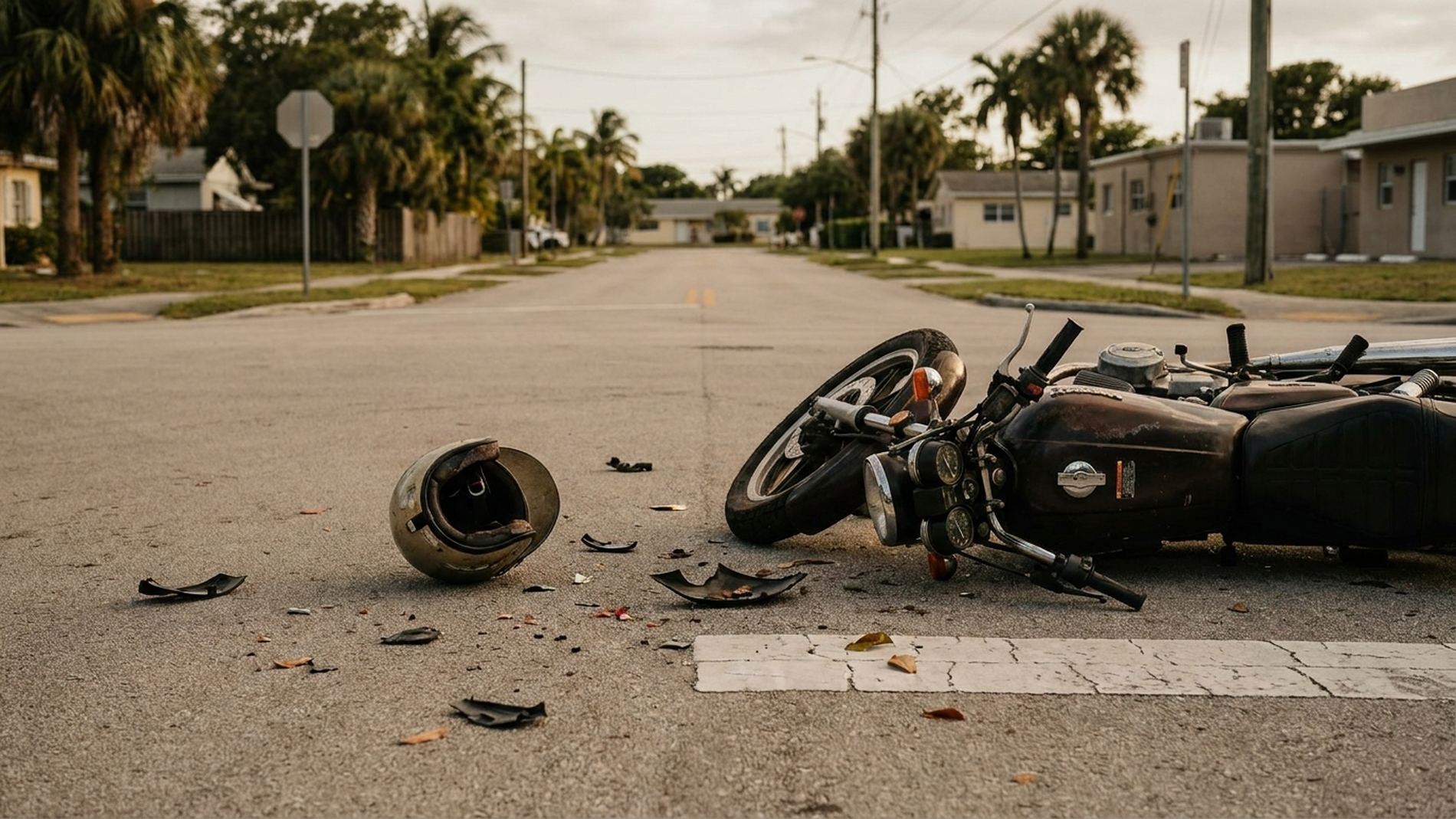
West Palm Beach motorcycle accident lawyer
Shalhoub Law Injury & Accident represents motorcyclists injured in crashes in West Palm Beach and throughout Palm Beach County. That includes claims where PIP does not cover the rider, and the injury threshold that governs what can be recovered. Attorney Paul R. Shalhoub spent years defending insurance companies before he began representing injured people, and he handles every case himself, from the first call through trial.
Florida’s no-fault system does not cover you on a motorcycle. The $10,000 of PIP benefits that pays a car occupant’s first medical bills, and the 14-day rule that goes with it, do not exist for a rider. That single fact changes how the whole claim has to be built.
It is written into the definition. Florida’s no-fault law applies to a “motor vehicle,” which section 627.732(3) defines as a self-propelled vehicle with four or more wheels. A motorcycle has two. It is not excluded by name anywhere — it simply never comes within the definition, so none of the no-fault benefits attach to it.
Attorney Paul R. Shalhoub spent the first part of his career at a Florida insurance-defense firm, working for the carriers. On a motorcycle case that matters more than usual, because the defense of these claims is unusually aggressive and starts with an assumption about the rider that has to be taken apart with evidence.
What Paul Shalhoub does on a motorcycle claim
The order matters more here than in a car case, because you have no no-fault benefits and the bills start arriving straight away.
| Works out who pays, before anything is billed | Health insurance, medical payments coverage on the bike, the $10,000 policy behind a helmet exemption, then uninsured motorist. Paying the wrong one first creates liens that cost real money to unwind. This is the first call, not the last |
| Finds every policy, including the ones you forgot | The at-fault driver’s liability if they carry any — Florida requires none — your own UM, any resident relative’s policy, and an employer’s if the other vehicle was working |
| Preserves the bike, the helmet and the gear | Before anything is repaired, sold or thrown out. A scuffed helmet answers a causation argument that is otherwise expensive to fight, and the gear is evidence of what actually happened to your body |
| Gets the other vehicle’s data | Passenger cars carry event data recorders that hold speed and braking in the seconds before impact. That data is routinely lost when the car is repaired or sold, and it is the cleanest answer to “he came out of nowhere” |
| Builds the permanency proof anyway | Because the threshold probably is in your case, whatever other pages tell you. The opinion has to be asked of a treating physician and written down, early, while the records still support it |
| Takes the adjuster off your phone | No recorded statement. The questions are built around the assumptions further down this page |
| Negotiates the liens so the net is real | A health plan’s reimbursement right can take a large share of a recovery, and what it is entitled to is frequently less than what it first demands |
| Files and tries it if the number is not fair | Same attorney through depositions, mediation and trial |
What you do: get treated, keep your appointments, and do not throw away the helmet.
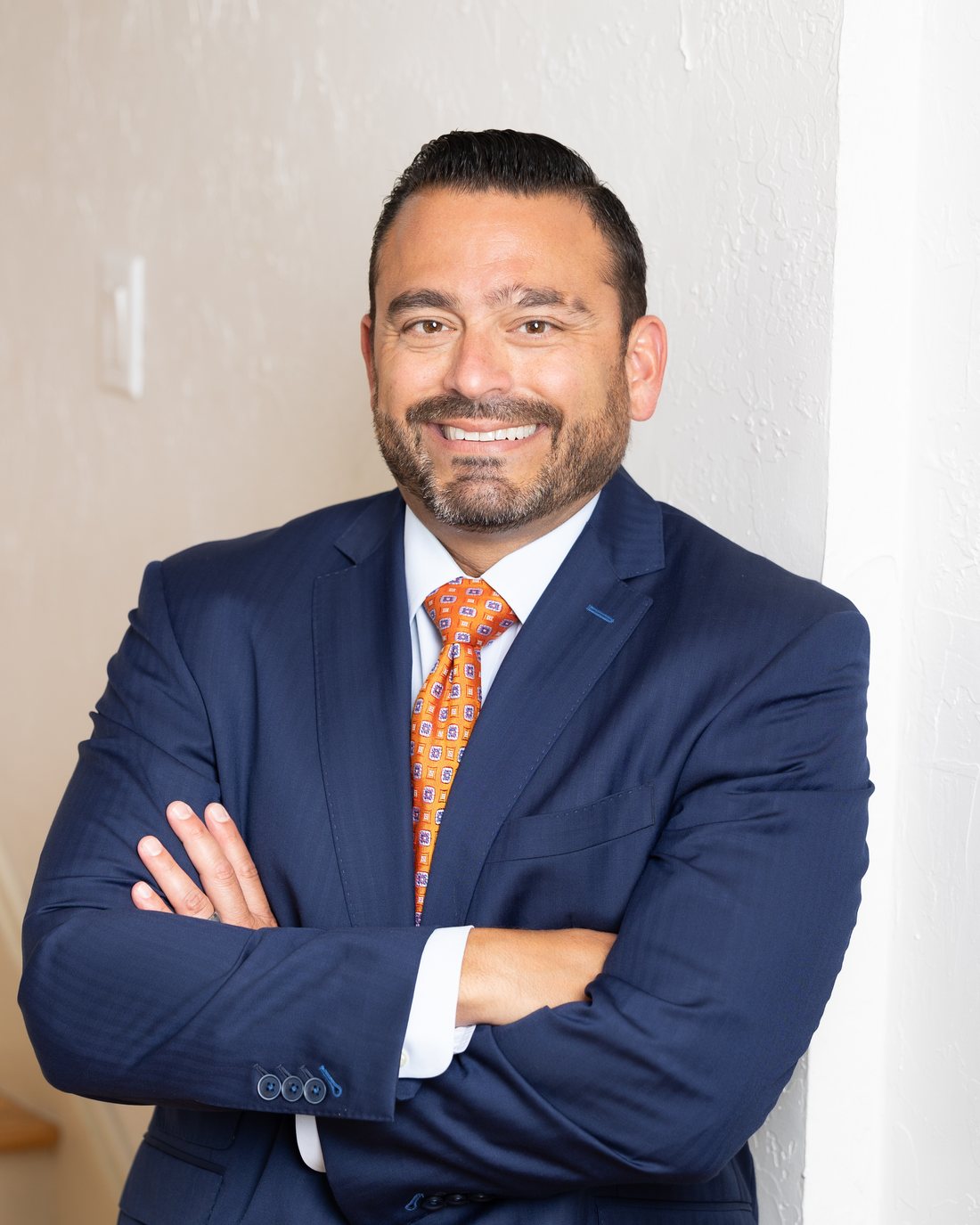
Why choose attorney Paul Shalhoub
Paul R. Shalhoub is the sole attorney at Shalhoub Law Injury & Accident, and he began his career at a Florida insurance-defense firm, working for carriers. On a motorcycle claim that is the credential that matters, because these files are defended harder than any other kind of road claim and they are defended on assumptions about the rider. Knowing which of those arguments a carrier actually believes, and which are reflex, comes from having sat on that side of the desk.
He has recovered policy limits of $500,000 and $250,000 in motor-vehicle claims and taken a case to a jury verdict at sixteen times the last pre-trial offer. Past results do not guarantee or predict a similar outcome, and no two cases are alike.
He is admitted to The Florida Bar (number 88300, admitted 22 March 2011) and to the United States District Court for the Southern District of Florida. He is also a former Mayor of Lake Clarke Shores and served three terms on its Town Council.
The practical difference is access. This is a single-attorney practice, so the lawyer who takes your first call is the one who orders the coverage, sends the preservation letters and tries the case.
More about Paul R. Shalhoub · Case results · All practice areas
Do you need a lawyer for a motorcycle accident?
An honest answer, including when it is no.
Where you probably do not. You were knocked off at walking pace in a parking lot, you are bruised, you were checked once and discharged, and the argument is about the fairing. That is a property damage claim.
Where you almost certainly do. You have no PIP, so any real injury means bills with no automatic payer and a coverage order somebody has to work out. Add any of these and it is not close: you were hospitalized; the driver says you came out of nowhere, were speeding or were lane splitting; the driver was uninsured; you were not wearing a helmet and someone has raised it; or somebody died.
The consultation is free and it is with Paul, so finding out which of those you are in costs nothing.
The practical details
| Attorney | Paul R. Shalhoub — the sole attorney at the firm |
| License | The Florida Bar number 88300, admitted 22 March 2011. Verify on The Florida Bar |
| Relevant background | Began at a Florida insurance-defense firm. He knows which arguments a carrier is trained to make against a rider, and in what order |
| Who handles the case | Paul, start to finish. No case managers, no settlement department |
| Office | 1011 N Olive Ave, West Palm Beach, FL 33401. He will also meet you at home or in the hospital |
| Office hours | Monday to Friday, 8:30 a.m. to 5:30 p.m. Calls and messages answered 24 hours |
| Case costs | The firm advances them. You owe no fee and no reimbursement of costs unless it recovers compensation for you |
Who pays your medical bills when there is no PIP
This is the first practical problem, and it arrives within days. The emergency department wants a payer and there is no no-fault carrier to bill.
| Your health insurance | Usually the first real payer. It will assert a lien or a right of reimbursement against any recovery, which has to be negotiated before the case closes — an ERISA plan behaves very differently from a Florida policy |
| Motorcycle medical payments coverage | Optional coverage you may have bought with the bike. It pays regardless of fault, with no 14-day rule. Many riders have it and do not know |
| The $10,000 policy behind a helmet exemption | If you rode without a helmet under the over-21 exception, you were required to carry at least $10,000 in medical benefits. That policy is a payer, and it is routinely forgotten |
| Uninsured / underinsured motorist coverage | Often the most important coverage a rider owns, for the reason set out below |
| A letter of protection | Where no coverage exists, a provider may treat on the promise of payment from the recovery. It has consequences at trial and is a decision to make with a lawyer, not alone |
| The at-fault driver’s liability insurance | Pays at the end, in one lump, not as bills arrive. It is not a solution to the first six months |
Florida does not require a private passenger vehicle owner to carry any bodily injury liability coverage at all. The state’s minimum is $10,000 of property damage liability and $10,000 of PIP. A driver can be entirely legal, put a rider in a trauma center, and carry nothing that pays for the injury. That is why uninsured and underinsured motorist coverage on your own motorcycle policy is the single most valuable thing a Florida rider can buy, and the first document Paul asks for.
With no no-fault coverage behind you, who pays first is a decision rather than a default. It is the question to settle in week one, not month three.
The injury threshold: what almost every other page gets wrong
You will read, on firm after firm, that a motorcyclist never has to meet Florida’s permanent-injury threshold to recover for pain and suffering. The statute does not say that, and believing it will cost you.
Section 627.737(2) limits recovery for pain, suffering, mental anguish and inconvenience in a tort action brought against the owner, registrant, operator or occupant of a motor vehicle with respect to which security has been provided as the no-fault law requires. Read that again, slowly. The condition attaches to the vehicle of the party being sued, not to the vehicle the injured person was riding.
So the question is not whether you had PIP. It is whether the driver who hit you carried the coverage Florida requires. Florida courts have framed it the same way, treating the availability of the threshold defense as turning on whether the at-fault motorist provided the security the no-fault law demands (Dauksis v. State Farm Mut. Auto. Ins. Co., 623 So. 2d 455 (Fla. 1993), applied in later decisions).
In practice:
| Hit by a driver with the required Florida coverage | Expect the threshold to be in the case. You will need to prove a permanent injury within a reasonable degree of medical probability, significant and permanent loss of an important bodily function, significant and permanent scarring or disfigurement, or death |
| Hit by an uninsured driver, or one whose vehicle carried no qualifying security | The condition the statute sets is not met, and the threshold argument loses its footing. This is the scenario the other pages are describing without saying so |
| Hit by an out-of-state vehicle | Fact-specific. Whether security was provided as the Florida sections require has to be checked against that policy, not assumed |
Why does this matter so much? Because a rider told at the start that the threshold does not apply stops documenting permanency. The treating doctors are never asked for the opinion. Then the defense raises the threshold at mediation, there is no permanency opinion in the file, and the number collapses. It is far better to build the permanency proof you may not need than to discover at month eighteen that you needed it.
A separate point worth knowing: the threshold limits pain and suffering. Medical expenses, lost earnings and lost earning capacity are not subject to it at all, and for a rider with no PIP those economic losses are usually larger from day one than a car occupant’s.
Helmets, eye protection and what the law actually requires
Florida’s rule is in section 316.211, and it is more specific than most riders realize.
| Helmet, generally | A person may not operate or ride upon a motorcycle unless properly wearing protective headgear securely fastened, complying with Federal Motorcycle Vehicle Safety Standard 218 (s. 316.211(1)) |
| The over-21 exception | A person over 21 may ride without headgear if covered by an insurance policy providing at least $10,000 in medical benefits for injuries from a motorcycle crash (s. 316.211(3)(b)). It is an insurance condition, not an age exemption on its own |
| Eye protection | A person may not operate a motorcycle unless wearing an eye-protective device approved by the department (s. 316.211(2)). There is no over-21 exception to this one. It applies to every operator, every ride — the point almost every page on this subject misses |
| Small engines and enclosed cabs | Riders in an enclosed cab are exempt, as are those 16 or older on a motorcycle of 50 cc or less, or rated at two brake horsepower or less, incapable of exceeding 30 mph on level ground |
| Mopeds, under 16 | Anyone under 16 operating or riding a moped must wear headgear meeting the same federal standard |
| Penalty | A violation is a noncriminal traffic infraction, punished as a nonmoving violation. It is not a crime, and it is not an automatic answer to your claim |
If you were not wearing a helmet
You still have a claim. Riding without a helmet does not cause a collision, and in Florida the defense cannot simply tell a jury you had no helmet and leave it there. To put the issue in front of a jury at all, the defense has to show both that not wearing one was unreasonable in the circumstances and that it actually caused the injuries being claimed — a causation showing that usually needs a biomechanical expert and that frequently fails.
It also only ever reaches head injuries. A rider with a shattered pelvis and no head injury has nothing to argue about. And if you were riding lawfully under the over-21 exception, you were by definition carrying the $10,000 in medical benefits the statute requires, which is both an answer to the argument and a source of payment.
The assumptions a motorcycle case has to overcome
Every rider’s claim starts further back than a car occupant’s, and the work is to replace assumption with record.
- “He must have been speeding.” Answered with the physical evidence — scene measurements, the vehicles’ resting positions, crush damage, and increasingly the other car’s own event data recorder, which a reconstruction expert can download.
- “He came out of nowhere.” The most common thing a driver says after turning left across a rider. It is usually a failure to look, not a failure of the rider to be visible, and sight-line analysis at the actual intersection is how it is tested.
- “He was lane splitting.” Florida does not permit a motorcycle to pass between lanes of traffic, so the accusation carries weight if it sticks. Whether it happened is a question of physical evidence and witnesses, not of what the driver assumed.
- “No helmet, so it is his own fault.” Addressed above: it is a damages argument about head injuries, with a causation burden, and not a defense to liability.
- “Riders take risks.” The quiet one, and the reason jury selection matters in these cases more than in a rear-end car claim.
None of this is answered by argument. It is answered by the crash report, the scene, the download, the witnesses and the reconstruction — gathered early, while they still exist.
If anyone has already implied the crash was your fault for being on a bike, say so on the first call. It changes the order in which the evidence has to be gathered.
Motorcycle crashes in Palm Beach County
The county’s own figures, from the state’s annual report rather than from anybody’s marketing page.
| Motorcycle crashes, Palm Beach County, 2024 | 489 — up 8.19 percent on 2023, against a three-year average of 450 |
| Motorcycle fatalities, Palm Beach County, 2024 | 32, against 21 in 2023 and a three-year average of 28. That is a 52.38 percent rise in a single year |
| Motorcycle injuries, Palm Beach County, 2024 | 404, up 8.60 percent |
| Statewide, 2024 | 575 motorcycle drivers and 23 passengers were killed. 9,347 motorcycle drivers and 693 passengers were involved in crashes |
Source: FLHSMV, Florida Traffic Crash Facts Annual Report 2024 — Palm Beach County table and the statewide vehicle-type tables.
Put plainly: in Palm Beach County in 2024, roughly one motorcycle crash in fifteen killed someone. Deaths rose by half while crashes rose by eight percent, which means the crashes that happened were more severe, not simply more numerous.
The roads matter here. Florida’s Turnpike between PGA Boulevard and Indiantown Road carries about one heavy vehicle in five. I-95 through West Palm Beach runs roughly 219,908 vehicles a day including 14,954 trucks between Okeechobee Boulevard and Palm Beach Lakes Boulevard. 45th Street at I-95 is the city’s most truck-heavy arterial at about 11 percent (FDOT, 2025). A rider shares all of it.
Three local patterns are worth naming because they decide where the evidence is. The downtown West Palm Beach grid — Clematis, Olive, Dixie, Flagler — produces door openings, parking maneuvers and left turns at low speed with high injury, and it is dense with private cameras that are overwritten in days. The six-lane suburban arterials — Okeechobee, Military Trail, Forest Hill, Southern, Belvedere, Congress — produce the left-turn and lane-change collisions at speeds that put a rider in a trauma center, usually at a signaled intersection where timing data exists. And the western and coastal routes riders actually choose on a weekend, including A1A and the roads out toward the Glades, produce single-vehicle and road-surface cases where the only evidence is the surface itself and it gets resurfaced.
If you were taken for trauma care, the county has exactly two state-approved trauma centers, both Level I: Delray Medical Center and St. Mary’s Medical Center. Those records are the backbone of the claim and should be obtained complete, imaging included, not just the radiology reports. The films themselves are what a treating physician relies on to give a permanency opinion, and a summary report is not a substitute when that opinion is the thing the case turns on.
Injuries, and why the medical proof runs differently
A rider has no cage, no airbag and no seatbelt. The injuries follow from that, and so does the proof:
- Traumatic brain injury, including in riders who wore a helmet. A helmet reduces risk; it does not eliminate it. See brain injury.
- Orthopedic trauma — pelvis, femur, tibia, clavicle — typically with surgery, hardware and a second operation later.
- Road rash and degloving, which sounds minor and is not: repeated debridement, grafting, infection risk and permanent scarring. Significant and permanent scarring is its own category under the threshold.
- Spinal injury, where the question becomes lifetime care rather than recovery.
- Amputation and crush injuries, often to a leg trapped between the bike and the other vehicle.
- Psychological injury, compensable in Florida when it accompanies physical injury, and routinely under-documented because nobody raised it.
Because there is no PIP, the economic loss starts immediately and is usually the larger number early on. In a serious case the question becomes what the next forty years cost, which is proved with a life care plan, the treating physicians’ opinions on future care, and an economist — not with a stack of bills already paid.
What to do, and the clock you are on
- Get treated, and keep treating. With no PIP there is no 14-day rule, but a gap in treatment is read by a carrier as recovery, and on a motorcycle claim it will be.
- Find every policy before you need it. Your motorcycle policy, your health insurance, any medical payments coverage, your UM coverage, and any policy in your household. A rider usually has more coverage than they think and does not know which to use first.
- Photograph the bike and your gear before anything is repaired or thrown away. The helmet, the jacket and the boots are evidence. A scuffed helmet answers a causation argument that is otherwise expensive to fight.
- Get the crash report, but expect a wait. Florida crash reports are confidential for 60 days after filing, released in that window only to those involved, their legal representatives, insurers and certain others (s. 316.066(2)(a)).
- Do not give a recorded statement to the other driver’s insurer. On a motorcycle claim the questions are built around the assumptions listed above.
- Have the other vehicle’s data preserved. Passenger vehicles do carry event data recorders, and that data is routinely lost when the car is repaired or sold.
- Watch the deadline. Two years for a negligence claim accruing after 24 March 2023 (s. 95.11(5)(a)). A death claim runs under the Wrongful Death Act — see wrongful death. A government vehicle changes the timing entirely.
Your own share of fault still matters. Under section 768.81(6), a party found more than 50 percent at fault for their own harm recovers nothing; below that line, recovery is reduced in proportion. On a motorcycle claim the defense will work hard to move you across that line, which is the practical reason the physical evidence has to be gathered in the first days.
The insurance conversation, and why it goes differently for a rider
A carrier handling a motorcycle claim knows two things about you from the first call: you have no no-fault benefits, and bills are arriving. Both shape how the claim is handled.
That is not a conspiracy, it is arithmetic. An adjuster with a file showing an unrepresented rider, an unpaid trauma bill and no PIP has every reason to make an early, modest offer while the pressure is highest and before anyone knows what the injury will cost. It is the same calculation Paul used to make from the other side of the desk.
What changes it:
- Order the coverages properly before anything is paid. Health insurance, medical payments coverage, the $10,000 policy behind a helmet exemption, then UM. Paying the wrong one first creates liens that cost real money to unwind later.
- Decline the recorded statement. You are not required to give one to the other driver’s insurer. The questions are built around the assumptions on this page.
- Read what you are asked to sign. A broad medical authorization hands over a lifetime of records so the carrier can argue the injury predates the crash. A release ends the claim permanently, whatever is discovered afterward.
- Put the permanency opinion in the file early. If the threshold is in the case, the opinion is the case. If it is not, the opinion still supports the value.
- Deal with the lien before you settle, not after. A health plan’s reimbursement right can take a large share of a recovery, and what it is entitled to is frequently less than what it first demands.
How these collisions happen, and what each one points to
The crash type tells you which evidence decides the case, which is most of what the first week is for.
| Left turn across the rider | The most common serious motorcycle collision there is. A driver turns left across an oncoming bike and says it came out of nowhere. The case is made on sight lines at the actual intersection, approach speeds from the physical evidence, and whether the driver ever looked. Signal timing and any nearby camera matter |
| Lane change into the rider | Mirror position, blind-spot geometry for that specific vehicle, whether it had blind-spot monitoring and whether a warning fired. Modern cars record more than drivers expect |
| Rear-ended at a light | Catastrophic for a rider with nothing behind them. Usually clear liability, so the fight moves to injury and causation — which is where the threshold proof and the treating physicians carry the case |
| Door openings | Common on the downtown West Palm Beach grid and on Clematis and Olive. The duty sits with the person opening the door, and the physical damage pattern settles it quickly |
| Road surface and debris | Potholes, loose gravel, failed repairs, a raised edge at a utility cut. Where a city or county is responsible this becomes a sovereign immunity claim with notice requirements and damages caps, and a far shorter practical clock |
| Defective part or tire | Brake failure, a tire separation or a component defect shifts the claim to the manufacturer. The bike itself is the evidence and must be preserved exactly as it is — see product liability |
| Collision with a commercial vehicle | Changes the case entirely: federal safety regulations apply, and the records they create have destruction dates as short as three months. See truck accidents |
| Single-vehicle, no other driver | Do not assume there is no claim. A road defect, a defective component or a vehicle that left the scene can all be behind it, and your UM coverage may answer a phantom vehicle |
Notice how much of this lives in something physical that gets repaired, scrapped or resurfaced. That is the recurring theme, and the reason a motorcycle case rewards early work more than almost any other.
What the claim can include
| Medical expenses | Emergency and trauma care, surgery, hospitalization, imaging, rehabilitation, medication and equipment. Not subject to the injury threshold |
| Future medical care | What you will need and have not yet had, proved through treating physicians and, in a catastrophic case, a life care plan |
| Lost earnings | Wages already lost, and lost earning capacity where the injury changes what you can do. Also not subject to the threshold |
| Pain, suffering and mental anguish | This is the category the threshold governs. Proved through the medical record and the people who can describe the difference, not from a formula |
| Permanent scarring and disfigurement | Its own category under the threshold, and a real one after road rash and grafting |
| Loss of enjoyment of life | What you can no longer do, documented rather than asserted. For many riders that includes riding |
| Property damage | The motorcycle, the helmet and the gear. Keep all of it |
| Household services | What you did at home and now pay someone else to do |
If a family member died, the recoverable categories are set by the Wrongful Death Act rather than ordinary negligence law. See wrongful death.
How a motorcycle case actually proceeds
No two run the same way, but the shape is predictable enough to set out honestly.
| First days | The scene documented before it changes. The motorcycle, helmet and gear located and preserved before anyone repairs or discards them. A preservation demand to whoever holds the other vehicle, so its data survives. The crash report requested, with the 60-day confidentiality in mind |
| First weeks | Treatment established and documented. Every policy identified — yours, the other driver's, any household policy, any UM layer — and the order they pay in worked out. A reconstruction expert engaged where liability is disputed. Health plan put on notice so its lien is managed rather than discovered late |
| Months one to six | Treatment continues to the point where the medical picture is clear. Permanency assessed and documented, whether or not we expect the threshold to be argued — because building proof you may not need is cheaper than needing proof you did not build |
| Demand | Once future care can be stated rather than guessed at, and the liens are understood. Not before |
| Suit, if needed | Filing opens formal discovery: the driver's deposition, the vehicle download, phone records where distraction is in issue. Many carriers reassess once a rider's file turns out to be documented rather than assumed |
| Resolution | Settlement, mediation or trial. Florida requires most cases to be mediated before trial |
Throughout, one attorney handles the file. You are not passed from a signing lawyer to a litigation department to a settlement department, which is how most volume firms in this market are built.
Common questions
Does my PIP cover me on a motorcycle?
No. Florida no-fault applies to a “motor vehicle,” which section 627.732(3) defines as a self-propelled vehicle with four or more wheels. A motorcycle never comes within the definition, so there is no $10,000 of PIP and no 14-day rule. Your health insurance, any medical payments coverage on the bike, and your UM coverage carry the first bills instead.
Do I have to prove a permanent injury?
Probably, and this is where most pages mislead riders. Section 627.737(2) attaches the threshold to the vehicle of the person being sued, not to yours. If the driver who hit you carried the coverage Florida requires, expect the threshold to be in the case. If that driver was uninsured, the condition the statute sets is not met. Either way, medical bills and lost earnings are never subject to the threshold.
I was not wearing a helmet. Do I still have a case?
Yes. Not wearing a helmet does not cause a collision. For the issue to reach a jury at all, the defense has to show both that it was unreasonable in the circumstances and that it actually caused the injuries claimed, which usually needs expert proof and often fails. It can only ever touch head injuries, and if you were riding lawfully under the over-21 exception you were carrying at least $10,000 in medical benefits, which both answers the argument and helps pay for care.
Is it legal to ride without a helmet in Florida?
Only if you are over 21 and covered by an insurance policy providing at least $10,000 in medical benefits for motorcycle crash injuries. It is an insurance condition, not an age exemption. Separately, eye protection is required of every operator with no over-21 exception at all — a point most riders have never been told.
The driver who hit me had no insurance. What now?
Then your own uninsured motorist coverage becomes the claim, and it is often worth more than people expect. It also tends to remove the threshold argument, because the statute conditions that defense on the at-fault vehicle carrying the required security. Florida does not require a private driver to carry any bodily injury liability coverage at all, which is exactly why UM coverage matters so much to a rider.
How long do I have to file?
Two years for a negligence claim that accrued after 24 March 2023, under section 95.11(5)(a). A wrongful death claim runs under its own statute, and a claim involving a government vehicle has notice requirements that can expire long before two years. Evidence disappears far sooner than any of these deadlines.
Will the fact that I ride be used against me?
It will be worked on, quietly. The assumptions are that you were speeding, lane splitting or came out of nowhere. None of them is answered by argument; they are answered by the scene, the physical evidence, the witnesses, the other car’s data and a reconstruction — which is why the first week matters.
What if a family member died in the crash?
The claim runs under Florida’s Wrongful Death Act, which sets its own rules about who may bring it and what may be recovered, and the personal representative of the estate brings one action for everyone. See wrongful death.
Who pays while the case is going on?
Realistically: your health insurance, any medical payments coverage on the bike, and in some cases a provider treating under a letter of protection. The at-fault driver’s insurer pays once, at the end. A health plan's lien has to be negotiated before the case closes, and that negotiation is often worth real money to you.
Should I accept the early offer?
An early offer is made before anyone knows what your treatment will cost and usually before permanency can be assessed. On a motorcycle claim it is frequently made in the first weeks precisely because the carrier knows you have no PIP and are facing bills. Accepting it closes the claim. There is no harm in having it reviewed.
What does it cost to hire a lawyer?
The consultation is free and confidential, with Paul. The firm advances case costs, and you owe no attorney’s fee and no reimbursement of those costs unless it recovers compensation for you. That matters on motorcycle cases, which often need a reconstruction expert and a vehicle download before anyone knows what the case is worth.
Related claims
Crashes that follow different rules, handled by the same attorney in the same office. See every practice area

What happens if you call
You speak to Paul, not an intake screener. The consultation is free, and he will tell you honestly whether you need a lawyer at all — some claims do not. If he takes the case, the preservation letters and the notices to the insurers go out that day, and the calls to you stop. You treat; he deals with the other side. Nothing is settled without your decision, and you see the net figure before you sign anything.
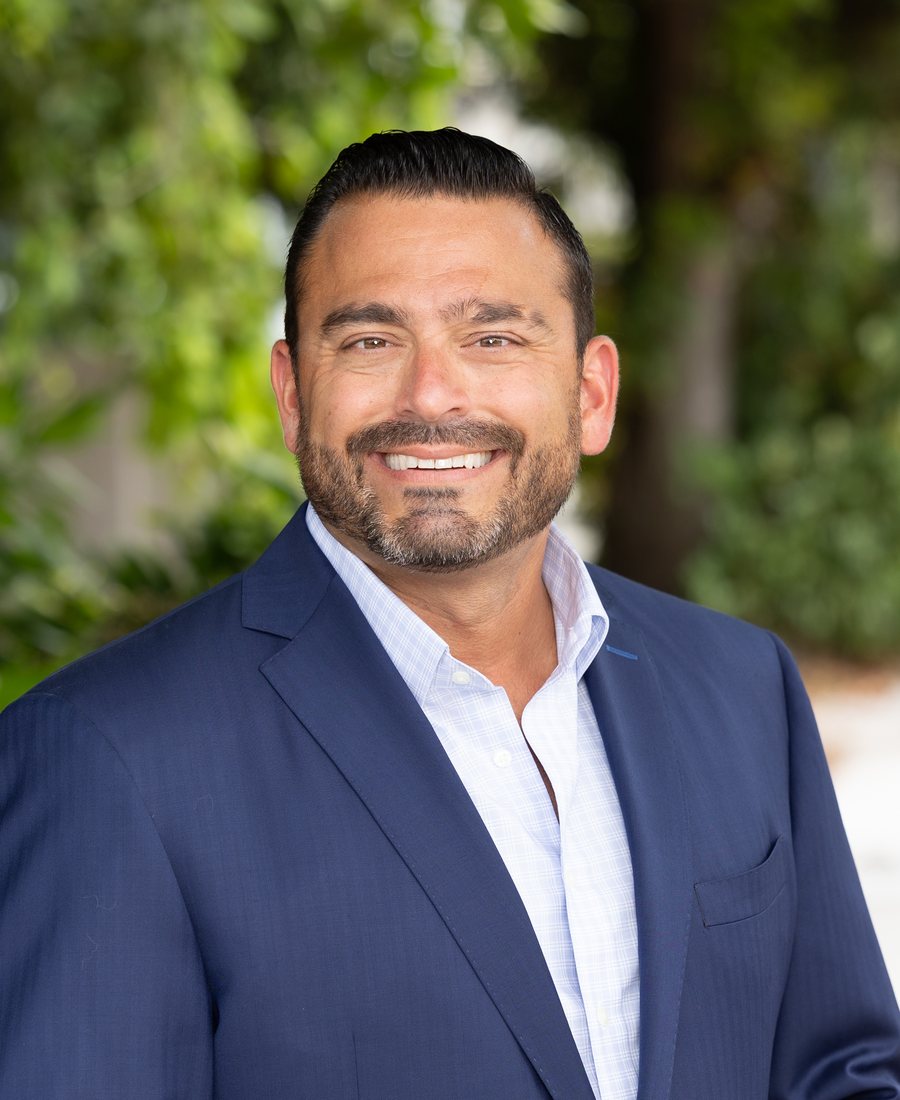
Talk to Paul about your crash
Free, confidential, and with the attorney who would handle the case. If you were on a bike, the first question is which policies pay — and that answer exists today.
Call (561) 208-5058 Free case review
This page describes Florida law as of 22 October 2026 and applies to claims in Florida. It is general information, not legal advice, and reading it does not create an attorney-client relationship.