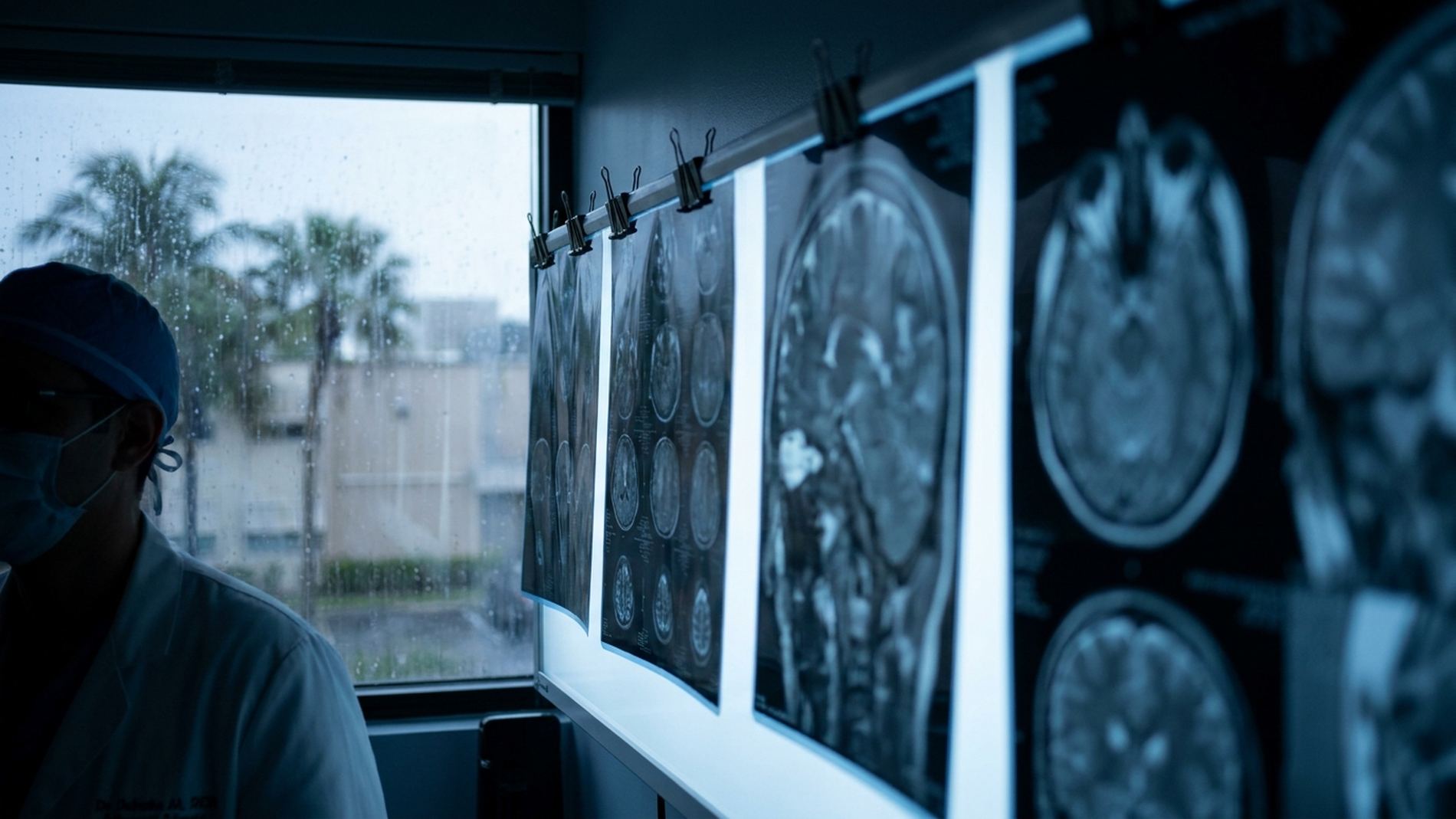
West Palm Beach brain injury lawyer
Shalhoub Law Injury & Accident represents people with brain injuries, and their families in West Palm Beach and throughout Palm Beach County. That includes injuries that do not show on a scan, and the state’s lien that decides what the family keeps. Attorney Paul R. Shalhoub spent years defending insurance companies before he began representing injured people, and he handles every case himself, from the first call through trial.
Two things make a brain injury claim different from every other injury claim, and neither is obvious. The first is that the scan can look normal while the person has changed. The second is that if Florida’s Brain and Spinal Cord Injury Program paid for any of the care, the state has a lien on the case — and almost nobody finds out until the settlement is on the table.
Those two facts decide, respectively, whether the claim is believed and how much of it the family actually keeps. Everything else on this page sits underneath them.
What Paul Shalhoub does on a brain injury claim
The work is proof and arithmetic: proving an injury the imaging may not show, and making sure the recovery is not eaten by liens nobody tracked.
| Builds the proof the scan does not give you | A normal CT is the defense’s whole case in a mild traumatic brain injury. The answer is the rest of the record: the emergency notes, loss of consciousness or its absence, post-traumatic amnesia, the neuropsychological testing that measures function rather than structure, and the treating physicians’ opinions. That has to be arranged, not waited for |
| Collects the before and the after | School records, performance reviews, payroll, and statements from the people who live and work with you. In a brain injury case the most persuasive evidence is rarely medical: it is a colleague describing someone who used to run meetings and now cannot follow one |
| Finds and manages every lien, starting with the state’s | The Brain and Spinal Cord Injury Program lien, health plan reimbursement, PIP, hospital and provider liens. Identified early and negotiated before anything is signed, because the gross number is not what the family lives on |
| Documents permanency to the statutory standard | Significant and permanent loss of an important bodily function, or permanent injury within a reasonable degree of medical probability. Those are the words the statute uses and the opinion has to meet them |
| Prices the next forty years, not the bills so far | A life care plan and an economist. In a severe case the cost of future attendant care, therapy and lost earning capacity dwarfs the treatment already received, and an early offer is low precisely because it ignores that |
| Finds all the coverage | The at-fault party’s liability, your own uninsured and underinsured motorist, medical payments, an employer’s policy, a premises policy, excess layers. Catastrophic injuries exhaust small policies immediately |
| Takes the adjusters off the family’s phone | A person with a head injury should not be giving a recorded statement about how they feel, and a family should not be fielding calls while arranging care |
| Files and tries it where the number is not fair | Same attorney through depositions, mediation and trial |
What you do: keep every appointment, follow the referrals, and write down what is different — sleep, temper, memory, words that will not come. That record is evidence.
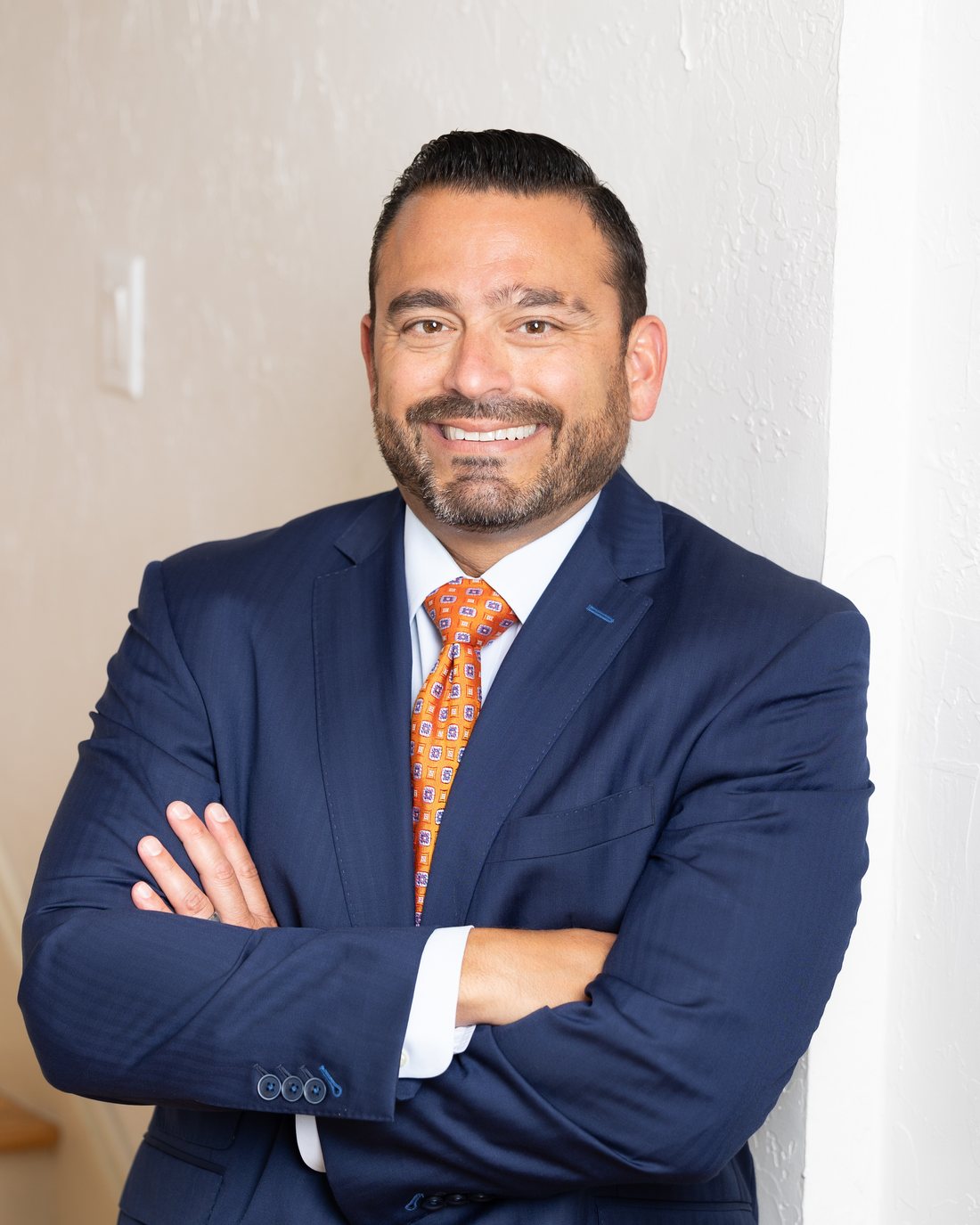
Why choose attorney Paul Shalhoub
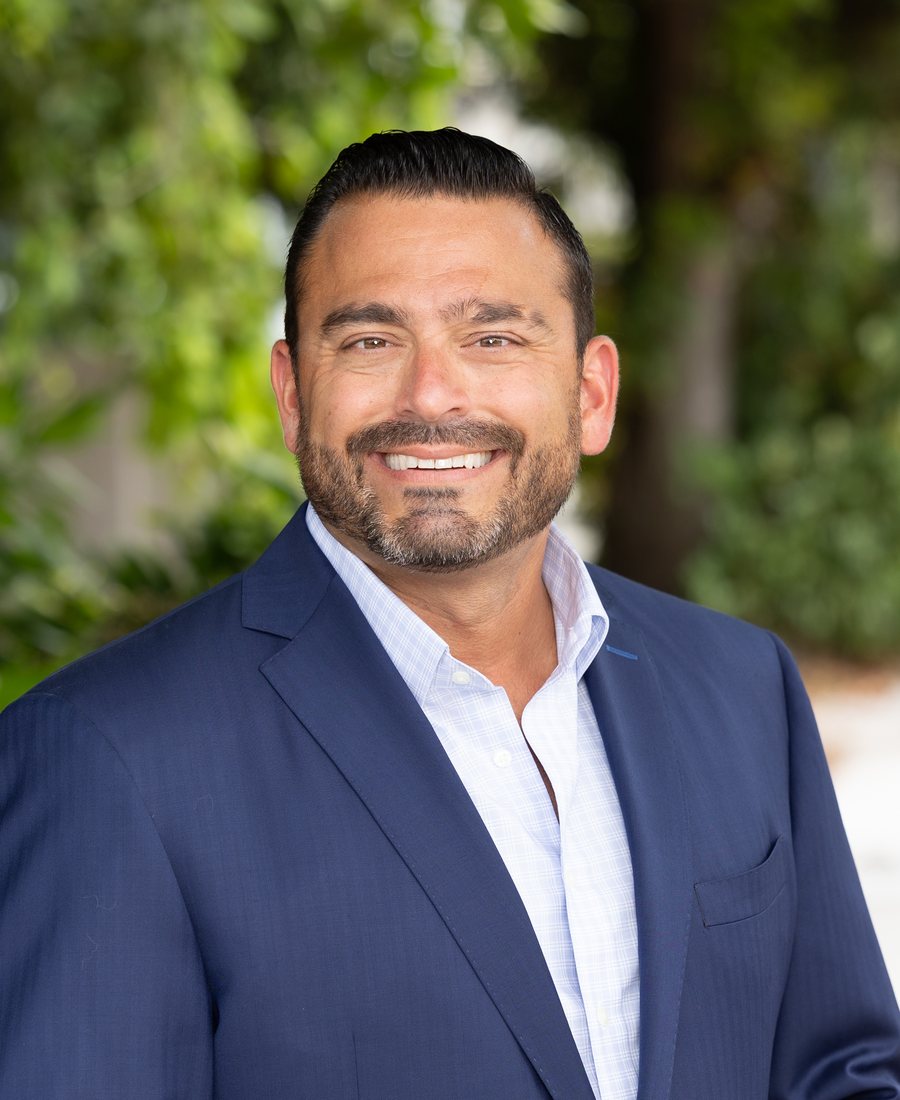
Paul R. Shalhoub is the sole attorney at Shalhoub Law Injury & Accident, and he began his career at a Florida insurance-defense firm, working for carriers. On a head injury claim that is the credential that matters most, because these are the files carriers fight hardest: the injury is invisible, the imaging is often unremarkable, and the defense playbook is to call it a soft tissue case with a headache. He has argued that side, which is the fastest way to know what defeats it.
He has recovered policy limits of $500,000 and $250,000 in motor-vehicle claims and taken a case to a jury verdict at sixteen times the last pre-trial offer. Past results do not guarantee or predict a similar outcome, and no two cases are alike.
He is admitted to The Florida Bar (number 88300, admitted 22 March 2011) and to the United States District Court for the Southern District of Florida. He is also a former Mayor of Lake Clarke Shores and served three terms on its Town Council.
The practical difference is access. A brain injury case runs for a long time and the family needs to reach the same person each time, not a rotating case manager. This is a single-attorney practice.
More about Paul R. Shalhoub · Case results · All practice areas
Do you need a lawyer for a brain injury?
An honest answer, including when it is no.
Where you probably do not. You took a knock, were checked the same day, had no loss of consciousness, and were completely yourself within a few days with no ongoing symptoms and no time off. That is a bump, not a brain injury claim.
Where you almost certainly do. Any of these: you lost consciousness, however briefly; there is a gap in your memory around the event; symptoms are still there weeks later — headaches, light sensitivity, word-finding trouble, temper, sleep; you have been referred to neurology, neuropsychology or a concussion clinic; you have been unable to return to work or have returned and cannot keep up; someone close to you says you are different; or the injury is severe and the question is lifetime care.
And specifically: if anyone has mentioned the Brain and Spinal Cord Injury Program, get advice before you settle anything. There is a lien attached to that.
The practical details
| Attorney | Paul R. Shalhoub, the sole attorney at the firm |
| License | The Florida Bar number 88300, admitted 22 March 2011. Verify it yourself |
| Office | 1011 N Olive Ave, West Palm Beach, FL 33401. He will come to your home, a rehabilitation facility or a hospital room, which on these cases is usual rather than exceptional |
| Hours | Monday to Friday, 8:30 a.m. to 5:30 p.m. Calls and messages answered 24 hours |
| Cost | The consultation is free. The firm advances case costs, and you owe no attorney’s fee and no reimbursement of those costs unless it recovers compensation for you. That matters here, because these cases need a neuropsychologist, a life care planner and an economist before anyone knows what the claim is worth |
The state’s lien, and why it decides what the family keeps
This is the part of a Florida brain injury claim that almost nothing published online explains, and it is worth more than most of what is.
Florida operates a Brain and Spinal Cord Injury Program. Its trust fund exists under section 381.79 to meet the cost of care for brain or spinal cord injury as a payor of last resort for Florida residents, covering acute treatment, rehabilitation, transitional living, adaptive equipment and related support. For many catastrophically injured people it is the reason care happened at all.
It is not a gift. Under section 381.785:
| You must tell the program about third-party rights | An applicant or recipient “must inform the brain and spinal cord injury program of any rights she or he has to third-party payments” (subsection (2)) |
| It is subrogated to those rights | The program “shall be subrogated to her or his rights to such third-party payments”, and may recover directly from the third party, the recipient or the provider (subsection (2)) |
| You are deemed to have assigned them | The recipient is “deemed to have assigned” rights to payment for the funded services (subsection (3)) |
| It has a lien on your case | “It has a lien for the amount of such services upon all causes of action that accrue to the recipient” (subsection (5)) |
| You keep what was not subrogated | Program action “does not preclude the recipient’s recovery for that portion of her or his damages not subrogated” (subsection (4)) |
| The lien is perfected by filing | A notice of lien is filed with the clerk of the circuit court in the recipient’s county of residence, valid five years and extendable by a further five. Failing to file does not waive the program’s other rights (subsection (5)) |
Two practical consequences. First, this lien has to be identified and quantified before a settlement is agreed, not after, because the figure the family is told they are receiving is not the figure they will keep. Second, the Department of Health’s own guidance to practitioners states that the program is not subject to the waiver and fee reduction provisions of section 768.76, on the basis that services it funded are not collateral sources — so the routine reduction arguments that work on other liens do not simply transfer. That is the agency’s position and it is where the negotiation starts.
If someone tells you a brain injury settlement number without having asked whether this program paid for anything, they have not finished the arithmetic.
When the scan looks normal
The commonest way a real brain injury claim is lost.
In litigation, a clean CT is the first thing a defense lawyer reaches for. The argument is familiar: no bleed, no fracture, no abnormality, therefore no injury, therefore headaches and irritability are stress or something pre-existing. It is a legal argument built on an imaging result, and it is answered with evidence rather than indignation.
What answers it:
- The contemporaneous record. What the paramedics and the emergency department actually wrote down at the scene and on arrival — confusion, repeated questioning, a gap in memory, any loss of consciousness and for how long.
- Neuropsychological testing. It measures function rather than structure: memory, processing speed, attention, executive function, with validity measures built in. This is the evidence most mild traumatic brain injury cases live or die on, and it has to be arranged by somebody.
- The treating physicians’ opinions, expressed in the statutory language about permanency, because that is what the threshold requires.
- Lay witnesses. A spouse, a manager, a colleague describing concrete changes. Juries find a specific account of someone who can no longer follow a recipe more persuasive than a graph.
- The before. Performance reviews, school records, payroll. You cannot show a decline without establishing the baseline, and nobody collects the baseline unless they are thinking about it early.
Nothing here is a medical opinion, and this page does not offer one. It is a description of how these cases are attacked and what tends to answer the attack.
The threshold, and the other rules that apply
Where the injury came from a motor vehicle crash and the at-fault driver carried the security Florida requires, section 627.737(2) limits recovery for pain, suffering, mental anguish and inconvenience to cases involving a significant and permanent loss of an important bodily function, a permanent injury within a reasonable degree of medical probability, significant and permanent scarring or disfigurement, or death. A documented traumatic brain injury commonly meets the first or second — but only if a treating physician has been asked for the opinion and has given it in those terms.
Also in play:
| PIP, where it was a crash | $10,000 in medical and disability benefits, conditioned on initial care within 14 days (s. 627.736(1)(a)). In a head injury case this is usually satisfied by the emergency visit, but check it |
| Comparative fault | More than 50 percent at fault for your own injury and you recover nothing (s. 768.81(6)) |
| The deadline | Two years for a negligence claim accruing after 24 March 2023 (s. 95.11(5)(a)). A government defendant carries notice requirements that expire sooner |
| Capacity | Where the injury is severe enough that the injured person cannot manage their own affairs, a guardianship may be needed before anyone can settle a claim on their behalf |
Where these injuries come from here
A brain injury is not a cause of action in itself. It arrives attached to something else, and what it is attached to decides which rules apply.
| Car crashes | Palm Beach County recorded 26,550 crashes, 207 deaths and 16,564 people injured in 2024 (FLHSMV, Annual Report 2024). PIP, the 14-day rule and the threshold all apply |
| Motorcycle crashes | 489 crashes and 32 deaths in the county in 2024. No PIP at all for the rider, so the coverage order is the first problem |
| Pedestrian and bicycle collisions | 807 and 724 crashes respectively in 2024. The brain injury usually comes from the second impact, with the road, not the vehicle |
| Commercial vehicle crashes | 3,166 commercial motor vehicle crashes in the county in 2024. Federal records apply, and some can be destroyed in three months |
| Falls and premises claims | A head strike on a hard floor from standing height. Section 768.0755 governs, and the evidence is the surveillance footage |
| Assaults on a property | Where inadequate security allowed it, the property owner may be responsible alongside the attacker |
If you were taken for trauma care in this county you went to one of exactly two state-approved trauma centers, both Level I: Delray Medical Center or St. Mary’s Medical Center. Those records are the single most important document set in the case, and they should be obtained complete — the imaging itself, not just the radiology reports, and the nursing and paramedic notes, which are where the early signs of a head injury are usually recorded and where nobody thinks to look.
Where a suit is filed, it goes to the Fifteenth Judicial Circuit, main courthouse at 205 North Dixie Highway in downtown West Palm Beach, with branches at PGA Boulevard in Palm Beach Gardens, West Atlantic Avenue in Delray Beach and State Road 15 in Belle Glade.
What the claim can include
| Medical expenses | Emergency and trauma care, surgery, imaging, inpatient rehabilitation, neurology, neuropsychology, therapy and medication |
| Future medical care | Usually the largest single figure in a severe case, proved with a life care plan: attendant care, supervision, therapy, equipment, home modification and transport |
| Lost earnings and earning capacity | Not only time off, but what the person can realistically earn for the rest of a working life. An economist values it |
| Pain, suffering and mental anguish | The category the threshold governs |
| Loss of enjoyment of life | Concrete and documented: what the person did before and cannot do now |
| Household services | What they did at home and now needs paying for |
| Loss of consortium | A spouse’s own claim for the loss of companionship and services, which exists separately and is frequently overlooked |
If the injury was fatal, the claim runs under the Wrongful Death Act with its own rules about who may bring it and what may be recovered. See wrongful death.
What these cases look like in practice
Three situations and what tends to decide each. These are illustrations of how the rules above apply. They are not case results, and nothing here predicts what any particular claim is worth.
The mild injury that was not mild
A rear-end crash, no loss of consciousness, discharged from the emergency department the same evening with a clean CT. Six weeks later the person cannot hold a thread in a meeting and is sleeping badly. The case turns on whether anyone built the record early: the paramedic note, the neuropsychological testing, and colleagues who can describe the change. Left alone, this is the claim that gets valued as a sore neck.
The catastrophic injury with state-funded care
A severe injury, a long inpatient stay, rehabilitation partly funded through the Brain and Spinal Cord Injury Program. Liability may not even be disputed. What decides what the family lives on is the life care plan on one side and the lien arithmetic on the other, and both have to be worked before any number is agreed.
The injury inside another claim
A fall on a commercial property, or an assault where the security was inadequate. The head injury is the damages; the fight is on liability, and it is governed by a different statute entirely. The surveillance footage usually settles it, and it overwrites in days.
What to do now, and what to write down
The evidence in a brain injury case is partly made rather than found, and the window for making it is early.
- Follow every referral. Neurology, neuropsychology, a concussion clinic, vision or vestibular therapy. A gap in treatment is read by a carrier as recovery, and on a head injury claim it is read as proof there was nothing wrong.
- Keep a short daily note. Sleep, headaches, light and noise, temper, words that will not come, things forgotten, tasks abandoned. Not a diary — a line a day. It is one of the most useful documents a client can produce, and it cannot be created retrospectively.
- Ask someone close to you to do the same. People with head injuries are often the last to notice the change, which is itself a feature of the injury. A partner’s or colleague’s account carries weight precisely because it is independent.
- Collect the before. Performance reviews, school or university records, payroll, anything that establishes what you were doing and how well before this happened.
- Do not give a recorded statement. A person with a head injury being asked to describe their own cognition on a recorded line is being set up, whether or not anyone intends it.
- Find out whether the Brain and Spinal Cord Injury Program funded anything — before any settlement discussion.
- Watch the deadline. Two years for a negligence claim accruing after 24 March 2023. A government defendant is shorter.
How a brain injury case actually proceeds
Slower than other injury claims, deliberately.
| First weeks | Treatment and referrals established. Complete trauma records obtained, including the imaging itself and the paramedic and nursing notes where the early signs are recorded. Every policy identified. Any evidence tied to how the injury happened preserved — footage, vehicle data, scene |
| Months one to six | Neuropsychological testing arranged at the right point. Lay witness accounts taken while memories are fresh. Liens identified, the Brain and Spinal Cord Injury Program first. Baseline records collected |
| Until the picture is stable | No demand. Valuing a brain injury before the deficits are stable means valuing it wrong, and almost always low |
| Life care plan and economist | In a severe case, the cost of future care and lost earning capacity is the claim. This is where the number comes from |
| Demand, then suit if needed | Filing opens depositions of the defendant, the treating physicians and the experts. Florida requires most cases to be mediated before trial |
| Before signing | Every lien quantified and negotiated, and the net figure set out in writing. Where capacity is affected, a guardianship and court approval |
Throughout, one attorney handles the file — which on a case that runs for years is not a small thing for a family.
Common questions
My CT scan was normal. Do I still have a case?
Very possibly. A clean CT is the first argument a defense lawyer makes, but imaging shows structure and a mild traumatic brain injury is a problem of function. What answers it is the contemporaneous record of confusion or memory gap, neuropsychological testing, treating physicians’ opinions and people who can describe concrete changes. None of that assembles itself.
What is the Brain and Spinal Cord Injury Program lien?
Florida runs a program that funds care for brain and spinal cord injury as a payor of last resort for residents. Under section 381.785 it is subrogated to your rights against the person who caused the injury, you are deemed to have assigned those rights, and it has a lien on your causes of action, perfected by a notice filed with the clerk of the circuit court in your county and valid five years. You still keep the portion of damages not subrogated. It has to be quantified before you settle, not after.
Can that lien be reduced?
It is negotiated, but not on the same footing as most liens. The Department of Health’s own guidance says the program is not subject to the waiver and fee reduction provisions of section 768.76, on the basis that services it funded are not collateral sources. That is the agency’s position, and it means the usual reduction arguments do not simply transfer. It is a reason to involve someone early rather than discover the problem at mediation.
Do I have to prove a permanent injury?
Where the injury came from a crash and the at-fault driver carried the required coverage, yes, for pain and suffering. Section 627.737(2) requires a significant and permanent loss of an important bodily function or a permanent injury within a reasonable degree of medical probability. A documented brain injury commonly meets it, but only if a treating physician has been asked for that opinion in those terms. Medical bills and lost earnings are never subject to it.
How much is a brain injury case worth?
Nobody honest will give a number early, because the largest component is usually care that has not happened yet. What drives it is the severity and permanence of the deficit, the cost of future care proved by a life care plan, lost earning capacity valued by an economist, how clear liability is, your own share of fault, and how much insurance exists. Then the liens come off.
How long will the case take?
Longer than a soft tissue claim, and for a good reason: the claim should not be valued until the medical picture is stable, because settling early on a brain injury means settling before anyone knows what the next forty years cost. The deadline is two years for a negligence claim accruing after 24 March 2023, but the pace is usually set by the medicine rather than the clock.
My relative cannot manage their own affairs. What now?
Where the injury is severe enough to affect capacity, a guardianship may be required before anyone can bring or settle a claim on their behalf, and a court approves the settlement. It is an extra layer rather than an obstacle, but it takes time and should be started early rather than discovered at the end.
Does my spouse have their own claim?
Potentially yes. A loss of consortium claim belongs to the spouse for the loss of companionship, society and services, and it exists separately from the injured person’s claim. It is one of the most frequently overlooked components in a serious injury case.
What if the injury happened at work?
Then workers' compensation is likely involved, and it may not be the only claim. Where someone other than the employer contributed — a driver, a contractor, a property owner, a defective product — there may be a separate claim against them, and the compensation carrier will assert a lien on it. The order in which those are handled affects what the injured person keeps.
What does it cost to hire a lawyer?
The consultation is free and confidential, with Paul. The firm advances case costs, and you owe no attorney’s fee and no reimbursement of those costs unless it recovers compensation for you. On these cases that matters, because a neuropsychologist, a life care planner and an economist are needed long before anyone knows what the claim is worth.
Related claims
A brain injury arrives attached to something else. These are the claims it most often sits inside. See every practice area

What happens if you call
You speak to Paul, not an intake screener. The consultation is free, and he will tell you honestly whether you need a lawyer at all — some claims do not. If he takes the case, the preservation letters and the notices to the insurers go out that day, and the calls to you stop. You treat; he deals with the other side. Nothing is settled without your decision, and you see the net figure before you sign anything.
Talk to Paul about what happened
Free, confidential, and with the attorney who would handle the case. If the Brain and Spinal Cord Injury Program has paid for any of the care, that is a reason to call before anything is agreed rather than after.
Call (561) 208-5058 Free case review
Shalhoub Law Injury & Accident, 1011 N Olive Ave, West Palm Beach, FL 33401. This page describes Florida law as of 22 October 2026 and applies to claims in Florida. It is general information, not legal advice, and nothing here is medical advice. Reading it does not create an attorney-client relationship. Past results do not guarantee or predict a similar outcome.