Florida’s 51 percent comparative fault rule
Florida used to reduce your recovery by your share of the blame, however large that share was. Since 2023, being found more than half at fault ends the claim entirely — and that single change is why an adjuster now spends real money trying to move your percentage by two points.
The number everyone quotes is 51 percent. The statute does not say 51. It says a party found “greater than 50 percent at fault for his or her own harm may not recover any damages,” which means an even split still recovers. That one word is worth money, and it is the first of several places where the popular summary of this rule and the text of it part company.
Two exceptions keep the bar off a claim entirely. One of them is then reversed by a different 2023 statute that almost nothing written on this subject mentions. And the rule that decides what your case is actually collectible for is not the fault rule at all.
Written by the attorney who handles the cases. Reviewed by Paul R. Shalhoub.
How the bar works
Below the line your damages are reduced. Above it there is nothing to reduce.
Before March 2023 Florida followed pure comparative negligence: a claimant 80 percent at fault still recovered 20 percent of their damages. House Bill 837 became chapter 2023-15, which added subsection (6) to section 768.81 and replaced that with a modified system. Cross 50 percent and the recovery is zero.
Below the line the arithmetic is straightforward. On $200,000 of damages with the jury putting 30 percent of the fault on you, the award is $140,000. Subsection (2) says contributory fault “diminishes proportionately the amount awarded as economic and noneconomic damages” and “does not bar recovery, subject to subsection (6).” Those last four words are the whole of the 2023 change.
What the percentages do to a real number
The same injury, the same bills, five different outcomes.
Take $200,000 in damages — which under section 768.81(1) means past and future lost income reduced to present value, medical expenses, lost support and services, and the noneconomic damages a jury allows for the injury itself.
| Your share of the fault | What you recover |
|---|---|
| 0 percent | $200,000 |
| 20 percent | $160,000 |
| 49 percent | $102,000 |
| 50 percent | $100,000 — still recoverable, because the statute bars only a share greater than 50 percent |
| 51 percent | Nothing. Not a reduced award — no award |
The gap between the last two lines is one percentage point and $100,000. That single point is what the negotiation is now about, and it is why a carrier will pay for an investigator, an engineer and a records review to move your share from 49 to 51.
Note the wording carefully. The statute bars a party found “greater than 50 percent at fault for his or her own harm.” An even split is not a bar. Plenty of summaries call this the “51 percent rule,” which is a serviceable nickname and a real search term but not what the text says — and the difference is exactly one line of this table.
Why insurers fight over a few percentage points
The change moved the whole negotiation, and it moved what a carrier is willing to spend to win it.
An adjuster arguing you were 45 percent at fault is arguing about the size of the check. An adjuster arguing 55 percent is arguing that there is no check at all, and that is now a realistic goal rather than a bluff. The economics of the file changed on 24 March 2023: before that date, pushing your share up bought a discount; now, past a point, it buys the entire claim.
So expect the file to be built around your conduct rather than the other driver’s. Speed, attention, whether you were wearing a seat belt, whether you were where you were supposed to be. The counter to it is evidence gathered before anyone has had time to shape a narrative, which is a matter of weeks and not months. There is more on how that conversation goes at talking to an insurance adjuster after a crash, and on the specific fight over who caused it at their insurance says I caused the accident.
Which claims the bar actually covers
Most people meet this rule after a car crash, but the statute is written far wider than that.
Section 768.81(1) defines a “negligence action” as a civil action for damages based on negligence, strict liability, products liability, professional malpractice whether couched in terms of contract or tort, or breach of warranty and like theories. It then closes the obvious escape route: “The substance of an action, not conclusory terms used by a party, determines whether an action is a negligence action.” You cannot plead around the bar by calling the claim something else.
The practical reach is wider than the headlines suggested. A slip and fall, a defective product, a negligent security claim against a property owner and a breach of warranty claim all sit under the same 50 percent line as a rear-end collision.
| Status | What it covers | Where it comes from |
|---|---|---|
| Covered | Negligence, strict liability, products liability, professional malpractice, breach of warranty and like theories — and substance governs over labels | s. 768.81(1) |
| Not covered | An action based on an intentional tort. If someone assaulted you, your claim against that person is not reduced by this rule | s. 768.81(4) |
| Not covered | Personal injury or wrongful death arising out of medical negligence under chapter 766. Those stay pure comparative: an 80 percent share still recovers 20 percent | s. 768.81(6), final sentence |
| Not covered | Actions for actual economic damages resulting from pollution, and causes where joint and several liability is specifically provided by chapters 403, 498, 517, 542 or 895 | s. 768.81(4) |
The exception that a second 2023 statute takes back
If you were hurt by a crime on somebody’s property, read this one twice.
The intentional-tort exclusion above looks like it protects the victim of a crime. In the case where that matters most, a different statute from the very same act puts the protection back on the other side of the ledger.
Section 768.0701 was created by chapter 2023-15, and it reads, in its entirety: “Notwithstanding s. 768.81(4), in an action for damages against the owner, lessor, operator, or manager of commercial or real property brought by a person lawfully on the property who was injured by the criminal act of a third party, the trier of fact must consider the fault of all persons who contributed to the injury.”
Read the first word. Notwithstanding subsection (4) — the paragraph that excludes intentional torts. So in a claim against an apartment complex, a bar, a parking garage or a store for failing to secure a place where you were attacked, the jury is now required to put the attacker on the verdict form and assign them a share.
Here is why that costs money rather than merely sounding fair. Section 768.81(3) abolished joint and several liability, so each defendant pays only its own percentage. Put 85 percent of the fault on an attacker who has no money and no insurance, and the property owner owes 15 percent — and the 85 percent is not collectible from anyone. The claim is not barred. It is apportioned to somebody who will never write a check.
Together with the safe-harbor presumption that the same act created in section 768.0706 for multifamily residential property that substantially implements the listed security measures, this is the part of the 2023 reform that changed premises cases the most, and it is almost never mentioned alongside the 50 percent bar. How the firm runs those claims is at negligent security.
There is no joint and several liability
Two defendants, two separate obligations. If one cannot pay, that share does not move.
Section 768.81(3) requires the court to “enter judgment against each party liable on the basis of such party’s percentage of fault” and expressly not on the basis of joint and several liability. Each defendant owes their own slice and nobody else’s.
That changes what a case is worth long before any argument about your own conduct. Suppose damages of $300,000, with a jury putting 60 percent on a delivery driver and 40 percent on the trucking company that loaded the trailer. You hold a $180,000 judgment against the driver and a $120,000 judgment against the company. If the driver carries $50,000 in coverage and owns nothing, the shortfall is not collectible from the company. It simply does not get paid.
Which is why identifying every properly responsible party early, and finding out what each of them is actually insured for, decides the real outcome more often than the fault percentage does. One exception sits in subsection (5): in a medical malpractice action, where fault is apportioned to a teaching hospital as defined in section 408.07, judgment against that hospital is likewise entered on its percentage of fault.
How fault gets moved to someone who is not in the room
A defendant can ask the jury to blame a person you never sued. There are conditions, and they are worth knowing.
Because each defendant pays only its own percentage, every point a defendant can push onto somebody else is a point it does not pay. The obvious target is a person who is not in the case at all — another driver who left, a contractor, a maintenance company, sometimes a family member.
Section 768.81(3) sets the conditions. A defendant seeking to allocate fault to a nonparty must plead it, and absent a showing of good cause must identify the nonparty. To get that nonparty onto the verdict form it must then prove the nonparty’s fault by a preponderance of the evidence at trial. It is not enough to gesture at an empty chair; the empty chair has to be proved negligent like anyone else.
The same subsection handles one more situation directly: in a products liability action alleging that the injuries were greater than they would otherwise have been because of a defective product, the trier of fact considers the fault of all persons who contributed to the accident. The crash and the defect are weighed together.
How a share of fault actually gets assigned to you
It is argued, not calculated. Knowing the arguments is most of the defense.
No formula produces your percentage. A jury decides it, and before any jury exists an adjuster forms a private view of what a jury would do and prices the file on that. The arguments are predictable:
| The argument | What answers it, and when |
|---|---|
| Speed and attention | Phone records, infotainment data and the vehicle’s own event data recorder. Asked for early these usually help; asked for late they may be gone |
| Where you were | Crosswalk or not, lane position, whether a cyclist was riding with traffic. This is where knowledge of a specific intersection matters |
| What you did after | A gap in treatment is argued as evidence the injury was minor, and sometimes as evidence you caused your own worsening |
| Seat belt use | Raised routinely in Florida. It goes to the extent of the injury rather than to the cause of the crash, and it is argued as a share of fault all the same |
| Your own words | “I didn’t see him” at the scene, or a recorded statement given before anyone knew the injury, is quoted back for the life of the claim |
None of these is decided by what is true in the abstract. Each is decided by what can still be shown months later, which is why evidence gathered in the first weeks tends to settle the percentage long before anyone argues about it.
Which crash dates this rule reaches
It turns on the date you file, not the date you were hurt. That is the detail most explanations get backwards.
Chapter 2023-15 ends with two applicability sections and they are measured from different events. Section 28 says the amendments to section 95.11 — the filing deadline — apply to causes of action accruing after the effective date. Section 30 says that “except as otherwise expressly provided in this act, this act shall apply to causes of action filed after the effective date of this act.” Section 27 fixes that date as the day the act became law, which was 24 March 2023.
The comparative fault change has no applicability clause of its own, so it falls under section 30. It applies to any case filed after 24 March 2023, whenever the crash happened.
So a 2022 crash can sit under the old four-year deadline and the new 50 percent bar at the same time, because the two provisions are measured from different events. Anyone telling you the whole of HB 837 turns on your accident date has read one section and not the other. The deadline side of this is worked through at Florida injury filing deadlines.
What this looks like in practice
An illustration, not a case. No real client, no real claim, no result promised.
Suppose a woman is hit while crossing Dixie Highway at dusk, a few feet outside the crosswalk. Her damages come to $400,000. Liability is not admitted and the driver’s carrier opens by saying she stepped into traffic.
If the jury puts 25 percent on her, she recovers $300,000. At 50 percent she recovers $200,000. At 51 percent she recovers nothing at all — same injury, same bills, same conduct described one point differently. The entire negotiation now happens inside that band, and the carrier knows where the cliff is better than she does.
Now change one fact. The road is poorly lit because a maintenance contractor missed a replacement cycle, and the contractor is never sued. The driver pleads the contractor as a nonparty under section 768.81(3), identifies it, and proves its negligence at trial. The jury puts 20 percent on her, 50 percent on the driver and 30 percent on the contractor. Her recovery is reduced by her own 20 percent, and the driver — the only defendant — pays only 50 percent of what is left. The contractor’s 30 percent is a number on a verdict form and nothing else.
Both halves of that outcome come from this statute, and only one of them is the part people have heard of.
If someone has already put a number on your share
Short list, in order. The first three are about evidence that is disappearing.
- Get the number in writing, with the reason. An adjuster’s percentage is an opinion priced into a file. Ask what facts it rests on and ask in writing.
- Preserve the data on the vehicles. Event data recorders, infotainment systems and phone records answer speed and attention arguments. They are gone once a car is salvaged.
- Photograph the place, not just the cars. Sight lines, lighting, signal timing, lane markings and what a driver could actually see are the facts that move a percentage, and the road gets repaired.
- Do not argue the citation. A traffic citation is evidence and it is not the decision. Civil fault is decided separately and sometimes differently.
- Find every responsible party, not just the obvious one. With no joint and several liability, a missing defendant is a missing percentage of the recovery.
- Say nothing about percentages on a recorded call. “Maybe I could have been more careful” is quoted for the life of the claim.
- Watch the filing date. This rule applies by the date you file, and the deadline runs from the date you were hurt. The two clocks are not the same clock.
What Paul investigates in a fault dispute
The percentage is argued from the record, so the work is building a record worth arguing from.
Paul R. Shalhoub defended these arguments before he made them, which is the reason he starts with the carrier’s own theory rather than the client’s account: what exactly is being said about your conduct, and what in the file supports it. Then the physical evidence while it still exists — vehicle data, the scene, the lighting and sight lines, signal timing, any camera within view. Then whether anybody has been left out who belongs in the case, because a share allocated to an uninsured nonparty is a share nobody pays. Then the nonparty pleadings, if any, and whether the defendant can actually carry its burden on them. Then your own recorded words, so that what gets quoted back is known in advance rather than discovered at a deposition.
A number assigned early is not a finding. It is a position, and positions move when the record underneath them changes.
Do you need a lawyer over a fault dispute?
A few percentage points, argued honestly, is sometimes not worth a third of the recovery.
Where you probably do not. Liability is admitted, nobody has suggested you contributed, your treatment was brief, and the adjuster is not arguing percentages at all. If fault is not in dispute, the comparative fault rule never gets applied to your claim.
Where you probably do. Anyone has put a number on your share, even informally. That is the moment the rule starts costing you money, because every point assigned to you comes off the recovery and above 50 percent you receive nothing at all. Also: there is no police report, the report blames you and you disagree, there were no independent witnesses, the other driver’s account and yours do not match, or more than one party may be responsible and only one of them is insured.
We advance case costs, and you owe no attorney’s fees or reimbursement of those costs unless we recover compensation for you.
Common questions
Can I still recover if I was partly to blame?
Yes, as long as your share is 50 percent or less, and your damages are reduced by that percentage. Section 768.81(6) bars only a party found “greater than 50 percent at fault for his or her own harm,” so an even split still recovers half.
Does this apply to a crash that happened before 2023?
Yes. Chapter 2023-15 sets two different tests: section 28 applies the shorter deadline in section 95.11 to causes of action accruing after 24 March 2023, while section 30 applies the rest of the act to causes of action filed after that date. The comparative fault change has no clause of its own, so it falls under section 30 and turns on your filing date. A 2022 crash can sit under the old four-year deadline and the new 50 percent bar at the same time.
Who decides my percentage of fault?
The jury, at trial. Before that the insurer’s adjuster forms a view of what a jury would do and prices the file accordingly, which is why the evidence you put in front of them early matters more than the argument you make later.
Does a traffic citation decide fault?
No. A citation is evidence and it carries weight, but civil fault is decided separately and sometimes differently. A driver can be cited and a jury can still apportion a share to someone else.
I was assaulted on someone’s property. Does the 50 percent bar apply to me?
Your claim against the attacker is based on an intentional tort, which section 768.81(4) excludes from this section. Your negligence claim against the property owner is a negligence action and is covered. And section 768.0701 adds something most pages leave out: notwithstanding subsection (4), in that premises claim the trier of fact must consider the fault of all persons who contributed to the injury, so the attacker goes on the verdict form and the owner’s percentage drops.
Does the rule apply to a medical malpractice claim?
No. The last sentence of section 768.81(6) says the subsection “does not apply to an action for damages for personal injury or wrongful death arising out of medical negligence pursuant to chapter 766.” Those claims remain pure comparative, so a share above 50 percent reduces the recovery without eliminating it.
Can the other side blame a person I never sued?
Yes, within limits. Under section 768.81(3) a defendant seeking to allocate fault to a nonparty must plead it, must identify the nonparty absent a showing of good cause, and must prove that nonparty’s fault by a preponderance of the evidence at trial. Pointing at an empty chair is not enough; the empty chair has to be proved negligent.
If two companies are at fault and one is broke, does the other cover it?
No. Section 768.81(3) requires judgment against each party on the basis of its own percentage of fault and not on joint and several liability. An uncollectible share stays uncollectible, which is why finding every responsible party and every policy early matters more than the percentage argument does.
Can I avoid the bar by calling my claim something other than negligence?
No. Section 768.81(1) defines a negligence action broadly — negligence, strict liability, products liability, professional malpractice whether couched in contract or tort, breach of warranty and like theories — and then provides that “the substance of an action, not conclusory terms used by a party, determines whether an action is a negligence action.”
What does it cost to hire Paul R. Shalhoub?
Nothing up front. We advance case costs, and you owe no attorney’s fees or reimbursement of those costs unless we recover compensation for you. The consultation is free and confidential, and it is with the attorney who would handle the case.
Written by
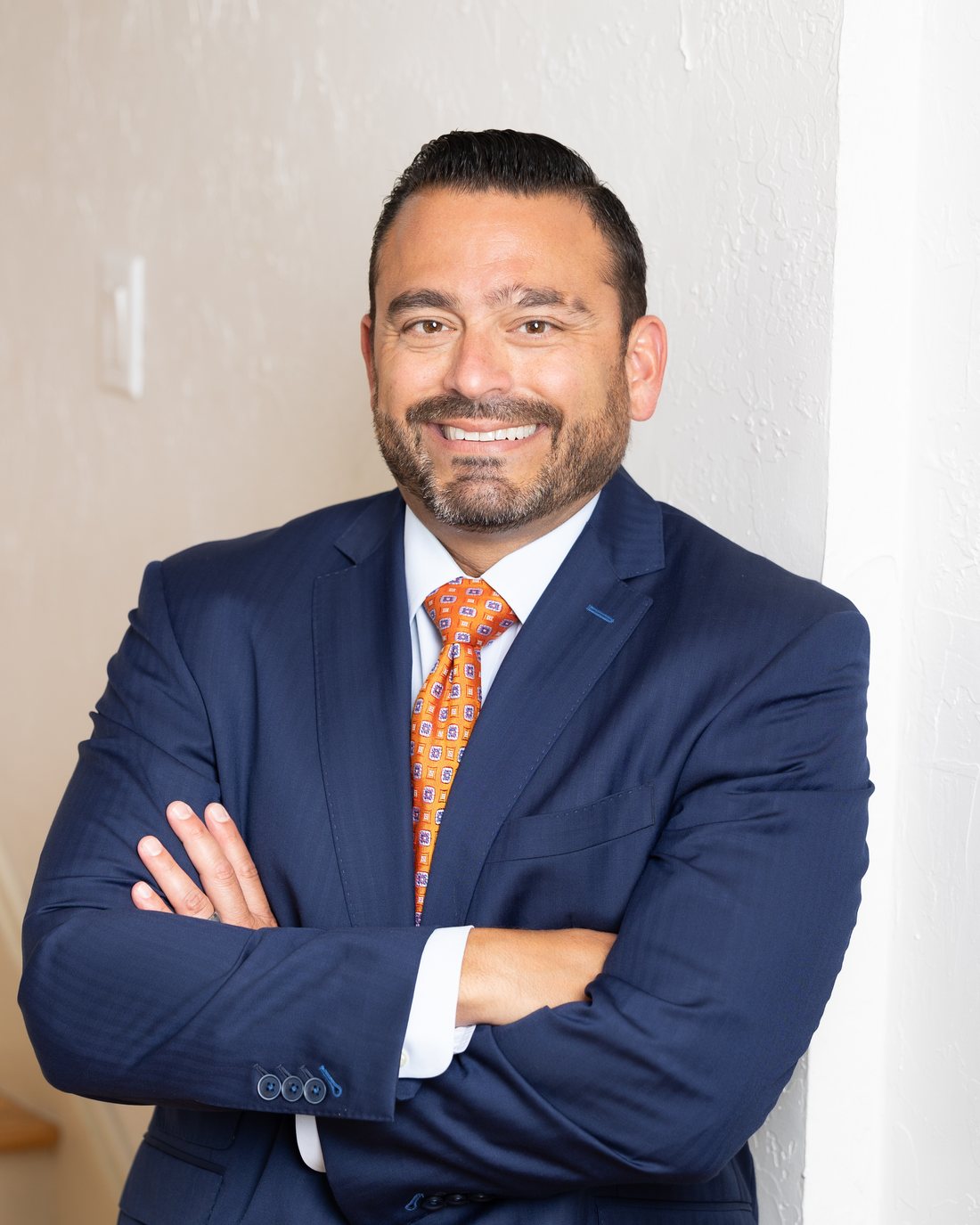
Paul R. Shalhoub
Personal injury attorney, West Palm Beach
Paul R. Shalhoub is the owner of Shalhoub Law Injury & Accident. He began his career defending insurance carriers and now represents the people those carriers underpay, handling every case personally from the first call through trial. He was mayor of Lake Clarke Shores in 2022 and 2023, after three terms on its town council, and sits on boards across Palm Beach County.
Where this fits
The claim types this answer touches, and how the firm runs them.

Talk to Paul, not a case manager
If an adjuster has put a percentage on you, that is a short conversation with a clear answer, and Paul R. Shalhoub will have it with you himself. Consultations are free and confidential. We advance case costs, and you owe no attorney’s fees or reimbursement of those costs unless we recover compensation for you.
Call (561) 208-5058 Free case review
Shalhoub Law Injury & Accident, 1011 N Olive Ave, West Palm Beach, FL 33401. This describes Florida law as of 31 October 2026 and applies to claims in Florida. Sections 768.81, 768.0701 and 768.0706 were read at leg.state.fl.us, and chapter 2023-15 was read as the enrolled act at laws.flrules.org, for this page. It is general information, not legal advice, and reading it does not create an attorney-client relationship. Past results do not guarantee or predict a similar outcome.