
Talking to an insurance adjuster after a crash
Whether you have to talk to an adjuster depends entirely on which company is calling. You owe your own insurer cooperation, and Florida law makes it a condition of being paid. You owe the other driver’s insurer nothing at all — and that is the one holding a document it must hand over to you, under oath, within thirty days of your asking.
Most people have it exactly backwards. They give the other driver’s carrier a recorded statement on day two because the man on the phone was friendly and said he needed it to open the file, and they stall their own carrier, which is the one that can stop paying their medical bills for not cooperating.
So before the advice, the question that decides all of it: whose company is this?
Written by the attorney who handles the cases. Reviewed by Paul R. Shalhoub.
Which insurance company is calling you
Nobody opens a call by announcing which side they are on, so listen for the three things that give it away.
The named insured. Your own adjuster is handling a policy in your name, or your spouse’s, or the name of whoever owns the car you were driving. The other side’s adjuster is handling a policy in the name of the person who hit you. If the name on the policy is not somebody in your household, it is not your company.
What they say they need. Your own carrier opens a personal injury protection file: benefits, the 14-day deadline, where you are treating, who the providers will bill. The other driver’s carrier opens a liability file, and the first thing it wants is your account of the crash in your own voice.
Whether the words “recorded statement” come up at all. A liability adjuster asks for one early, usually in the first week, usually described as routine. Your own carrier may eventually require something far more formal than a recorded statement, and it has a statute behind it. That difference is the whole of this page.
If you cannot tell, you do not have to decide on the call. Ask for the adjuster’s name, the company, the claim number and the name of the insured on the policy, write all four down, and say you will call back. Nothing in Florida law requires you to answer a single question the first time the phone rings.
What your own insurance company can make you do
More than most people expect, and the penalty for refusing is that the benefits stop.
Your relationship with your own insurer is a contract you signed. Florida’s no-fault statute then puts specific obligations on top of that contract, and they are not suggestions.
An examination under oath. Under section 627.736(6)(g), an insured seeking benefits must comply with the terms of the policy, which include “submitting to an examination under oath.” The statute then says it plainly: “Compliance with this paragraph is a condition precedent to receiving benefits.” This is not a phone call. It is sworn testimony, taken by the carrier’s lawyer, transcribed. The same paragraph limits the questioning to relevant information or information that could reasonably be expected to lead to relevant information, which is a real limit and one worth having somebody there to enforce.
A medical examination by a doctor they choose. Under section 627.736(7)(a) the injured person shall, on the insurer’s request, submit to a mental or physical examination, and the insurer pays for it. Subsection (7)(b) supplies the consequence: a person who unreasonably refuses or fails to appear leaves the carrier “no longer liable for subsequent personal injury protection benefits,” and failing to appear at two examinations creates a rebuttable presumption that the refusal was unreasonable. Two missed appointments is the line.
Your medical records, which they do not need you for. Section 627.736(6)(b) lets the carrier go to any physician, hospital or clinic that treated you and require a written report of the history, the costs and the medical necessity, a sworn statement, and the records themselves for inspection and copying — and the party asking pays the cost. People spend weeks couriering paperwork that the statute already entitles the carrier to collect directly.
The deadline that is yours, not theirs. Section 627.736(1)(a) pays 80 percent of reasonable expenses for medically necessary care, and only where the injured person “receives initial services and care” within 14 days of the crash. Miss that window and there are no medical benefits to argue about. It is the one clock on this page that runs out before anyone calls you back.
What the other driver’s insurance company can make you do
Nothing. There is no contract and no statute, and the recorded statement is voluntary every time.
You never agreed to anything with the company that insures the person who hit you. No cooperation clause reaches you, because a cooperation clause is a term in a policy and you are not on that policy. No provision of Florida law obliges an injured person to give a liability carrier a statement, sit for its examination, sign its authorization or answer its questions at all.
What it can do is ask, repeatedly, pleasantly, and early. The reason it asks early is that a recorded statement taken in week one is taken before you know what is wrong with you. Nine months later, after the MRI and the referral and the surgeon’s opinion, that transcript is read back a sentence at a time, and the sentence that gets read is the one where you said your neck was a little stiff.
| What the adjuster asks for | Your own insurer | The other driver’s insurer |
|---|---|---|
| A recorded statement | Usually asked for, and the policy’s cooperation clause is behind it | Entirely voluntary. No statute, no contract, no consequence for declining |
| Sworn testimony before any lawsuit | Yes — an examination under oath, and s. 627.736(6)(g) makes compliance a condition precedent to benefits | No. Not until a case is filed and a deposition is noticed |
| An exam by a doctor it picks | Yes, under s. 627.736(7)(a), at the insurer’s expense; two no-shows and benefits can end | No. Only through the court once a suit exists |
| A blanket medical authorization | It does not need one — s. 627.736(6)(b) lets it obtain reports and records from the providers directly | No right to your records at all. A signature is the only way it gets them |
| Its policy limits, in writing and under oath | — | It owes this to you within 30 days of a written request, under s. 627.4137 |
Read the last row again. The company you owe nothing to is the company that owes you something, and it is the single most useful thing on this page.
Can an adjuster record the call without telling you?
Not lawfully in Florida. Everyone on the call has to consent, and that rule cuts both ways.
Florida is an all-party consent state. Section 934.03(1)(a) prohibits intentionally intercepting a wire, oral or electronic communication, and the exception in (2)(d) is narrow: it is lawful “when all of the parties to the communication have given prior consent to such interception.” Not one party. All of them. A violation of subsection (1) is a felony of the third degree under (4)(a).
There is a second consequence that matters more to a claim than the criminal one. Under section 934.06, an unlawfully intercepted communication and any evidence derived from it may not be received in evidence in any trial, hearing or other proceeding. A recording made without consent is not a weapon for either side; it is nothing.
In practice a liability adjuster will ask on the recording, at the top, whether you consent to being recorded — which is both the legal requirement and the moment people say yes without having decided anything. You can say no. You can say you will answer in writing instead. You can say you want to speak with an attorney first. None of those answers is evidence of anything.
The same rule governs you. If you are thinking about recording the adjuster, understand that Florida gives you no one-party consent exception, and the exposure in (4)(a) is a third-degree felony. Ask first, on the call, and let them answer.
Why “I’m fine” is the most expensive sentence
It is the normal, polite, true-feeling answer, and it is the one the file keeps.
After a crash the body is running on adrenaline and the inflammation has not arrived yet. A herniated disc, a rotator cuff tear, a concussion and a soft-tissue injury to the neck commonly announce themselves between twenty-four hours and several days later, which is after the phone call. “I’m a little sore” on Tuesday and an MRI on the following Monday are not a contradiction to a physician. They are a contradiction to an adjuster building a file, and the adjuster is the one who writes the first number.
The honest answer on day two is not a brave one and not a dramatic one. It is that you do not yet know, you are being evaluated, and you are not going to characterize an injury a doctor has not finished looking at. That is true, it is short, and it cannot be read back against you.
If pain has already started arriving late, that is its own question and it has its own answer here: pain that starts days after a crash.
The letter that makes the other carrier show you the policy
Section 627.4137 is the part of this subject almost nobody writes about, and it is the part that changes the balance of the call.
Under section 627.4137(1), any insurer that does or may provide liability coverage for a claim must, within 30 days of a claimant’s written request, hand over a statement setting out, for each known policy including excess and umbrella coverage:
- the identity of the insurer;
- the identity of each insured;
- the limits of the liability coverage;
- any policy or coverage defense the insurer reasonably believes is available to it; and
- a copy of the policy itself.
The statement is signed under oath by a corporate officer, or by the insurer’s claims manager or superintendent. The duty does not stop at the carrier: on written request, the insured or the insured’s agent must identify every known insurer and forward the request to each of them, and each then has 30 days from receipt. Subsection (2) requires the statement to be amended immediately on discovery of facts calling for an amendment, and subsection (3) sends a request to a self-insured corporation by certified mail to its registered agent.
Why this matters on the phone: a $12,000 offer means one thing against a $10,000 policy and another entirely against a $250,000 policy, and until the sworn statement arrives you are negotiating against a number only one side can see. The written request also creates a dated record of what the carrier knew and when, which is the foundation of everything in the next section.
What you can ask for in writing, and when it has to arrive
Three requests, three deadlines, all of them better made on paper than on a call.
| What you ask for | What the law requires | When |
|---|---|---|
| The liability policy and its limits | A statement under oath by a corporate officer or the claims manager, covering every known policy including excess and umbrella, with a copy of the policy and any coverage defense — s. 627.4137(1) | 30 days from the written request |
| Written confirmation of coverage | An insurer that will not affirm or deny coverage, or give a written status, within 30 days after proof-of-loss statements are completed is engaged in a listed unfair practice — s. 626.9541(1)(i)3.(e) | 30 days after the proof of loss is complete |
| The reason for a denial or a low offer | A reasonable explanation in writing, grounded in the policy or applicable law, for a denial or a compromise offer — s. 626.9541(1)(i)3.(f) | “Promptly,” with no fixed number of days |
One caution that most pages leave out, because it is the inconvenient half. The practices listed in section 626.9541(1)(i)3 are unfair methods of competition only where they are committed “with such frequency as to indicate a general business practice.” One slow letter from one adjuster is not a violation of that statute. A pattern is. What the written request does for your own claim is simpler and more immediate: it forces an answer onto paper, where it can be compared with the next one.
Why an early file is worth more than an early statement
The clock that actually pressures a liability carrier does not start when you talk. It starts when the evidence lands.
Florida’s bad-faith statute, section 624.155, was rewritten in 2023, and the rewrite is the reason an early recorded statement does so little for you. Under (4)(a), a bad-faith action involving a liability claim does not lie at all where the insurer tenders the lesser of the policy limits or the amount demanded within 90 days after receiving actual notice of a claim supported by sufficient evidence. Where it does not tender in that window, subsection (4)(c) extends the applicable limitations period by 90 days.
Read what starts the 90 days. Not a phone call. Not your voice on a recording. A claim supported by sufficient evidence — records, bills, imaging, a wage loss that is documented, a physician willing to state a prognosis. Until that package exists there is nothing for a carrier to be unreasonable about, and a statement given before it exists has given away your account of the crash while buying no pressure at all.
The rest of the section sets the frame honestly. Subsection (1)(b)1 lets any person sue an insurer for “not attempting in good faith to settle claims when, under all the circumstances, it could and should have done so, had it acted fairly and honestly toward its insured and with due regard for her or his interests” — note that the duty described there runs to the carrier’s own insured, which is why these cases are built out of the insured’s exposure and not out of an adjuster’s manners. Subsection (3)(a) makes a 60-day civil remedy notice to the Department of Financial Services and to the insurer a condition precedent to filing, and (3)(c) bars the action if the violation is cured inside those 60 days. And subsection (5)(a) says what every honest page about adjusters should say out loud: “Mere negligence alone is insufficient to constitute bad faith.”
Which is the practical answer to “the adjuster was rude to me.” Rudeness is not a claim. A documented file, delivered with a demand and a deadline, is.
The medical authorization that arrives next
It usually comes by email a day or two after the call, and the scope of it is the whole question.
A liability carrier has no right to your medical records. The form is how it gets them, and the form that arrives is ordinarily written as broadly as the drafter could make it: all providers, all conditions, no date range, sometimes a decade back, sometimes including mental health and substance treatment.
What a broad release hands the defense is not evidence about this crash. It is a search for something else — the old back complaint, the chiropractor you saw in 2016, the note where a doctor wrote that you were under stress. None of that is relevant to whether a driver ran a light on Forest Hill Boulevard, and all of it is usable to argue that the pain was already there.
A limited authorization — named providers, the body parts actually injured, a date range tied to the crash — gives a carrier everything it legitimately needs to evaluate a claim. Carriers accept them routinely. The difference between the two documents is a paragraph of text and sometimes a large part of the value of a case, which is why this is a signature worth slowing down for.
And the asymmetry again: your own PIP carrier never needs you to sign anything like this, because section 627.736(6)(b) already lets it obtain reports and records from the treating providers and requires it to pay the cost of doing so.
What the adjuster is asking, question by question
The questions are not traps. They are a form, and each line of the form is doing a specific job.
| The question | What it is doing, and what to do with it |
|---|---|
| “Just confirm the date, time and location for me.” | Ordinary file-opening, and the part of the call you can answer without thinking about it. Facts that are already on the crash report cost nothing to confirm. |
| “Tell me what happened in your own words.” | The narrative is the product of the whole call. Memory of a crash is genuinely unreliable in the first week, and a guess about speed or distance becomes a fixed position. “The report has my account” is a complete answer. |
| “How fast would you say they were going?” | Inviting a number nobody can give. An estimate volunteered on day three and an engineer’s reconstruction on month six will differ, and only one of them was recorded. |
| “Are you hurt? How are you feeling today?” | The injury baseline. Answer only what a doctor has already said, and say that evaluation is still going on. |
| “Have you had any prior accidents or injuries?” | Building toward a pre-existing condition. Never guess at your own medical history on a recording; records answer this, and they answer it accurately. |
| “I just need you to sign this authorization so we can move forward.” | The records request, in a sentence engineered to sound procedural. Nothing stops moving forward while the scope of a release is narrowed. |
| “We can resolve this today — I can get you a check this week.” | A release, offered before the treatment is finished and before anyone knows what the claim contains. There is a separate answer for this one: should I accept the first settlement offer? |
What this looks like in practice
An illustration, not a case. No real client, no real claim, no result promised.
Suppose a driver is rear-ended on Okeechobee Boulevard on a Tuesday afternoon. She declines transport, drives home, and takes ibuprofen. On Thursday the at-fault driver’s carrier calls. The adjuster is pleasant, says he needs a brief recorded statement to get the file moving, and asks how she is doing. She says she is sore but fine, agrees the light was green, guesses the other car was going “maybe twenty-five,” and signs the authorization he emails that evening because it arrived with the claim number on it.
Ten days later her left arm is going numb. An MRI in week four shows a disc herniation at C6-C7. By month five there is a surgical consult and twelve thousand dollars in billing.
Two things have now happened that had nothing to do with her injury. First, the transcript says she was fine and estimates a speed that the physical damage does not support, and both sentences will be quoted in the carrier’s evaluation. Second, the blanket release produced eight years of records including a 2019 visit for shoulder pain, which the file now treats as the real explanation.
Nothing she did was unreasonable. She answered honestly, on day two, about an injury that had not arrived yet, and she signed a form that said it was needed to move forward. The alternative was not silence — it was a phone call that lasted ninety seconds, a written request under section 627.4137, and a release with four provider names on it.
What to do in the next 48 hours
Short list, in order, and none of it requires hiring anyone.
- Get evaluated, inside 14 days. Section 627.736(1)(a) conditions medical benefits on initial services and care within 14 days of the crash. This is the only deadline on this page that cannot be fixed later.
- Write down the four facts from every call: the adjuster’s name, the company, the claim number, and the name of the insured on that policy. The fourth one tells you which side you are talking to.
- Report the crash to your own carrier. Cooperating with your own insurer is not optional, and the obligations in section 627.736 are easier to meet early than to explain late.
- Decline the recorded statement to the other carrier, politely, and in writing if you can. It is voluntary, and the file is better served by records than by your voice.
- Do not sign a blanket medical authorization. Narrow it to the providers, the injuries and the dates that belong to this crash.
- Send the written request under section 627.4137. Thirty days later you will know the limits you are negotiating against, under oath.
- Keep the physical evidence: photographs of the vehicles and the scene, the crash report number, the names of anyone who stopped, your own notes on symptoms by date.
- Watch the two-year deadline. Under section 95.11(5)(a) an action founded on negligence must be brought within two years, and it runs while the calls are going on.
What Paul investigates when an adjuster has already called
A statement that is already given is a fact to work with, not a case that is over.
Paul R. Shalhoub spent the first part of his career on the other side of these calls, defending the carriers that make them, which is the reason the first thing he asks for is the recording and the transcript rather than a description of how the conversation felt. Then, in order: what the authorization actually permitted and what was produced under it; the crash report and whether the narrative in it matches the physical damage; the property damage photographs, which frequently contradict a speed estimate taken on day three; the treatment timeline against the 14-day rule; whether a written request for the limits has gone out under section 627.4137 and when; and whether the carrier has put anything in writing explaining a denial or an offer.
An early statement rarely ends a claim. It narrows the room, and the way to widen it again is evidence that outweighs it.
Do you need a lawyer before you call back?
Sometimes no. Here is the honest version of both answers.
You probably do not need one where the damage is to the car alone, nobody was hurt, fault is not in dispute and nobody has asked you to sign anything. That is a property damage claim, and handling it yourself is reasonable.
A call helps, and it is free, where any of these is true: you are being treated for an injury, somebody has asked for a recorded statement or a signed authorization, fault is disputed, an offer has been put in front of you, the other driver may have had no insurance or only the minimum, or your own carrier has raised an examination under oath or a medical examination. In every one of those, a decision is being made now that is difficult to undo later.
We advance case costs, and you owe no attorney’s fees or reimbursement of those costs unless we recover compensation for you.
Common questions
Do I have to give a recorded statement?
To the other driver’s insurance company, no. There is no contract between you and no Florida statute that requires it, and declining carries no penalty. To your own insurer the answer is different: the policy’s cooperation terms apply, and section 627.736(6)(g) goes further by making compliance with the policy’s examination-under-oath requirement a condition precedent to receiving benefits.
Is it illegal for an adjuster to record me without saying so?
In Florida, yes. Section 934.03(1)(a) prohibits intentionally intercepting a communication, and the consent exception in (2)(d) applies only where all parties have given prior consent. A violation is a third-degree felony under (4)(a), and under section 934.06 an unlawfully intercepted communication cannot be received in evidence in any proceeding. The same rule applies to you if you are thinking of recording them.
How do I find out how much insurance the other driver had?
Ask in writing. Section 627.4137(1) gives a liability insurer 30 days from a claimant’s written request to provide a statement, sworn by a corporate officer or the claims manager, of the insurer’s identity, each insured’s identity, the coverage limits, any coverage defense it believes is available, and a copy of the policy — for every known policy, including excess and umbrella. The insured or the agent must also identify each insurer and forward the request.
What happens if I refuse the examination under oath my own insurer wants?
Section 627.736(6)(g) makes compliance a condition precedent to receiving benefits, so refusing can end the medical payments. The questioning is limited by the same paragraph to relevant information or information that could reasonably be expected to lead to it, which is a limit worth having enforced rather than one worth testing alone.
What if they keep calling?
Ask them in writing to direct further contact to your attorney, or to put their questions in writing. Once a lawyer is involved the calls to you ordinarily stop. Section 626.9541(1)(i)3 describes failing to acknowledge and act promptly on communications as an unfair claim settlement practice, but only where it happens with such frequency as to indicate a general business practice, so for one claim the practical tool is a written record rather than that statute.
Should I tell them I am getting a lawyer?
You can, and it is usually the shortest way to end a call you did not plan for. It is not an admission of anything and no inference may fairly be drawn from it. Saying it before you have actually spoken to one is fine as well — the sentence is about ending the conversation, not about the claim.
They offered me money on the first call. Is that normal?
It is common, and it is early for a reason: a release signed before treatment is finished closes the claim at whatever the file looked like that week. Section 624.155(4)(a) shows the carrier’s own incentive — tendering the lesser of limits or the amount demanded within 90 days of actual notice of a claim supported by sufficient evidence removes a bad-faith exposure. There is a fuller answer at should I accept the first settlement offer?
Can I just email the adjuster instead of talking?
Yes, and for a liability carrier it is frequently the better channel. Writing removes the pressure of an unplanned call, it lets you check a date before you state it, and it produces a dated record of what each side asked and answered. Nothing requires an injured person to handle a liability claim by telephone.
The adjuster says my claim is worth very little. Can they be made to explain that?
Section 626.9541(1)(i)3.(f) lists failing to promptly provide a reasonable written explanation, grounded in the policy or applicable law, for a denial or a compromise offer as an unfair claim settlement practice — again, only where it is done with a frequency indicating a general business practice. Asking for that explanation in writing is still the right move on any single claim, because the written answer is what can be compared with the evidence and with the next offer.
What does it cost to hire Paul R. Shalhoub?
Nothing up front. We advance case costs, and you owe no attorney’s fees or reimbursement of those costs unless we recover compensation for you. The consultation is free and confidential, and it is with the attorney who would handle the case.
Written by
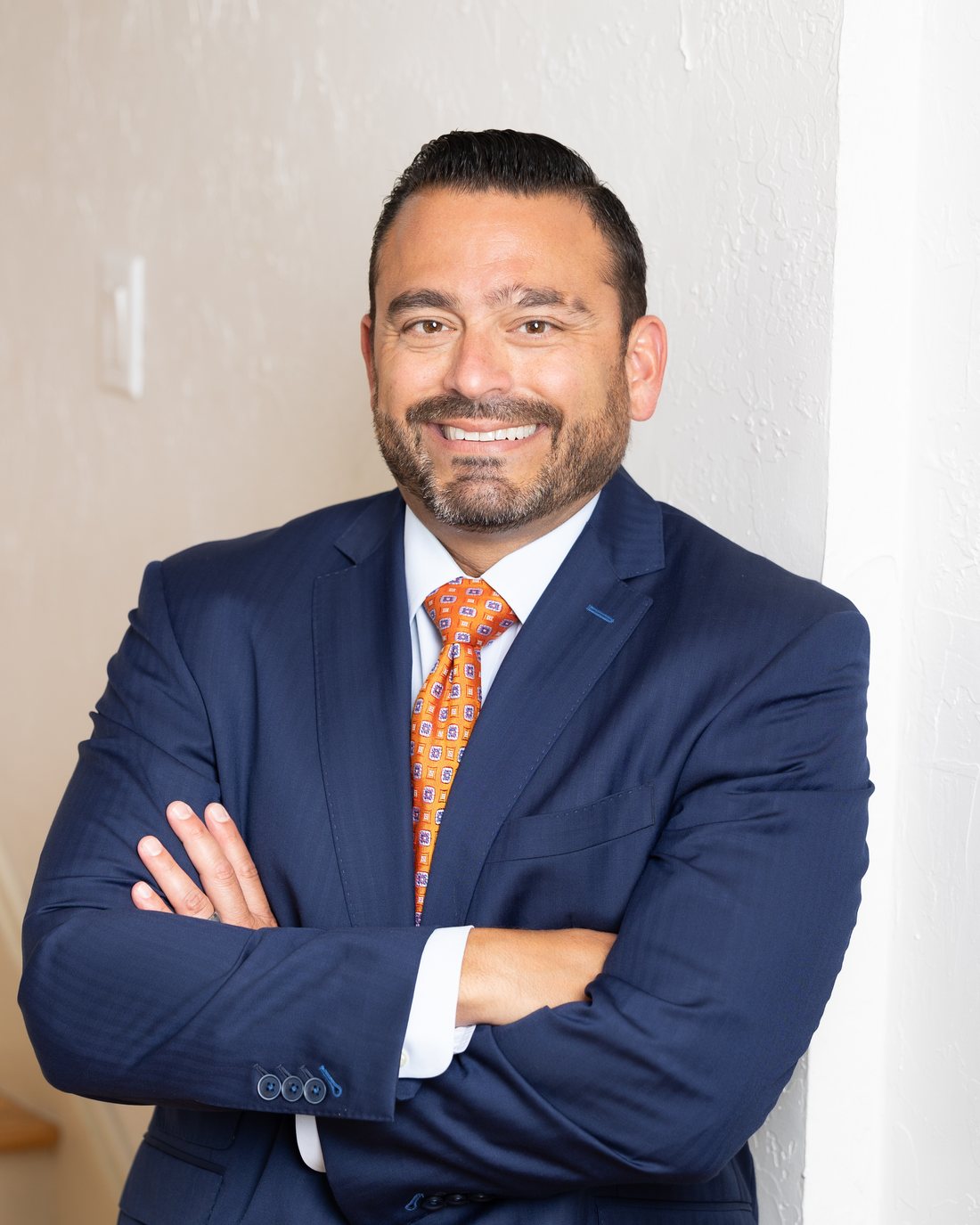
Paul R. Shalhoub
Personal injury attorney, West Palm Beach
Paul R. Shalhoub is the owner of Shalhoub Law Injury & Accident. He began his career defending insurance carriers and now represents the people those carriers underpay, handling every case personally from the first call through trial. He was mayor of Lake Clarke Shores in 2022 and 2023, after three terms on its town council, and sits on boards across Palm Beach County.
Where this fits
The claim types this answer touches, and how the firm runs them.
 Car accidentsThe practice area most of these calls belong to, start to finish.How we handle it →Uninsured motorist claimsWhen the adjuster calling you works for your own company.How we handle it →
 Truck accidentsWhere the adjuster calling is a commercial carrier with counsel already involved.How we handle it →
Talk to Paul, not a case manager
If an adjuster has asked you for a recorded statement or put a form in front of you to sign, that is a short conversation with a clear answer, and Paul R. Shalhoub will have it with you himself. Consultations are free and confidential. We advance case costs, and you owe no attorney’s fees or reimbursement of those costs unless we recover compensation for you.
Call (561) 208-5058 Free case review
Shalhoub Law Injury & Accident, 1011 N Olive Ave, West Palm Beach, FL 33401. This describes Florida law as of 30 October 2026 and applies to claims in Florida. Sections 627.736, 627.4137, 934.03, 934.06, 624.155, 626.9541 and 95.11 were read at leg.state.fl.us for this page. It is general information, not legal advice, and reading it does not create an attorney-client relationship. Past results do not guarantee or predict a similar outcome.