Warning signs of nursing home neglect

Reviewed by
by: Paul R. Shalhoub
Neglect in a care facility is rarely announced. It shows up as a pattern across small things, and the facility's own records usually document it before anyone says a word to the family.
Key takeaways
The short version, before the detail.
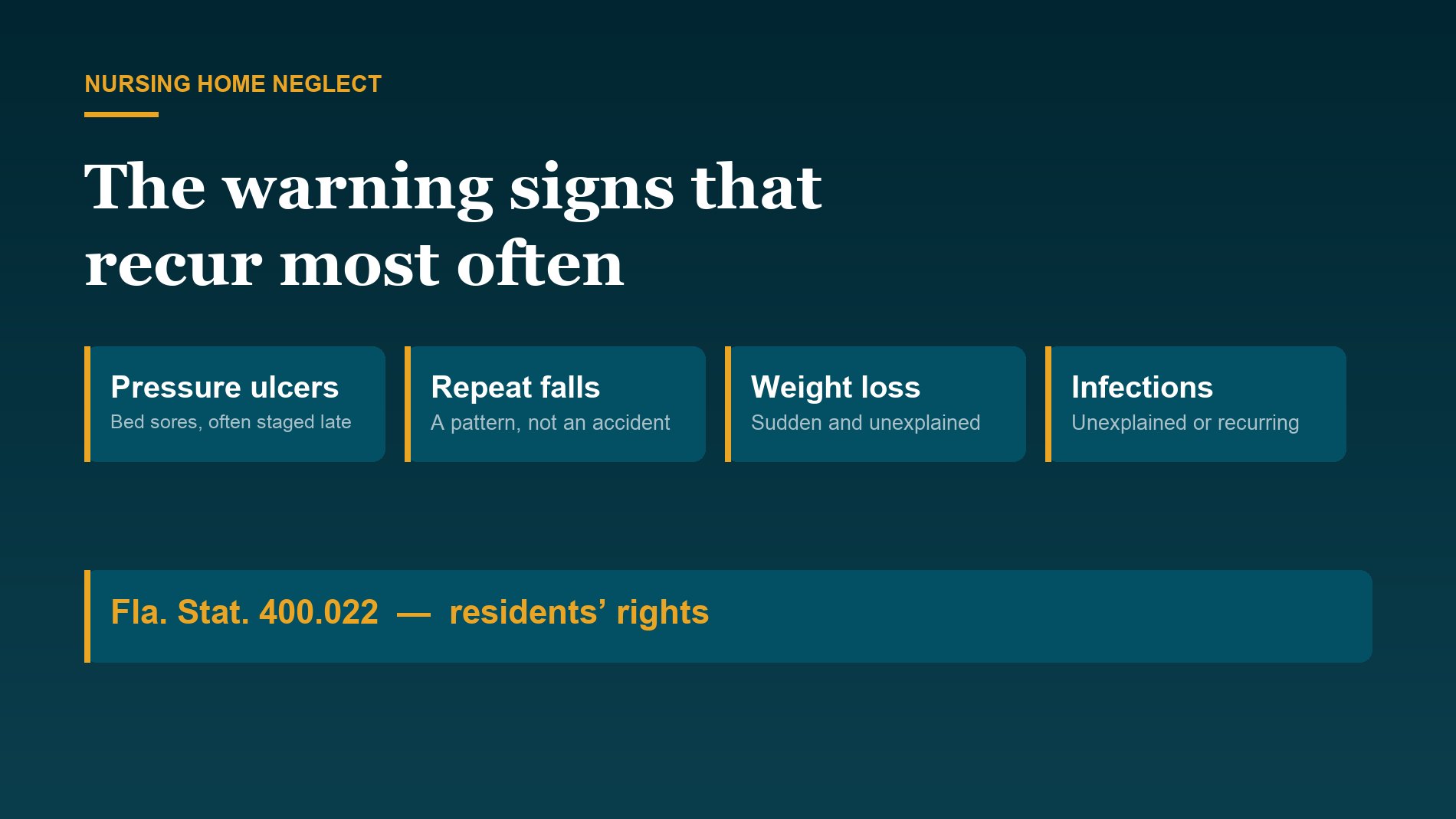
- Pressure ulcers, repeat falls, sudden weight loss and unexplained infections are the signals that recur most often.
- Florida Statute 400.022 sets out residents' rights, including adequate and appropriate health care.
- Facilities must keep records that show staffing levels, care plans, turning schedules and incident reports.
- Claims against a nursing home require pre-suit notice under Florida Statute 400.0233.
- Photographs with dates, and a written log of what you observe, are the most useful evidence a family can create.
What to look for
- Pressure ulcers. Bed sores on the heels, hips, tailbone or shoulders. These develop from immobility and are largely preventable with repositioning.
- Repeat falls. One fall can happen anywhere. A pattern points at supervision, call-bell response times and staffing.
- Weight loss and dehydration. Often the first measurable sign that meals and fluids are not actually being given.
- Medication errors. New sedation, confusion, or a resident who seems chemically restrained.
- Withdrawal and fear. A resident who goes quiet around particular staff.
- Poor hygiene and soiled bedding, especially if it is the norm rather than the exception.
What the records will show
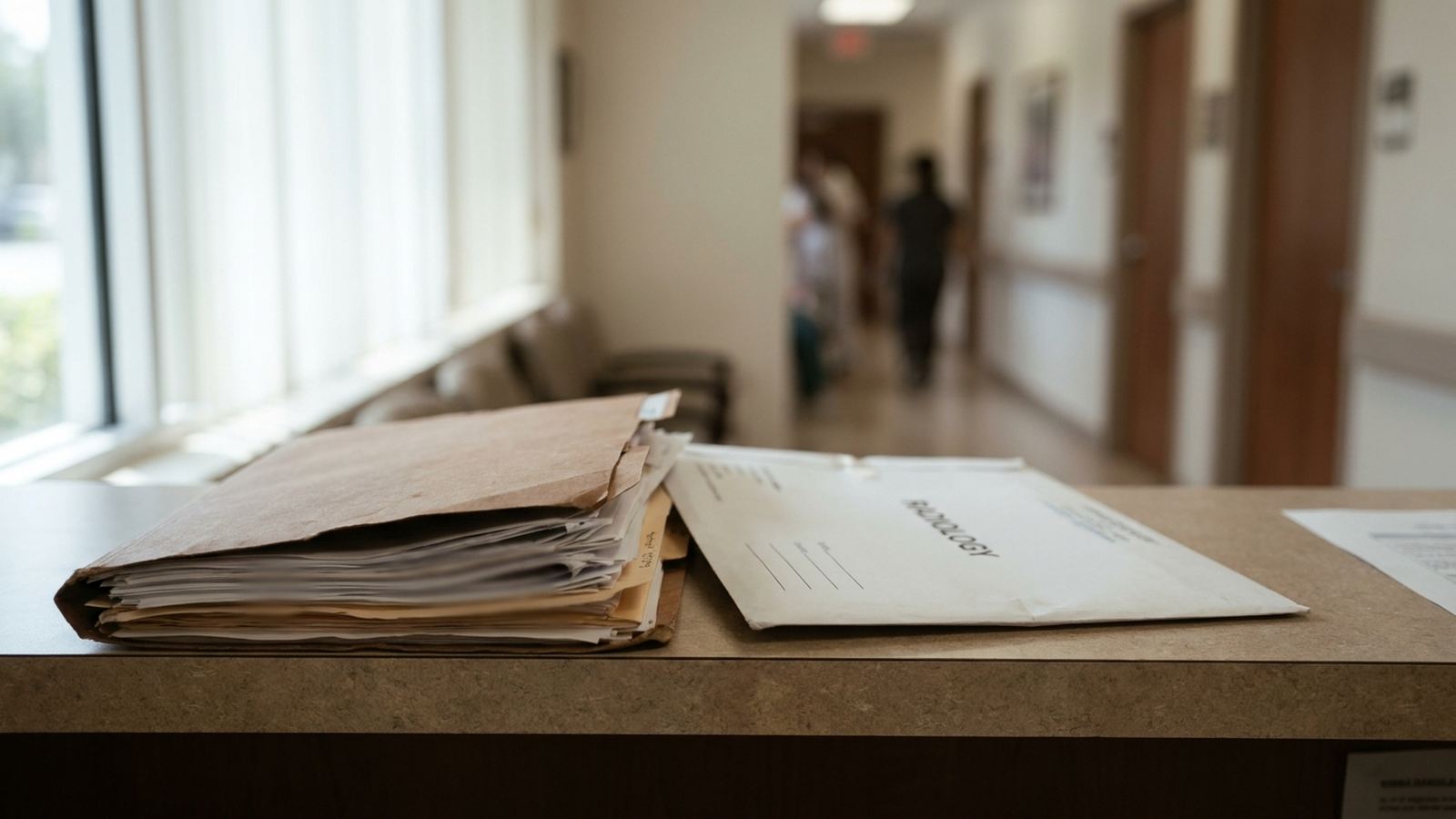
Care facilities are heavily documented. Care plans, turning and repositioning schedules, wound assessments, weight logs, medication administration records, incident reports and daily staffing sheets all exist, and they are usually more candid than anything said at a meeting.
The gap between what the care plan requires and what the records show was done is, very often, the case.
What families should do
- Photograph visible injuries with a date, repeatedly over time.
- Keep a written log of visits, observations and who you spoke to.
- Request the care plan and the records in writing.
- Report serious concerns to the Florida Agency for Health Care Administration and the state's elder abuse hotline.
- Ask a lawyer before signing anything the facility puts in front of you.
Do you need a lawyer about a nursing home?
Many problems are fixed faster by asking the facility than by filing anything.
Where you probably do not. A single lapse, caught early, corrected, and no lasting harm. Ask for the care plan and the incident report. A facility that answers plainly and fixes the problem has given you what a claim would have.
Where you probably do. A pressure ulcer, a pattern of falls rather than one, sudden unexplained weight loss, or an infection nobody will explain. The facility has become vague about records, or you have been handed an arbitration agreement to sign. Florida requires pre-suit notice and a survey period before a claim can be filed, so the timeline is longer than it looks, and the staffing and turning records that decide these cases are held by the facility.
The consultation is free, so finding out which one you are in costs a phone call.
Frequently asked questions
Is a bed sore automatically neglect?
No, but most are preventable, and a facility has to explain how one developed under its care.
We signed an arbitration agreement on admission. Does that end it?
Not necessarily. Arbitration clauses in admission paperwork are frequently challenged, and whether yours binds you depends on how and by whom it was signed.
Do we have to give notice before suing?
Yes. Florida Statute 400.0233 requires pre-suit notice and a survey period before a claim against a nursing home can be filed.
What if our relative cannot tell us what happened?
That is common, and it is why the records matter so much. They speak when the resident cannot.
Talk to Paul about your claim
Consultations are free and confidential. We advance case costs, and you owe no attorney’s fees or reimbursement of those costs unless we recover compensation for you. Paul handles every case personally.
Written by
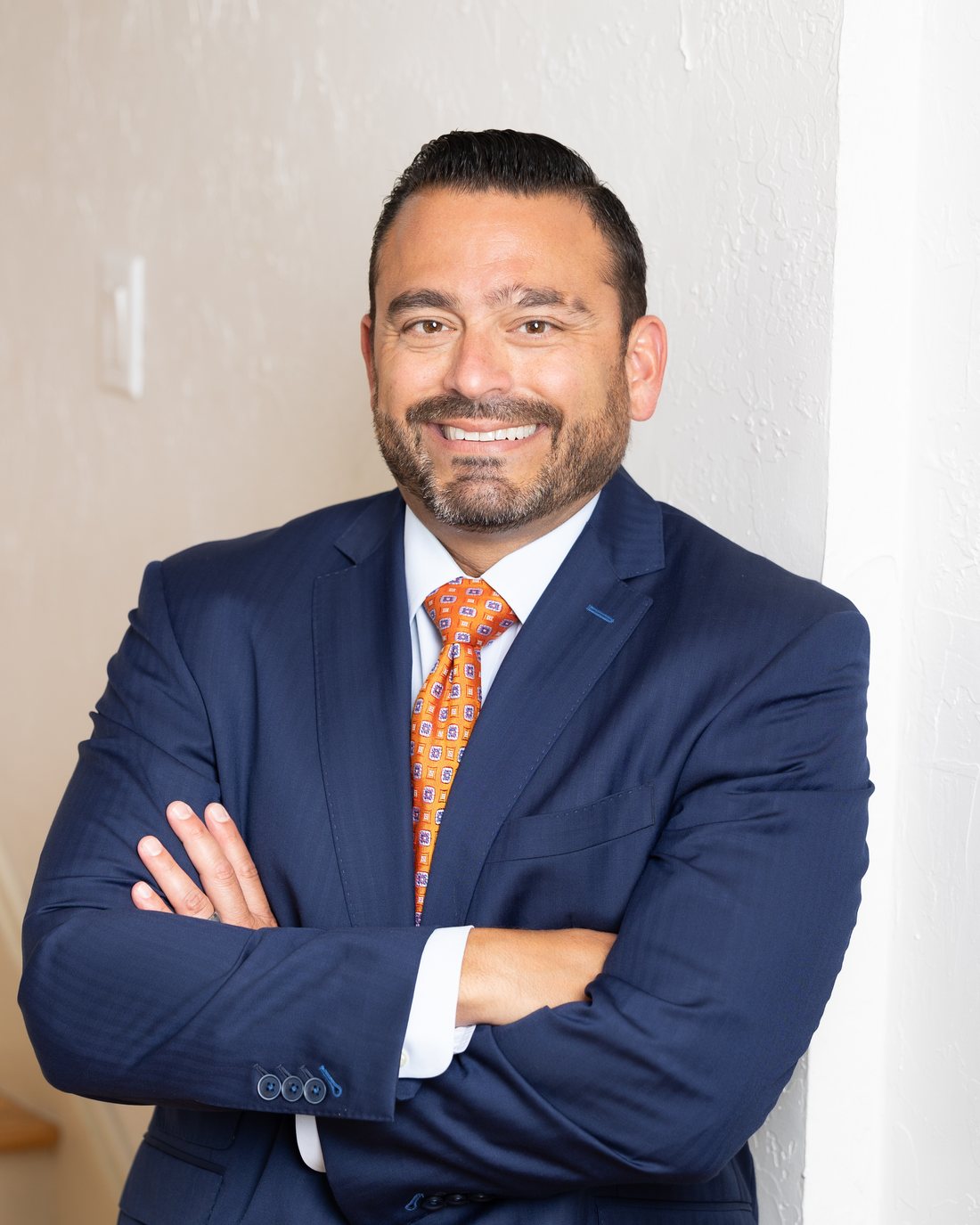
Paul R. Shalhoub
Personal injury attorney, West Palm Beach
Paul R. Shalhoub is the owner of Shalhoub Law Injury & Accident. He began his career defending insurance carriers and now represents the people those carriers underpay, handling every case personally from the first call through trial. He was mayor of Lake Clarke Shores in 2022 and 2023, after three terms on its town council, and sits on boards across Palm Beach County.
How we help with suspected nursing home neglect
The claim types this article touches, and how the firm runs them.