Proving a slip and fall in Florida
Reviewed by
Paul R. Shalhoub
Florida has a statute written specifically to make these claims harder. Winning one means proving something about what the business knew, not just that you fell.
Key takeaways
The short version, before the detail.
- Florida Statute 768.0755 requires proof that the business had actual or constructive knowledge of the dangerous condition.
- Constructive knowledge is shown by how long the hazard was there, or that it happened regularly and was foreseeable.
- Surveillance video is usually decisive and is routinely overwritten within weeks.
- Report the fall before you leave and ask for a written incident report.
- Photograph the substance, the floor, your shoes and the surrounding area immediately.
What the statute actually requires
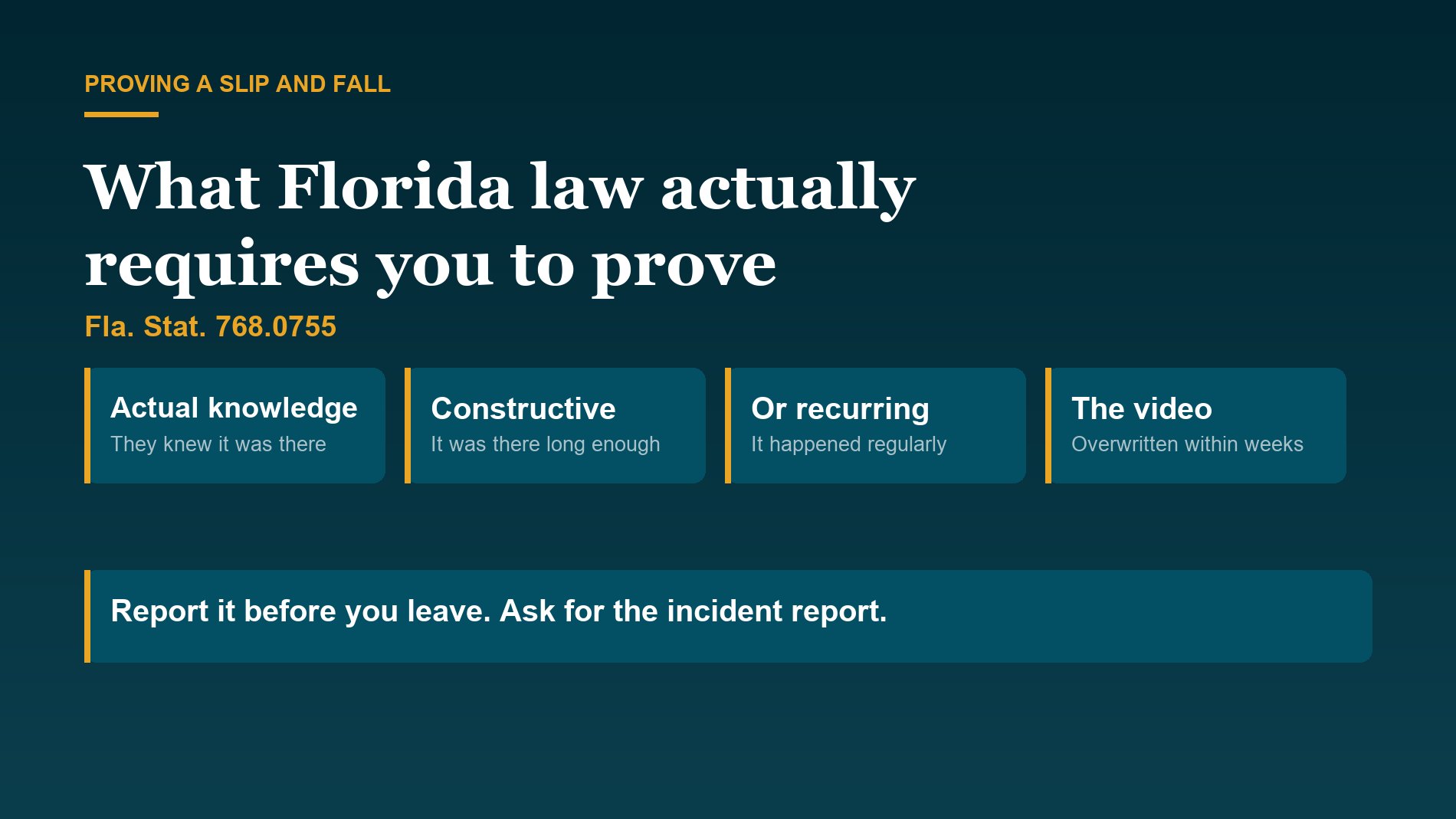
For a fall caused by a transitory foreign substance in a business establishment, Florida Statute 768.0755 puts the burden on you to prove the business knew or should have known about it. Proving you fell and were hurt isn’t enough on its own.
- Actual knowledge: an employee saw it, was told about it, or caused it.
- Constructive knowledge: it was there long enough that the business should have found it, or the condition occurred with such regularity that it was foreseeable.
Why the first week decides the case
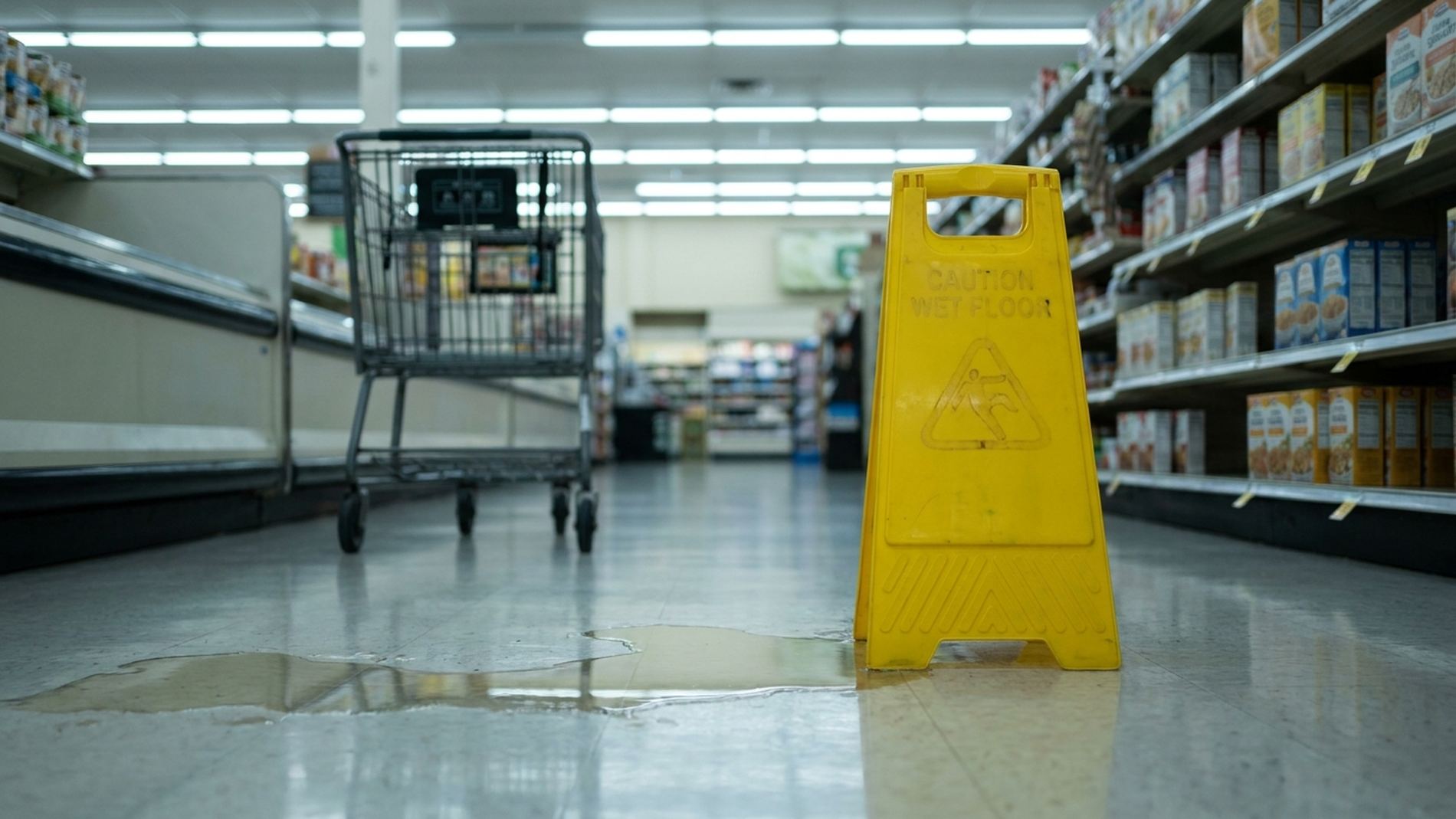
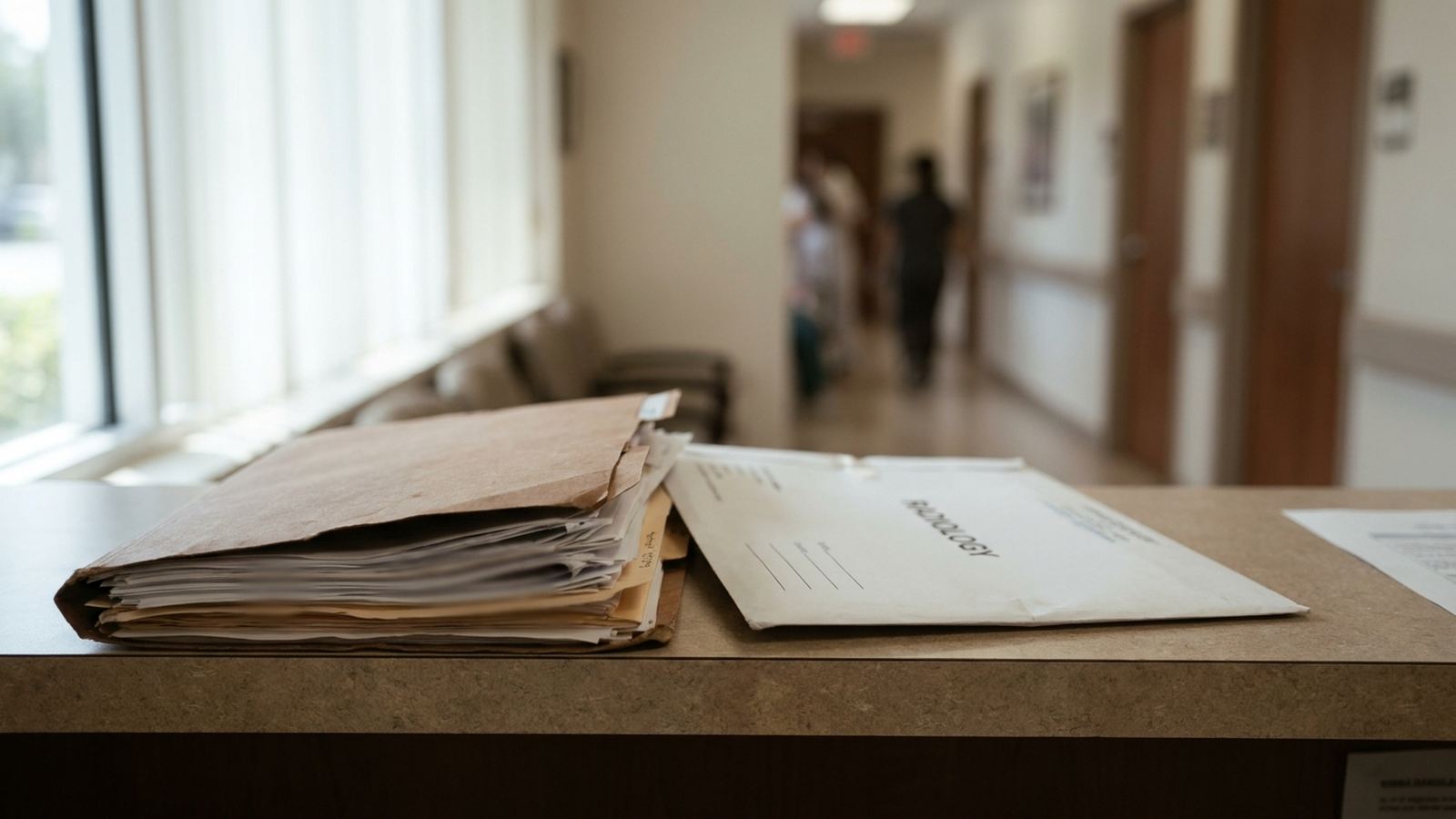
Constructive knowledge is normally proved by showing how long the hazard was there: a footprint through a spill, cart tracks, dried edges on the liquid, or video showing the puddle sitting there for twenty minutes while three employees walked past.
That video records on a loop. Many retailers overwrite within fourteen to thirty days. A preservation letter in the first week is often the difference between a provable claim and a story nobody can back up.
What to do if it happens to you
- Report it to a manager before you leave and ask for a written incident report.
- Photograph the substance from several angles, with something in frame for scale.
- Photograph the floor around it, any warning signs, and the shoes you were wearing.
- Get names and numbers for anyone who saw it.
- Seek medical attention the same day.
Do you need a lawyer for a slip and fall?
The answer depends almost entirely on what the store knew and whether anyone can still prove it.
You probably don’t need a lawyer if you slipped, caught yourself, weren’t hurt, and nothing needed treatment. Without an injury there is no claim to bring.
You probably do need one if you were hurt, and especially if the fall was never reported. Florida Statute 768.0755 requires proof the business knew about the hazard or that it sat there long enough that it should have, and almost nothing you personally witnessed proves either. The video does, and it is routinely overwritten within weeks. If a wet floor sign has been mentioned, or anyone has brought up your shoes or your phone, the comparative fault argument has already started.
The consultation is free, so finding out costs one phone call.
Frequently asked questions
What if there was a wet floor sign?
A sign helps the business but doesn’t automatically end the claim. Its placement, visibility and whether it was adequate for the hazard all matter.
Does it matter what shoes I was wearing?
The defense will bring it up, and it feeds into the comparative fault argument. It is rarely decisive on its own.
I didn't report it at the time. Is the claim over?
Not necessarily, but it’s harder. The first thing the defense will say is that the first report came after you spoke to a lawyer.
How quickly do I need to act?
Within days, because of the video. The two-year statute of limitations isn’t the main time pressure here.
Talk to Paul about your claim
Consultations are free and confidential. We advance case costs, and you owe no attorney’s fees or reimbursement of those costs unless we recover compensation for you. Paul handles every case personally.
Written by
Paul R. Shalhoub
Personal injury attorney, West Palm Beach
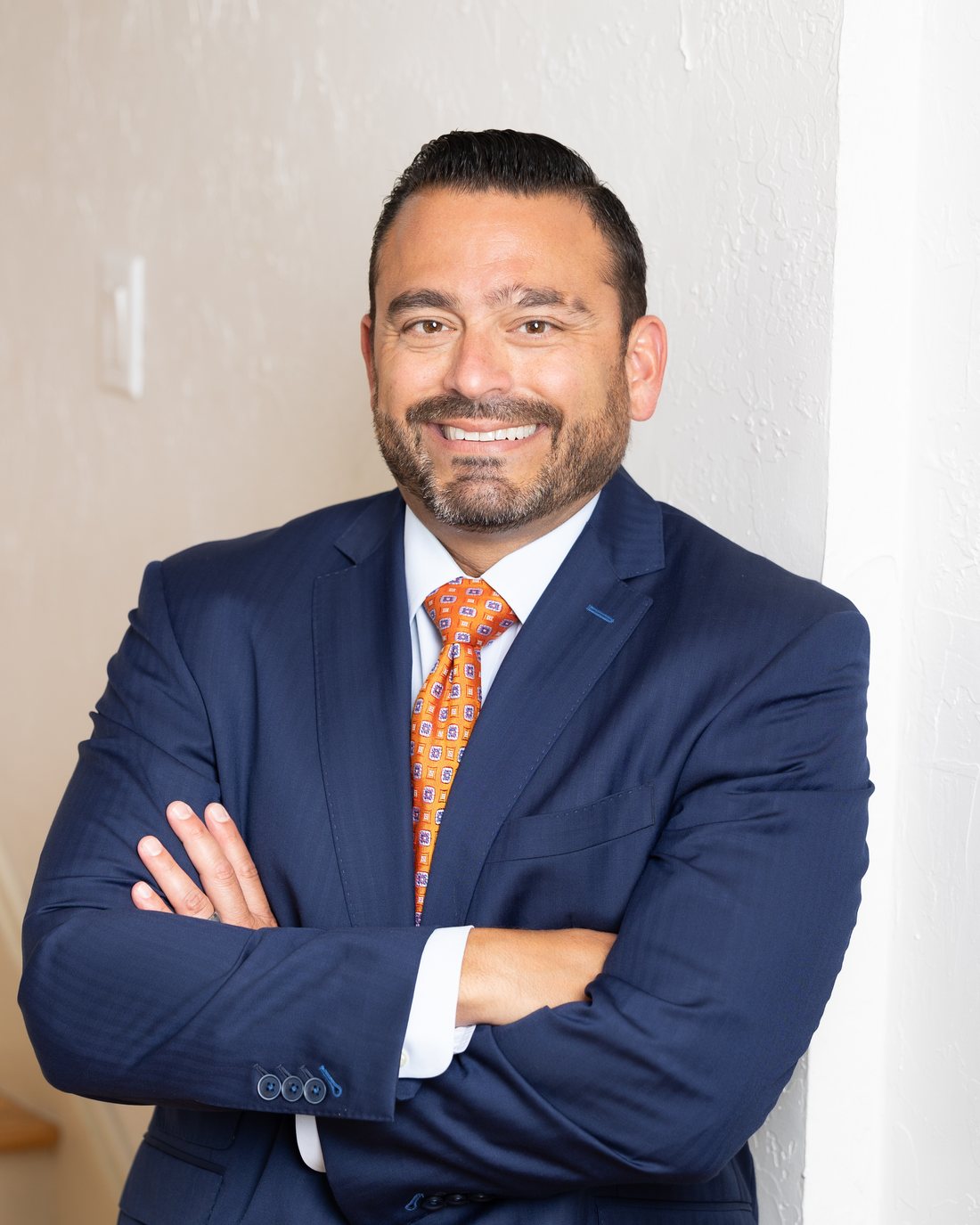
Paul R. Shalhoub is the owner of Shalhoub Law Injury & Accident. He began his career defending insurance carriers and now represents the people those carriers underpay, handling every case personally from the first call through trial. He was mayor of Lake Clarke Shores in 2022 and 2023, after three terms on its town council, and sits on boards across Palm Beach County.